

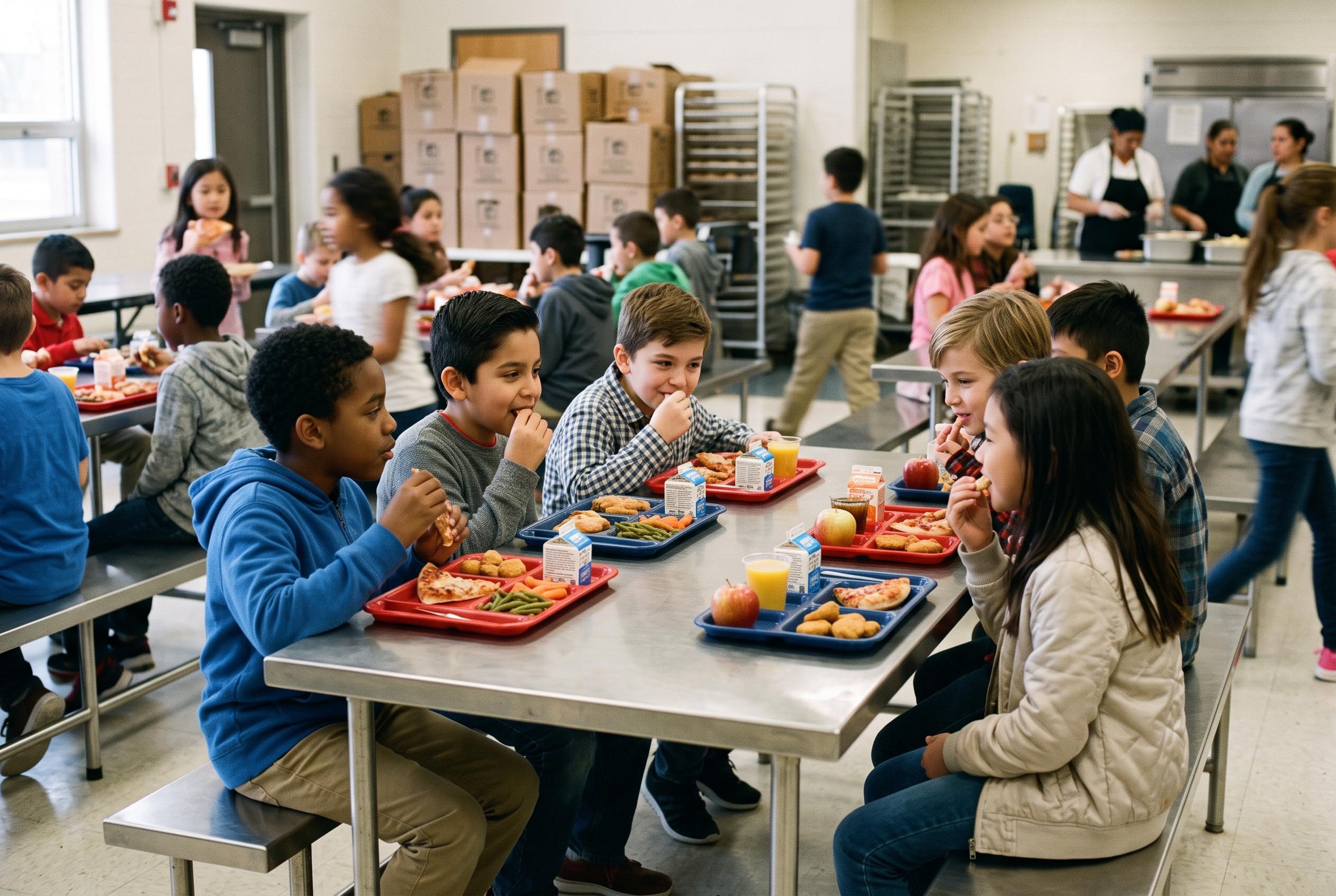

As cuts to SNAP and federal funding ripple through school cafeterias, concerns grow that increased food insecurity among children could undermine recent gains in school meal programmes, prompting calls for urgent policy review.
Cuts to federal food aid are beginning to ripple through school cafeterias, raising the prospect that some children could lose access to free breakfast and lunch just as the new academic year gets under way. Reporting from The Columbian and other outlets says more than 1 million American children have already lost SNAP coverage after a recent federal law, leaving schools worried that fewer eligible students will qualify automatically for meal support.
The issue matters because SNAP participation is one of the main gateways to free school meals. CBS News reported that the changes tied to the “One Big Beautiful Bill Act” have already pushed millions off food stamps, including about 1.5 million children, and that this drop could alter which students are identified as eligible for subsidised meals at school. In practical terms, a child who no longer receives SNAP may also lose the direct certification that schools use to enrol families in meal programmes without extra paperwork.
The potential effects may extend beyond individual students. OPB reported that the Community Eligibility Provision, which lets high-poverty schools serve free meals to all pupils, could be weakened if fewer families remain enrolled in SNAP. Stateline also reported that shifts in federal funding formulas tied to participation could make it harder for schools to sustain free breakfast and lunch programmes, especially in districts already dealing with food insecurity.
The concern has begun to draw scrutiny from Congress and advocacy groups. K-12 Dive reported that lawmakers have urged the US Department of Agriculture to spell out how the SNAP reductions are affecting access to free school meals, while the Food Research & Action Centre has warned that many districts fear falling participation will make it harder to keep children fed. The broader worry, advocates say, is that a policy aimed at trimming food aid could end up pushing more families into school hunger just as schools are trying to stabilise attendance and learning.
Disclaimer: This content is for informational purposes only and is not intended to be a substitute for professional medical judgment, advice, diagnosis, or treatment.



