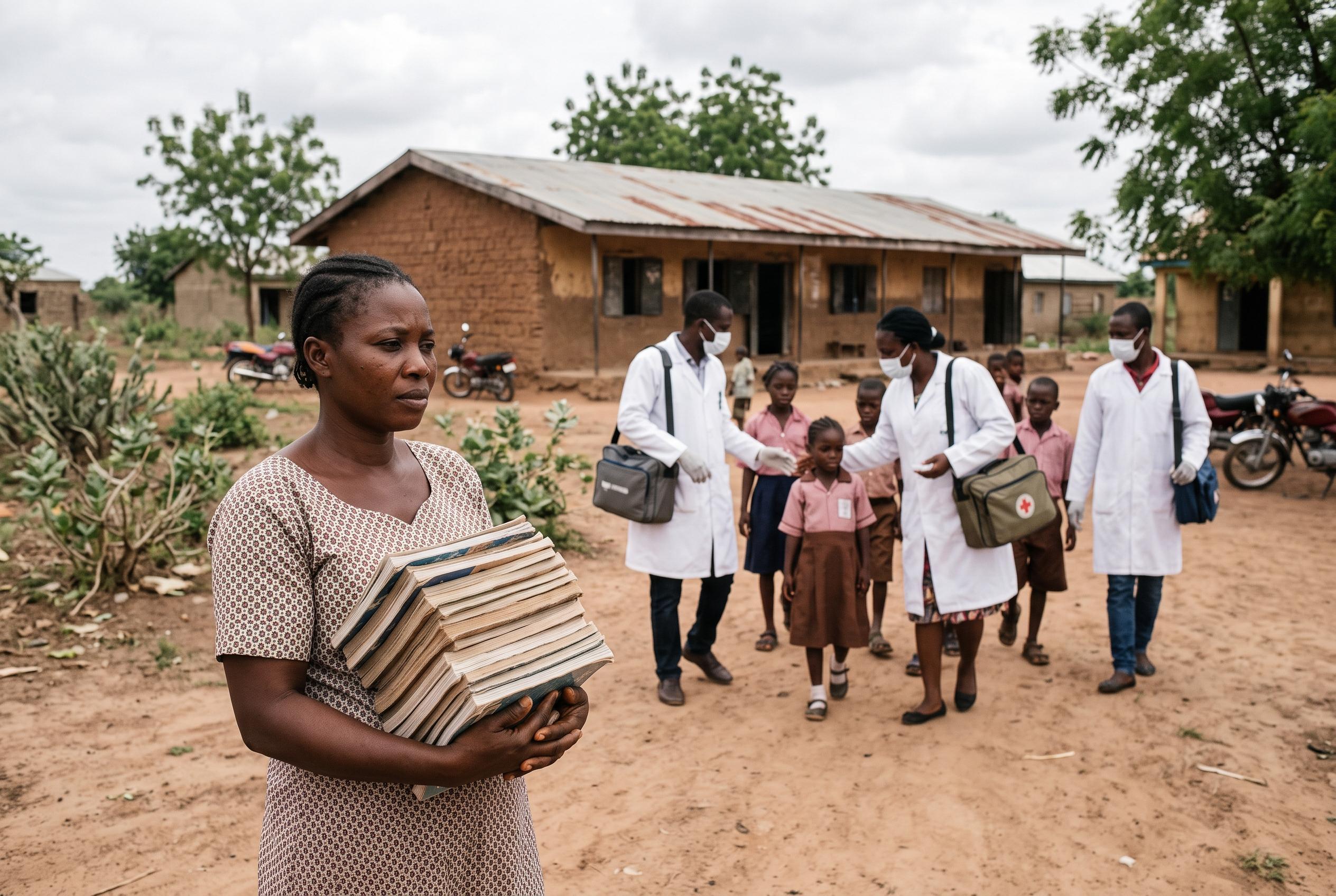

Plateau State’s shutdown of schools amid a rising diphtheria outbreak highlights Nigeria’s persistent immunisation gaps, with authorities rushing to contain a preventable health crisis worsened by governance failures and low vaccination coverage.
Plateau State’s decision to shut public and private primary and secondary schools after a diphtheria outbreak is a stark reminder that vaccination gaps can turn a preventable disease into a public emergency. Health officials said the outbreak has spread across Jos North, Jos South, Bassa and Wase, with suspected cases and deaths rising fast enough to force authorities into crisis measures. National surveillance has also shown that most confirmed cases in the latest assessment came from just eight states, while a large share of patients had not been vaccinated.
The latest figures underline how quickly the disease is overwhelming weak immunisation systems. According to health reporting cited by Nigerian media, the Nigeria Centre for Disease Control and Prevention has recorded more than 10,000 confirmed diphtheria cases and more than 300 deaths in 2026, with the burden concentrated in northern states. More than 60 per cent of suspected cases have involved unvaccinated people, a pattern that echoes earlier outbreaks in Nigeria and reinforces the link between low coverage and repeated transmission.
Public health experts have long warned that the country’s problem is not a shortage of vaccines alone, but a failure to reach children consistently. Analysis from Africa Check shows that outbreaks dating back to 2011, including major episodes in Borno and again in 2023, have repeatedly been tied to poor vaccination uptake and delays in diagnosis. A separate report by the World Health Organisation on Niger’s outbreak last year also shows how insecurity, poverty and weak access can leave communities exposed even where immunisation systems exist on paper.
That broader context puts pressure on the National Primary Health Care Development Agency, which is meant to help states and local governments close routine immunisation gaps, monitor coverage and strengthen community outreach. In practice, the challenge is whether warning signs are being acted on early enough: whether missed children are tracked, whether low-performing local councils are identified, and whether outreach follows the data rather than lagging behind outbreaks.
For Plateau and neighbouring states, the immediate task is to move beyond containment and into catch-up vaccination. That means mapping zero-dose and under-immunised children ward by ward, deploying mobile teams, checking cold-chain performance, tracing contacts, securing medicines for treatment centres and using trusted local voices to counter misinformation. Schools should reopen only alongside intensified surveillance and on-site vaccination, so that closures do not simply pause learning while leaving the underlying immunity gap untouched.
The wider lesson is uncomfortable but clear: when prevention is affordable and available, failure to deliver it is not an accident of fate. It is a governance failure that children pay for first.
Disclaimer: This content is for informational purposes only and is not intended to be a substitute for professional medical judgment, advice, diagnosis, or treatment.