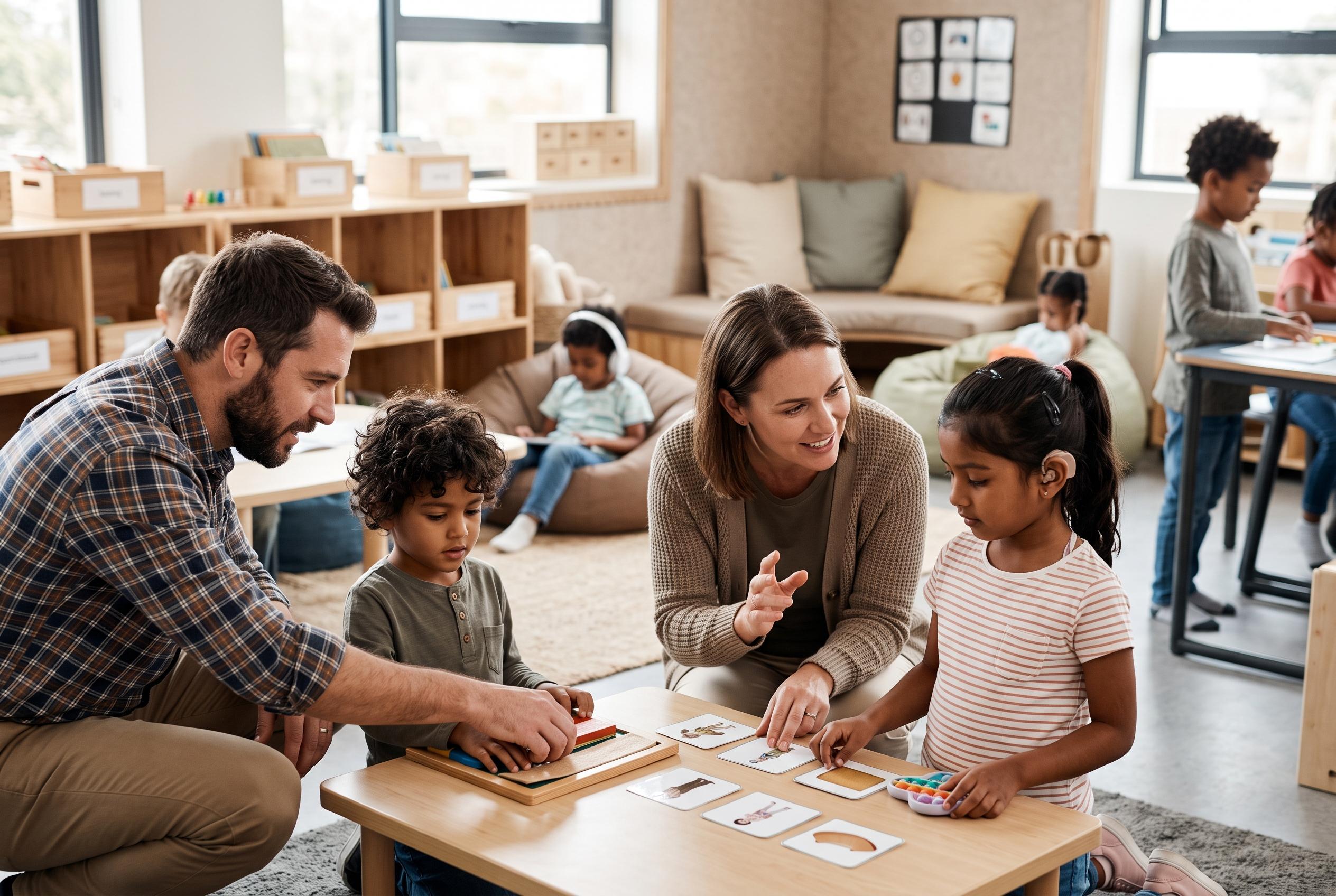

As the new school year begins, experts emphasise that success in inclusive education hinges on practical support, nuanced understanding, and a shift in how schools view and accommodate children with diverse needs, moving beyond labels to unlock potential.
As a new school year begins, the debate over inclusion can quickly become technical: staffing, funding, training and classroom support all matter. But the deeper issue is simpler and more human. Before a child is defined by a diagnosis, a learning difference or a formal assessment, schools must decide how they will see that child. Specialist evaluation can help identify needs and guide support, yet it should not become a label that narrows expectations or lowers ambition.
That risk is well recognised in research on inclusive education. A 2026 review of teachers’ experiences in inclusive classrooms found that many educators still feel underprepared for the range of needs they are asked to meet, with workload, stress and weak support systems among the biggest obstacles. Another study, published in the National Association for Special Educational Needs journals, found similar patterns: teachers often report limited training and insufficient backing when working with pupils with disabilities. Together, the findings suggest that inclusion depends not only on goodwill, but on practical help that teachers can actually use.
The language used around children also matters. Labels can settle into a school culture and shape what adults notice first. If a pupil is described as “difficult”, “problematic” or “always needing help”, attention can shift away from strengths, interests and potential. Research on stigma and learning disabilities shows that negative assumptions can damage both academic progress and social confidence, especially when children are treated as a category rather than as individuals. The consequence is often subtle: fewer chances to try, fewer opportunities to succeed and less room to surprise the adults around them.
That is why inclusive education should not be understood as forcing every child down the same path. A study published in Education Sciences criticised rigid, standardised curricula for failing to reflect how differently children learn. In practice, small adjustments can make a large difference: clearer instructions, shorter tasks, visual supports, movement breaks or extra time. What looks like refusal or non-compliance may actually be a child signalling that the task is too fast, too noisy or too confusing. Once the barrier changes, behaviour often changes too.
The final lesson is that schools do not have to solve everything alone. The literature consistently points to the need for professional development, collaborative problem-solving and outside consultation, particularly at a time when many schools are under pressure and struggle to recruit specialists. A fresh perspective can reveal why an approach is not working and what might work instead. In that sense, inclusion is not about lowering standards. It is about recognising different routes to the same goal and making sure special educational needs open the door to support rather than close the door to opportunity.
Disclaimer: This content is for informational purposes only and is not intended to be a substitute for professional medical judgment, advice, diagnosis, or treatment.