

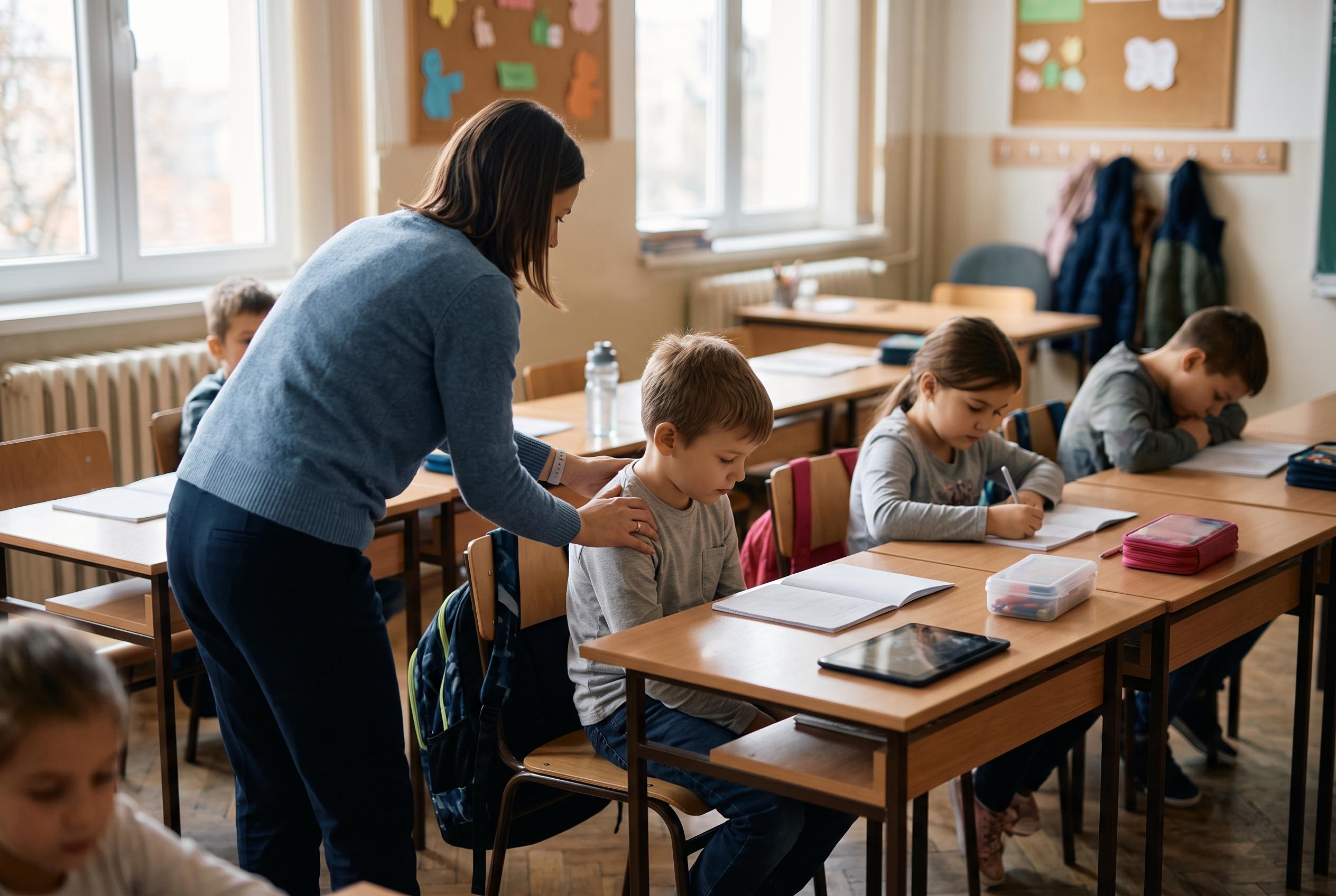

A Romanian initiative examining primary school pupils uncovers widespread back pain and unhealthy habits, raising concerns about the impact of sedentary lifestyles and screen use on future spinal health.
A Romanian posture education programme has found that back pain and poor habits are widespread among primary school children, underlining concerns about how inactivity and screen time may be affecting long-term spinal health. After two years in schools, the #StaiDrept initiative says it has assessed 16,129 pupils and 771 teachers across 50 schools, with 76.2% of children reporting back pain and only 8.7% enrolled in physiotherapy.
Bogdan Acatrinei, co-founder of the Asociatia Kinetobebe, said the programme has expanded beyond Bucharest and reached more children with screening and prevention work, but he warned that sedentary routines are already creating health risks for the adults of tomorrow. The group says the project is aimed at children aged six to 10 and combines screening, teacher discussions, corrective exercises and lessons on posture and movement.
The habits recorded in the programme suggest that the problem extends well beyond the classroom. According to the association’s findings, 84.6% of children do not do homework in a properly arranged space, 85.7% do not know the correct desk posture, 89.1% do not place their notebook correctly when writing and 92.9% do not take part in organised sport. The group also said 82.5% have access to a phone or tablet, while 93.4% use mobile devices in an incorrect posture.
The broader research record supports the concern that posture and lifestyle habits matter. A longitudinal study published in PubMed found back pain in 37% of student nurses over 20 months, while an analysis from Eastern Kentucky University linked slouching and poor study environments with higher musculoskeletal discomfort. A separate South Korean study found that everyday postural habits and stress were associated with low back pain, suggesting that prevention efforts in schools may need to cover both physical habits and wider health education.
Disclaimer: This content is for informational purposes only and is not intended to be a substitute for professional medical judgment, advice, diagnosis, or treatment.



