

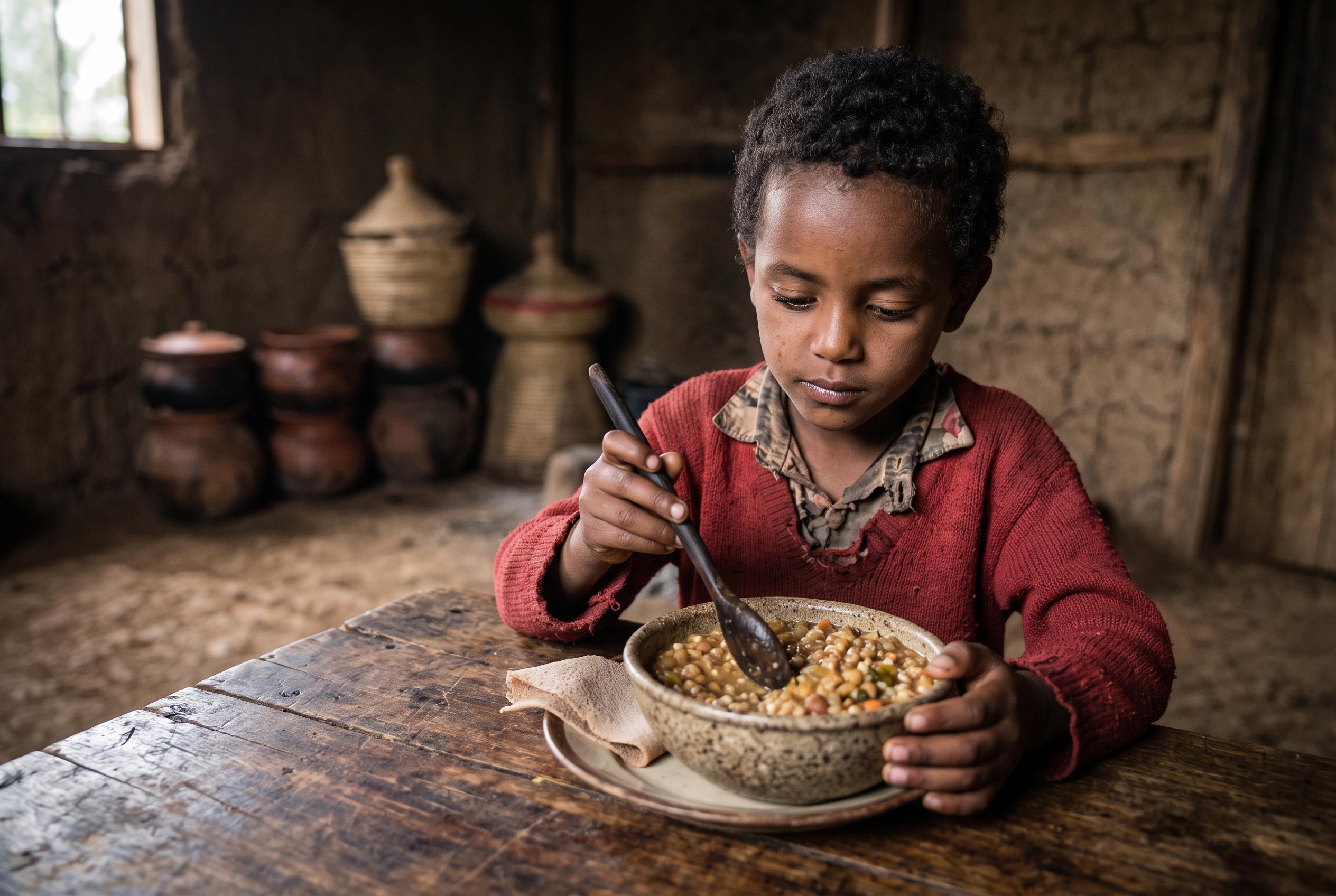

A study in Nature Food uncovers the profound and lasting impact on children’s health and education following Ethiopia’s 1998 salt iodisation halt, highlighting the importance of sustained food fortification efforts.
A new study in Nature Food suggests that when Ethiopia’s iodised salt supply was cut off in May 1998, the effects were felt far beyond the kitchen table. Researchers found that children exposed to the break in early life were less likely to survive and more likely to perform poorly at school, with the damage most pronounced in rural areas where local soils already contained little iodine. The findings add rare causal evidence to a long-running public health concern: even brief failures in food fortification can leave lasting scars on a generation.
Iodine is essential for thyroid function and, in turn, for brain development before birth and in infancy. That is why salt iodisation has long been treated as one of the simplest and most effective nutrition policies. The new research is notable because it examines what happens not when iodised salt is introduced, but when it suddenly disappears. According to the study, Ethiopia’s interruption created a natural experiment that exposed some children to a steep drop in iodine intake at precisely the most vulnerable point in development.
The effects were not uniform. The authors found the strongest losses in districts where the environment itself offered little protection, reinforcing the role of geography in micronutrient access. In iodine-poor areas, children were more likely to suffer harm once fortified salt was withdrawn; where naturally occurring iodine was higher, the impact was smaller. The study also used placebo checks to test whether the pattern might be explained by other shocks, such as broader economic hardship or conflict, and reported that the damage tracked early-life iodine exposure rather than general deprivation.
The findings build on earlier work showing that iodine deficiency remains a real problem in Ethiopia. Research cited in the public health literature has estimated that millions of school-age children in the country still face inadequate iodine intake, while surveys of household salt use have found coverage to be inconsistent over time. Separate studies have also linked iodine deficiency in Ethiopian schoolchildren to impaired development and other avoidable harms, underlining how fragile progress can be when fortification systems are not maintained.
The broader lesson is that salt iodisation cannot be treated as a one-off policy victory. The Nature Food study suggests that supply chains, regulation and monitoring all matter, because an interruption long enough to affect a birth cohort can reduce both survival and educational attainment. That has clear implications for governments and aid agencies: in regions with iodine-poor soils, universal fortification may need to be backed by additional measures, from tighter quality control to targeted supplementation for women of reproductive age. The children affected in Ethiopia in 1998 could not recover what was lost, but their experience is a warning that public health gains can disappear quickly if vigilance fades.
Disclaimer: This content is for informational purposes only and is not intended to be a substitute for professional medical judgment, advice, diagnosis, or treatment.



