


Emerging guidance emphasises personalised, sensory-friendly, and visual supports over strict schedules, challenging traditional potty training methods for children with autism.
Potty training a child with autism often works best when adults start from the child, not the calendar. The Autism-based guidance in the lead article stresses that no two children are the same, and WebMD likewise notes that readiness can vary widely among autistic children. Rather than forcing a timetable, parents and carers are usually better served by watching for signs that the child can manage the physical, behavioural and communication demands of toileting.
Routine is often central. Medical News Today and Behaviour Frontiers both say that children on the spectrum may find comfort in predictability, which can make a fixed toilet schedule helpful. Regular bathroom breaks, paired with snack and drink times, can turn toileting into a familiar sequence rather than an unpredictable demand. That structure may also support independence once the child begins to recognise the pattern.
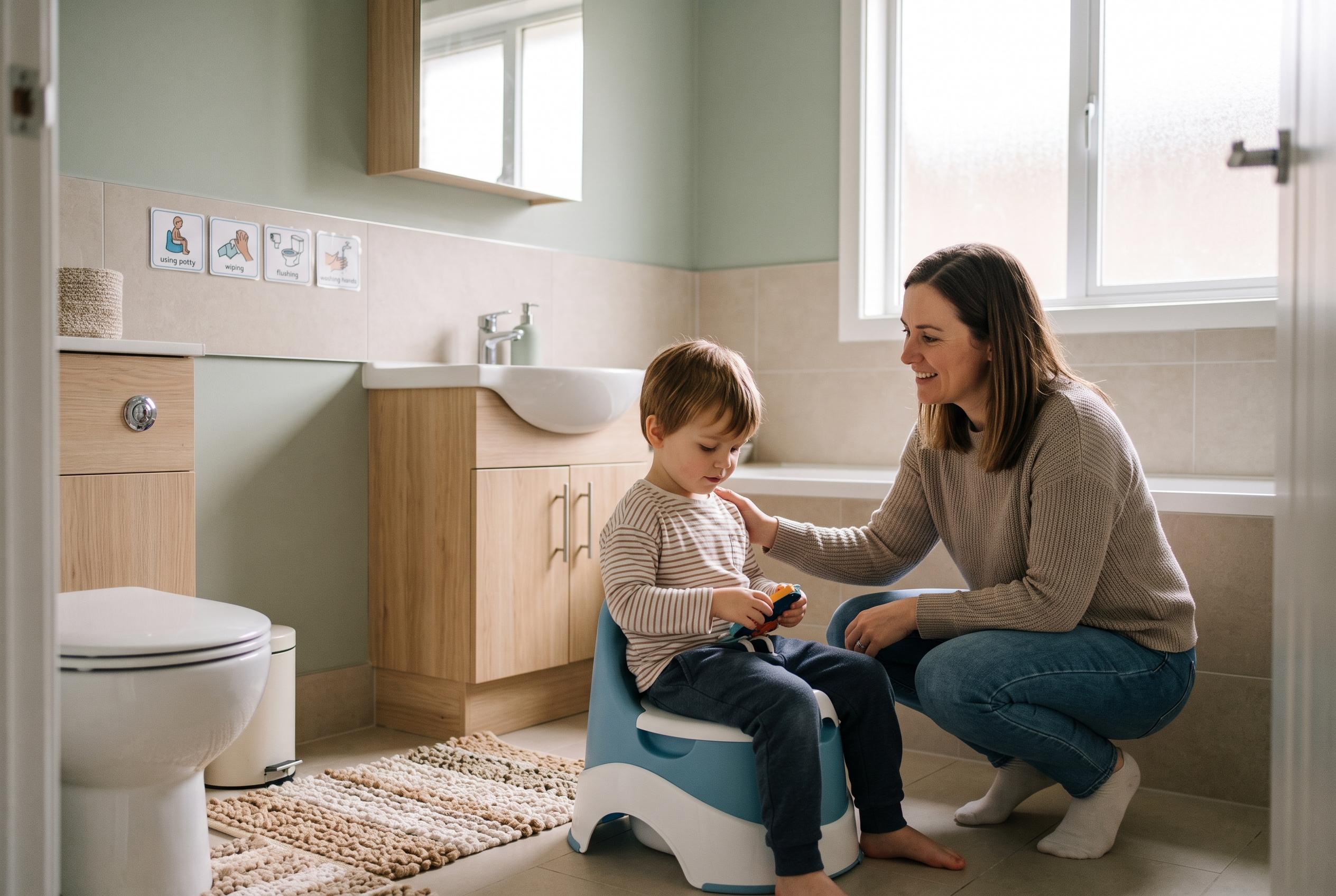
Sensory factors can matter just as much. The lead article points to discomfort with clothing, seats and the bathroom environment, while Potty Palai and Little Roots Pediatrics both recommend making the space calmer and more tolerable. That may mean softer seat covers, gentler lighting, reduced noise or looser clothing, depending on what the child finds distracting or upsetting. For some children, even a small change in texture or temperature can affect whether toileting feels manageable.
Visual supports are another common theme across the advice. The lead article highlights picture exchange communication systems, or PECS, while Medical News Today, Science Insights and Behaviour Frontiers also recommend picture schedules, social stories and other step-by-step cues. These tools can be especially useful for non-verbal children or those who process information better through images than spoken instructions. Timers can help signal when it is time to try again, and favourite characters or dolls can make the learning process feel less abstract.
Positive reinforcement can help, but the reward should fit the child and the setting. The lead article suggests small treats, such as a popsicle, while the other summaries emphasise building a routine that feels safe and successful. The goal is not simply to reach the toilet once, but to create a process the child can repeat with growing confidence. As the various guides note, patience and flexibility matter as much as any single technique.
Disclaimer: This content is for informational purposes only and is not intended to be a substitute for professional medical judgment, advice, diagnosis, or treatment.



