

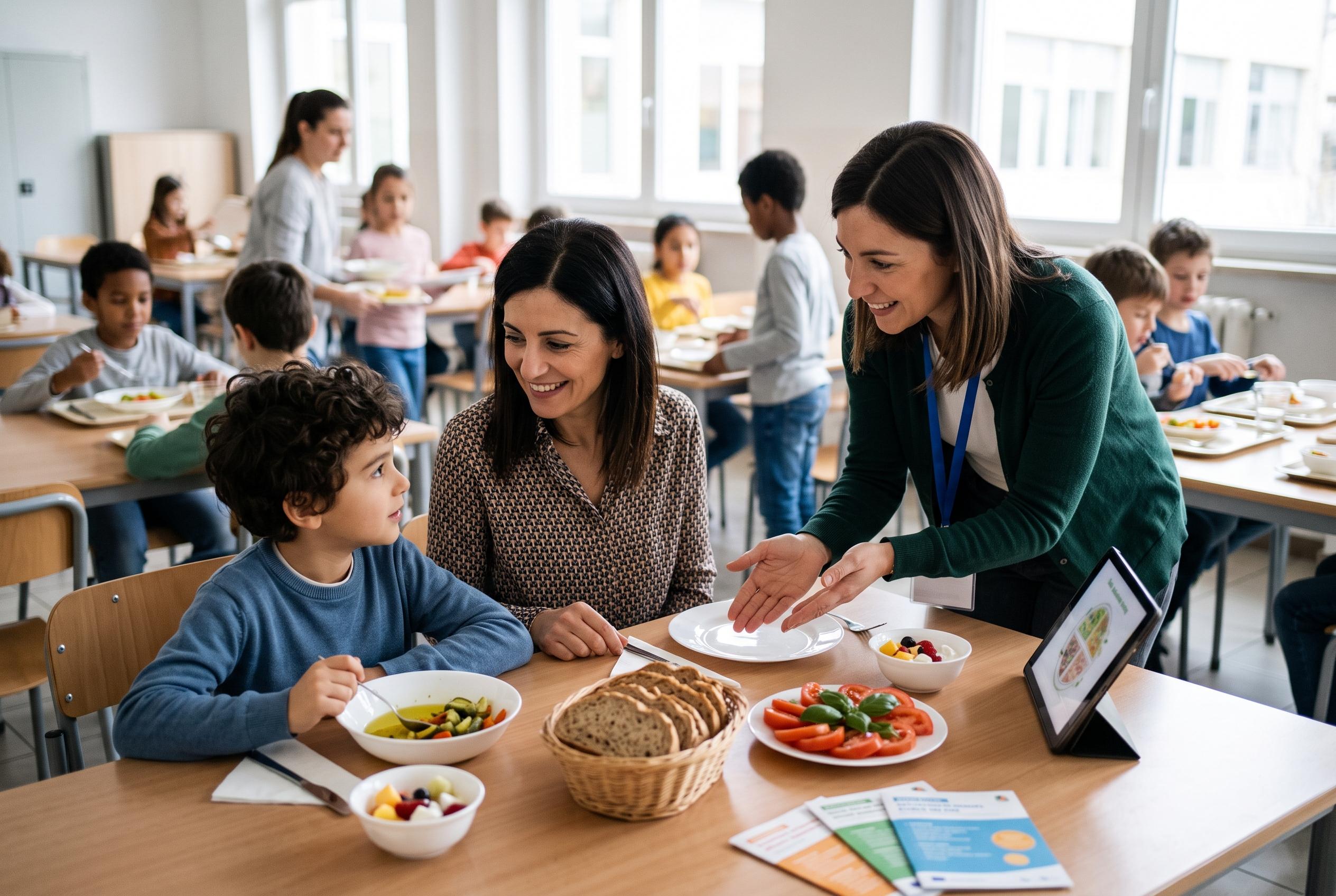

A comprehensive Italian nutrition education initiative involving families and schools has significantly improved eating habits and physical activity among children aged six to 14, highlighting the potential of multimedia tools and community engagement in shaping healthier lifestyles.
A nutrition education programme in Italy has been linked with better eating and lifestyle habits among children and teenagers after 210 days, according to a study published in Nutrients. The project, “Sano, giusto e con gusto!”, worked with families and schools through games, recipes, digital material and practical activities, and researchers reported a rise in Mediterranean diet adherence among six- to 14-year-olds from 46.8% to 61.4%.
The same assessment found that daily fruit consumption climbed from 72.3% to 84.2%, while the proportion eating vegetables every day increased from 60.5% to 78.4%. Screen time also improved, with the share spending more than three hours a day in front of screens falling from 18.8% to 9.1%. The paper describes the project as a promising but still preliminary sign that classroom and family-based education can shift habits.
The study, titled “An Innovative, Multimedia-Based Intervention for Promoting Changes in Lifestyle in Italian Families”, used repeated surveys rather than a controlled trial, so the authors caution against treating the results as proof that the programme alone caused the changes. The findings are nevertheless consistent with earlier Italian research, including teacher-led nutrition projects and other school-based interventions that have reported better Mediterranean diet adherence after structured education.
Annamaria Acquaviva, the dietitian and nutritionist who designed the initiative, told Italia a Tavola that the work grew out of a wider non-profit effort involving schools, families and more than 100 dietitians across Italy. She said the aim was to bring scientific advice into daily life, not just present it in theory.
Among women in the programme, the median Mediterranean diet score rose from 7.0 to 9.0, and the share classed as having good adherence increased from 10.9% to 35.2%. The median body mass index in that group fell from 24.7 kg/m² to 23.4 kg/m². Francesca Poggiante, the study’s scientific lead and coordinator, said the results point to improvements in diet, physical activity and screen use, while also stressing that longer follow-up and controlled studies are needed.
The initiative also leaned heavily on practical tools: video lessons, quizzes, worksheets, stories, video fairy tales and downloadable resources. It covered meal structure, breakfast, seasonal eating, sustainability, labelling and unfamiliar foods, while a recipe competition encouraged adults and children to cook together. The project also added a movement element through Cantaballo®, a music-and-dance activity, and reached more than 91,000 users online between 2019 and 2021, according to the project team.
The wider context matters. Recent Italian and international studies have repeatedly shown that Mediterranean diet adherence in children is shaped not only by food knowledge, but also by physical activity, sleep, family habits and the home environment. That makes the latest findings encouraging, but also a reminder that healthy eating in childhood is usually a family and school project, not a lesson on its own.
Disclaimer: This content is for informational purposes only and is not intended to be a substitute for professional medical judgment, advice, diagnosis, or treatment.



