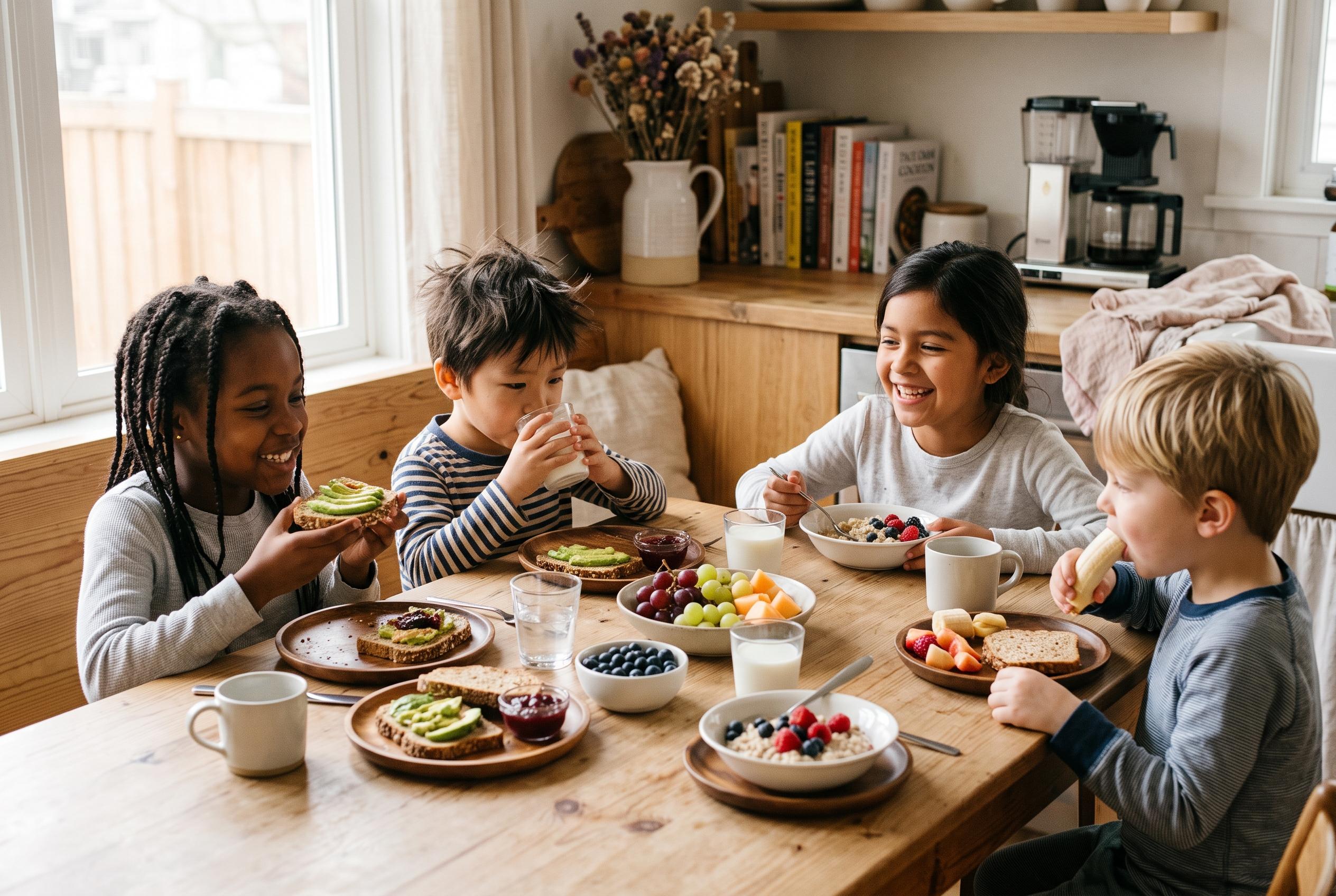

Experts highlight the significance of providing children with balanced, varied breakfasts that support energy, growth, and concentration, advocating for routine and simplicity amid busy mornings.
A good breakfast for children should do more than fill the gap after the night’s fast. It needs to be nourishing, steadying and satisfying, with a mix of whole-grain carbohydrates, protein, healthy fats and fruit or vegetables. That combination helps provide energy that lasts through the morning, while also supporting growth, concentration and school-day performance, according to Healthline, Johns Hopkins Medicine and Harvard Health. The aim is not to overload a child’s plate, but to offer the right balance in age-appropriate portions. This matters especially for families trying to avoid the all-too-common rush that leads children to skip the meal altogether.
The practical answer is variety. Easy staples such as idli, dosa, pongal and upma can work well on busy weekdays, while more leisurely options such as sandwiches, parathas, rava dosa and oothapam are better saved for weekends. Johns Hopkins Medicine and Mayo Clinic both stress the value of complex carbohydrates from foods such as oats, whole grains and vegetables, paired with protein and healthy fats for sustained energy. Healthline and Nemours KidsHealth also note that children are more likely to benefit when breakfast is routine, appealing and simple enough to fit into the morning rush. For parents, that means planning ahead and keeping a few reliable dishes in rotation rather than trying to reinvent breakfast every day.
The menu ideas here reflect that approach. They are meant to be flexible, family-friendly and easy to adapt, whether the goal is a quick weekday meal or a slower weekend spread. A thoughtful breakfast plan should include a main dish, suitable side dishes and enough variety to keep children interested without making the meal feel complicated. As Harvard Health points out, foods rich in fibre, protein and healthy fats can help maintain energy and avoid early-morning hunger, while fruit and vegetables add vitamins and minerals that round out the meal.
For parents dealing with children who are reluctant eaters, timing can matter as much as the food itself. One useful strategy is to offer breakfast first, then leave milk or juice for later, so the drink does not crowd out the meal. Healthline and KidsHealth both note that consistency helps children develop better breakfast habits, and that a calm routine can make the meal more successful. The broader lesson is simple: a balanced breakfast does not have to be elaborate to be effective, only sensible, varied and realistic for the household.
Disclaimer: This content is for informational purposes only and is not intended to be a substitute for professional medical judgment, advice, diagnosis, or treatment.