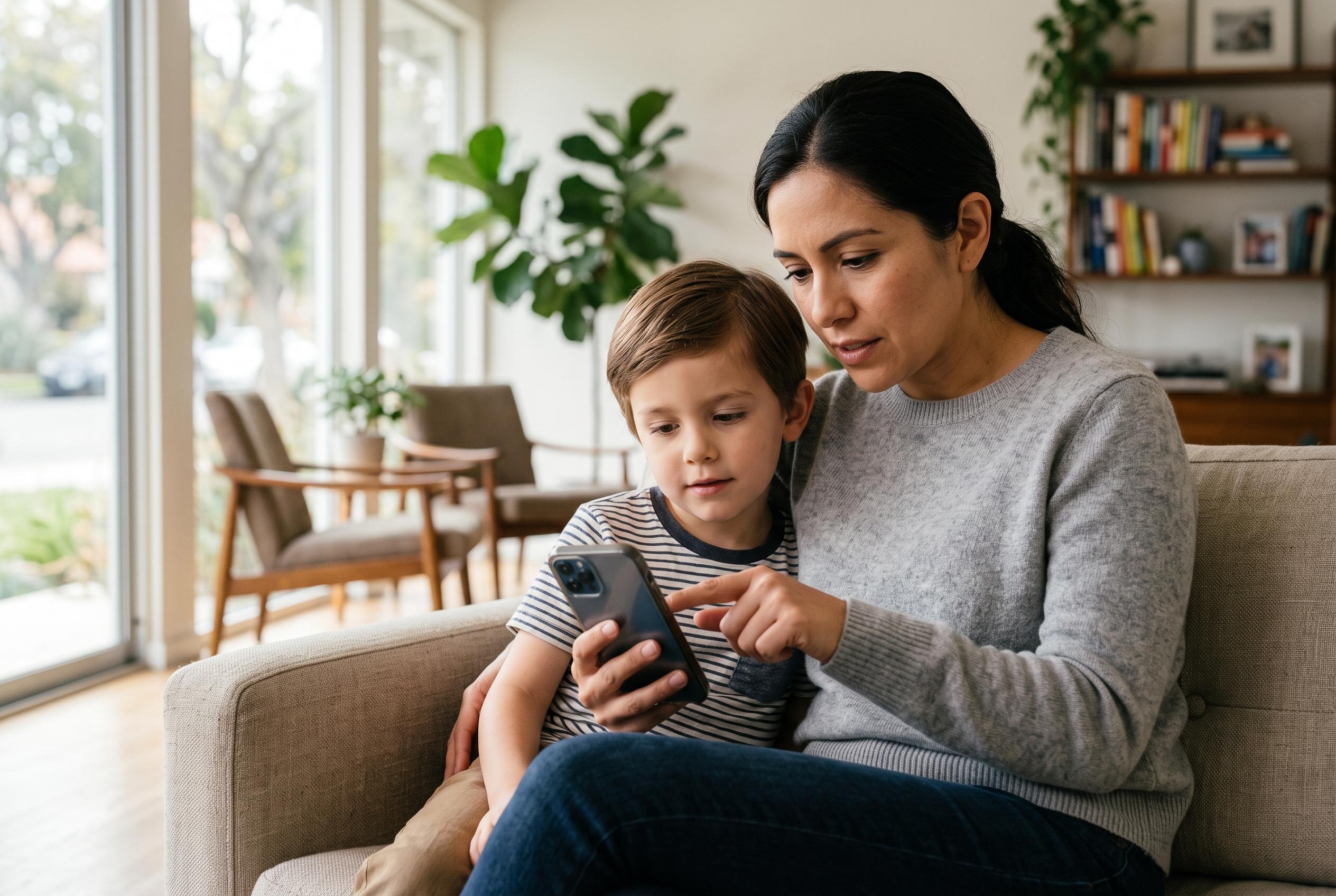

As families in Los Angeles prepare for the new school year, experts and lawmakers highlight the importance of early conversations, parental controls, and new legislation to safeguard children online before they receive their first phone.
As families prepare for the new school year in Los Angeles, many are also facing another rite of passage: deciding when a child is ready for a first phone. For Cathy Pedrayes, a digital safety advocate known online as the “Mom Friend”, the answer is less about age than about preparation, boundaries and whether parents have already started teaching online habits before the device arrives.
Speaking to CALÓ News, Pedrayes said families should begin those conversations early, ideally before the phone is handed over. She encouraged parents to build a digital safety plan that covers screen-time limits, private accounts, app restrictions and the kind of behaviour they expect from the start. Readiness, she said, can vary widely from child to child, and a younger teenager may handle a phone better than an older student or even some young adults. Verizon’s parenting guidance similarly recommends creating a family digital plan with agreed rules, boundaries and consequences, rather than treating the first phone as a one-off purchase.
Pedrayes also stressed that the device should be set up as a child’s phone, not an adult’s. That means using the child’s correct age and account details so built-in safeguards work properly, and taking advantage of parental controls such as Apple’s Screen Time or Google’s Family Link, which are commonly recommended by parenting and technology guides. She urged parents to explain why certain apps are not allowed, keep phones out of bedrooms at night and make the rules part of an ongoing conversation rather than a list of bans.
The broader safety picture matters too. California lawmakers have moved ahead with AB 1709, a bill intended to bar children under 16 from maintaining accounts on social media platforms with addictive features such as algorithmic feeds, while also requiring age verification and creating an e-safety advisory commission. Pedrayes pointed to other practical risks parents can miss, including scam calls and suspicious links, and said carrier tools can help block unwanted contacts. When it comes to cyberbullying, she urged parents to talk about it before school starts and to teach children how to report, block and delete harmful content. Pew Research Centre has found that nearly half of U.S. teens aged 13 to 17 have experienced at least one form of cyberbullying.
Above all, Pedrayes said the goal is to keep children talking. If a child breaks the family tech agreement, she advised, the response should focus on solving the problem rather than punishment alone, so children feel able to bring concerns to parents instead of hiding them.
Disclaimer: This content is for informational purposes only and is not intended to be a substitute for professional medical judgment, advice, diagnosis, or treatment.