

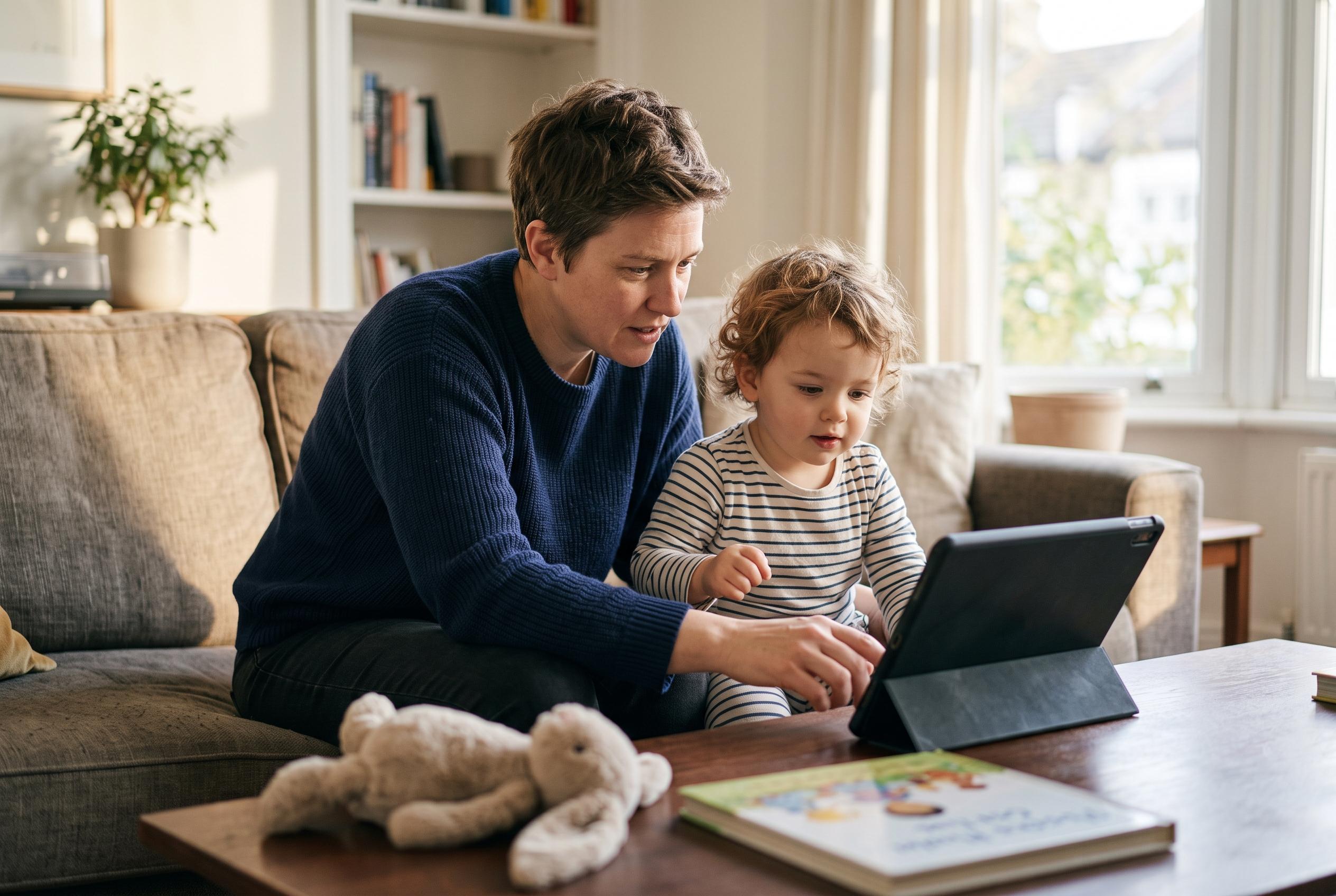

Emerging research suggests that parental involvement and content quality are crucial in mitigating the negative effects of screens on young children’s behaviour, language, and emotional regulation, prompting a rethink of current guidelines.
Screens are now woven into daily life, but the real question for parents is not simply how long young children spend in front of them. The deeper issue is what they are watching, whether an adult is involved, and what screen time is replacing. Teresa Rossignoli Palomeque, writing for The Conversation, argues that the evidence points less to screens as a single threat than to the quality of the experience around them.
Research summarised in a systematic review published by the Journal of Health Sciences found that prolonged screen use is consistently linked with behavioural difficulties, especially outward-facing problems such as impulsivity and disruptive conduct. It also noted a moderate association with executive function changes, the mental skills children use to plan, focus, remember instructions and regulate behaviour. The same review suggested that passive use, with little or no adult involvement, is more closely tied to negative outcomes than interactive viewing.
Other studies cited by Rossignoli Palomeque point in the same direction. Excessive exposure in early childhood has been associated with weaker language development, poorer attention and more difficulty with emotional regulation. A separate review of early childhood screen use, published in a journal on education, politics and values, found recurring concerns about low frustration tolerance, reduced social interaction and dysregulation. A documentary review from Colombia likewise focused on language, attention and executive function in children aged five and under.
The mechanism may be partly behavioural. When a screen is on in the background, even if a child is not actively watching, it can interrupt play, concentration and back-and-forth interaction. That matters because early development depends heavily on conversation, movement, free play and direct social contact. According to the research cited in the article, children learn more when an adult helps interpret content, talks about what is happening and turns viewing into an active exchange rather than a passive pastime.
The content itself also matters. Material designed for children can have benefits, particularly when it is educational and supported by family interaction. Rossignoli Palomeque cites studies showing gains in language, working memory, attention and self-control from well-designed digital programmes, with some effects extending into everyday skills and school performance. Other research suggests that technology can support movement and exploration when it is built into active play, such as sensor-based games or location-based activities.
Still, professional guidance remains cautious. The American Academy of Pediatrics advises avoiding screens for children under 18 months except for video calls, and recommends limited, supervised use for toddlers and preschool children. The World Health Organisation has also urged strict limits for very young children. More recently, the Spanish Association of Pediatrics updated its guidance to advise that children under six should not be exposed to screens, and stressed that parents’ own habits strongly shape those of their children.
For families, the practical message is not that screens must be banned, but that they should not crowd out the basics of healthy development. The evidence suggests that children do best when adults set boundaries, choose age-appropriate content and keep technology in its place: as a tool, not a substitute for play, sleep, movement and human attention.
Disclaimer: This content is for informational purposes only and is not intended to be a substitute for professional medical judgment, advice, diagnosis, or treatment.



