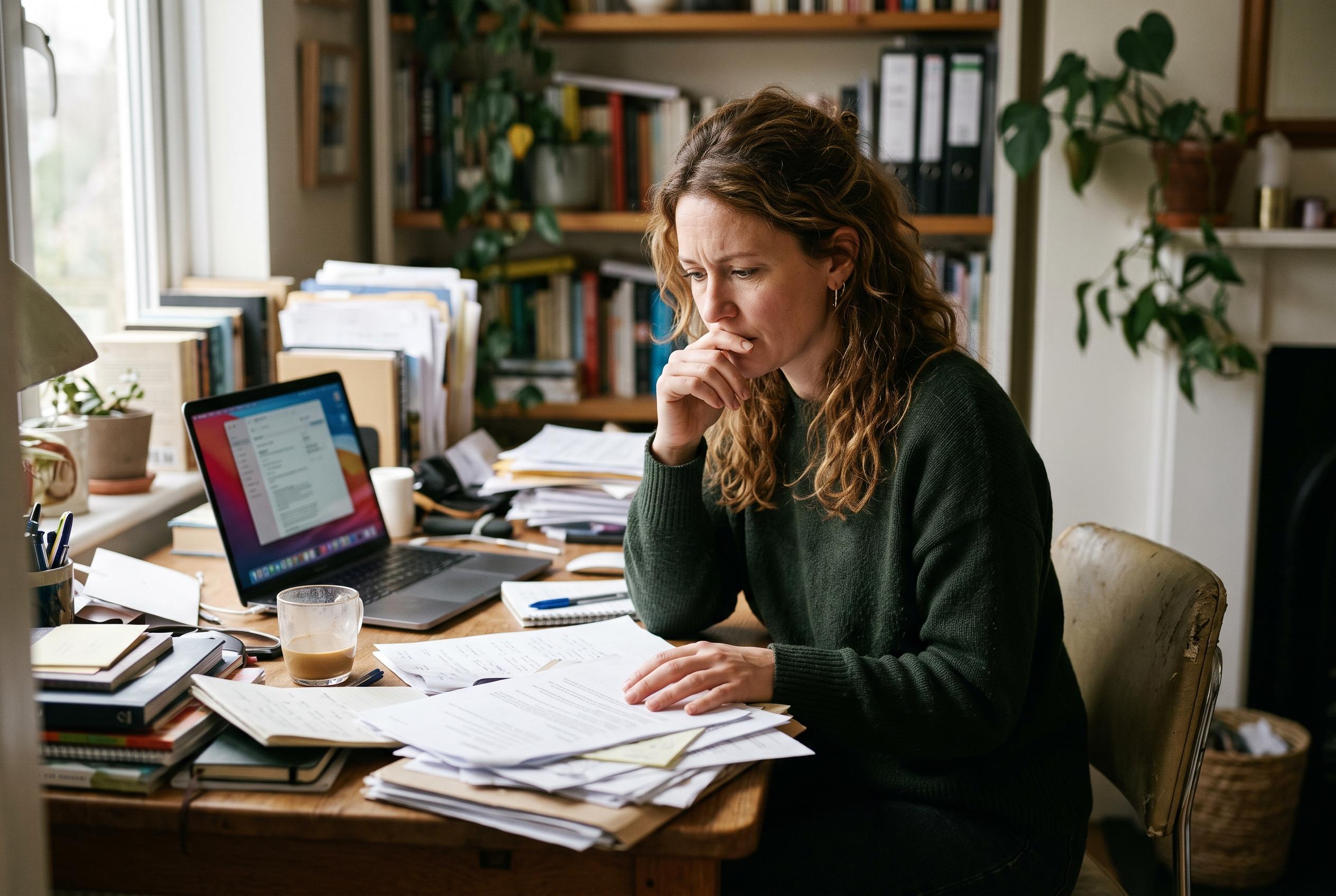

Many women with attention deficit disorder go undiagnosed for years due to subtle symptoms, but a Salzburg woman’s late diagnosis sheds light on the importance of recognition and tailored healthcare.
For years, Tamara Zuchna lived with the sense that she was constantly behind everyone else, struggling to keep her life in order and wondering why ordinary tasks seemed harder for her than for those around her. It was not until she was 32, and already a mother of two in Salzburg, that she finally received an explanation: attention deficit disorder, known as ADS.
At school, Zuchna was told she was daydreaming again. She was also scolded for drawing during lessons, a habit she now understands as a way of helping herself stay focused. Her experience fits a pattern that specialists say is often missed in women: unlike the more visible hyperactive form of ADHD, attention problems can appear quietly, with inattention, mental drift and a tendency to internalise difficulties. As a result, many women go undiagnosed for years, even when the condition shapes their daily lives.
Sven Lindberg, who leads clinical developmental psychology at the University of Paderborn, said the issue is not simply poor concentration. He explained that the brain’s prefrontal cortex, which helps people sustain attention and filter out irrelevant stimuli, does not function as it should in people with ADHD and ADS. He added that the way signals are transmitted in the brain can also be altered, leaving the nervous system quickly overstimulated and overwhelmed by competing inputs.
That can make everyday life exhausting. Zuchna described years of shame, self-doubt and endless internal replaying of thoughts, along with efforts to hide her struggles and appear normal. Such masking is widely reported among women with ADHD, according to several German-language health sources, which note that symptoms may be misread as laziness, sensitivity or lack of effort. Hormonal changes and social expectations can also make the condition harder to recognise across a woman’s life, contributing to late diagnoses.
Zuchna eventually began to suspect that she might have ADS after a conversation with a friend who had been diagnosed with ADHD. Reading through symptom descriptions online, she recognised herself in much of what she found and decided to seek a clinical assessment. After testing and exercises that measured her attention span, the diagnosis was confirmed. For her, that moment brought relief as well as clarity: at last, there was a framework for understanding why daily organisation had felt so difficult for so long.
Since then, she has begun using practical routines to manage the condition, including a simple sand timer to structure tasks and breaks. She says the diagnosis has made her more patient with herself and helped her build on strengths such as strong visual memory. Lindberg said that informed self-understanding is one of the most useful tools for people with ADHD and ADS, alongside clear routines, behaviour therapy and professional guidance. He also warned that online advice should be treated cautiously, particularly on social media, where not all information is reliable.
Zuchna now wants healthcare workers to be more alert to the signs, especially in women whose symptoms may not match the stereotypical image of hyperactivity. She also hopes others who feel they have spent a lifetime working harder than everyone else will seek help. In her words, it is worth looking into the issue and having the courage to address it.
Disclaimer: This content is for informational purposes only and is not intended to be a substitute for professional medical judgment, advice, diagnosis, or treatment.