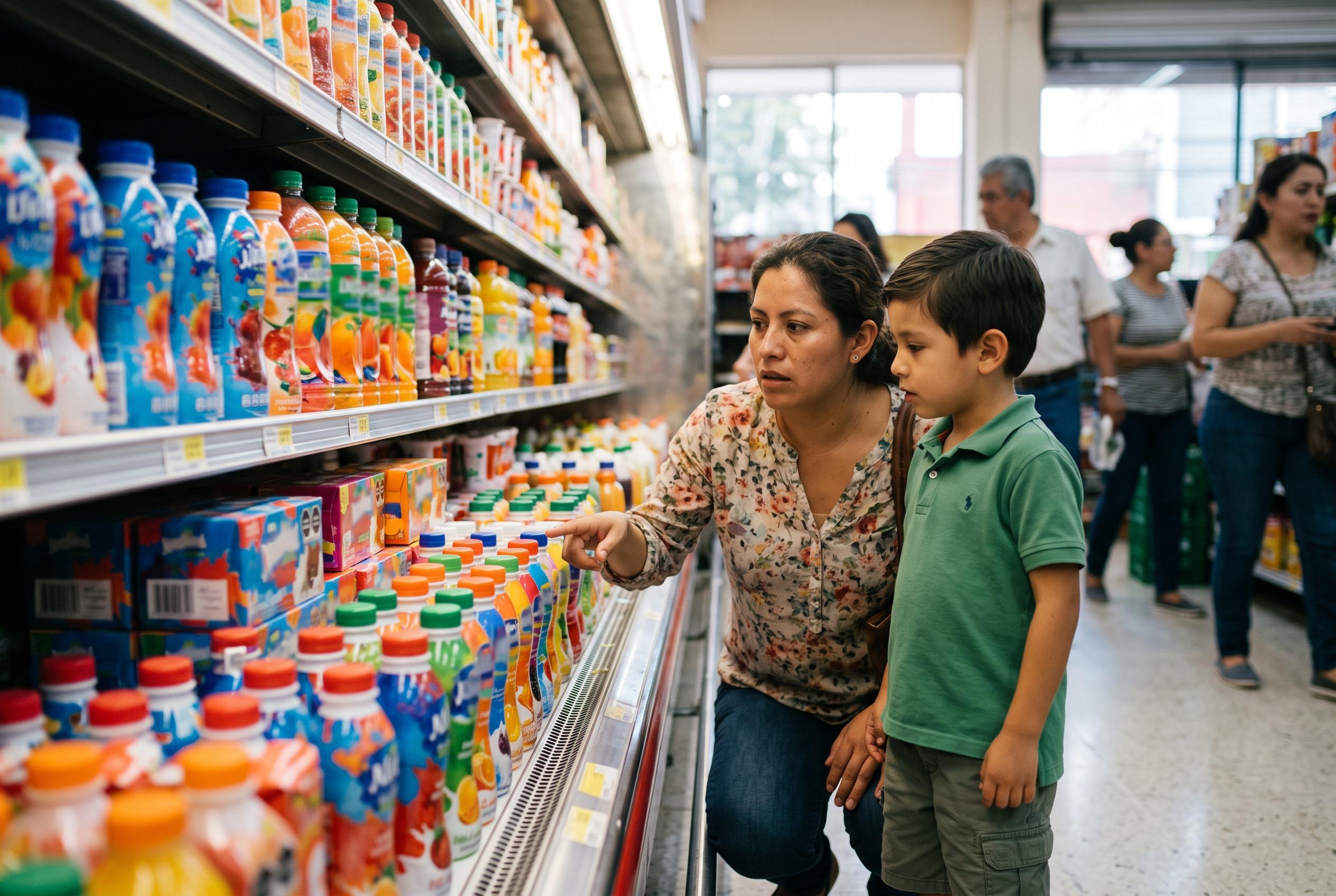

Consumer groups in Mexico have raised alarms over processed drinks and desserts targeted at children, revealing hidden high sugar content and exploiting labelling loopholes, prompting calls for stricter regulation and clearer warnings from authorities.
School lunchboxes are back under scrutiny in Mexico after consumer groups said a new analysis found that several drinks and desserts marketed to children contain so much sugar they can exceed a standard soft drink, yet still escape front-of-pack warning labels. The findings, drawn from a review of 31 products aimed at school-age consumers, have prompted a formal complaint to the Federal Commission for the Protection against Sanitary Risks, known as Cofepris.
According to El Poder del Consumidor and the Alianza por la Salud Alimentaria, the products include juices, nectars, flavoured milks, yoghurts and gelatins sold with child-friendly branding and without the black octagonal warnings required for high levels of sugar or calories. The groups said one 500ml apple drink for children contains 13 teaspoons of sugar, more than the 10 teaspoons they say are found in a Coca-Cola of the same size.
The complaint argues that manufacturers are exploiting gaps in Mexico’s labelling rules, especially NOM-051 and the standard governing juices and nectars, by using fruit concentrates and other ingredients that may not be counted in the same way as added sugar. The organisations also say some products rely on additives such as alulose, inulin and lactase to preserve sweetness while avoiding warning labels, alongside colourings and other ingredients they say are not suitable for routine school consumption.
The organisations have asked Cofepris to inspect the products immediately, verify whether sugar is being declared correctly and order warning labels where required. They also want restrictions on marketing tactics such as cartoons, sports figures and promotional slogans, as well as an official list of ingredients and additives that should not be promoted for everyday use in school settings.
Public health concerns remain central to the case. Citing the 2020-2022 national nutrition survey, the groups say Mexico has 12.7 million children and teenagers with overweight or obesity, and that more than 60% consume more added sugar than the World Health Organisation recommends. The issue is especially sensitive as schools are meant to become cleaner food environments under new rules that took effect in March 2025, with campaigners warning that classrooms should not become an extension of the confectionery aisle.
Disclaimer: This content is for informational purposes only and is not intended to be a substitute for professional medical judgment, advice, diagnosis, or treatment.