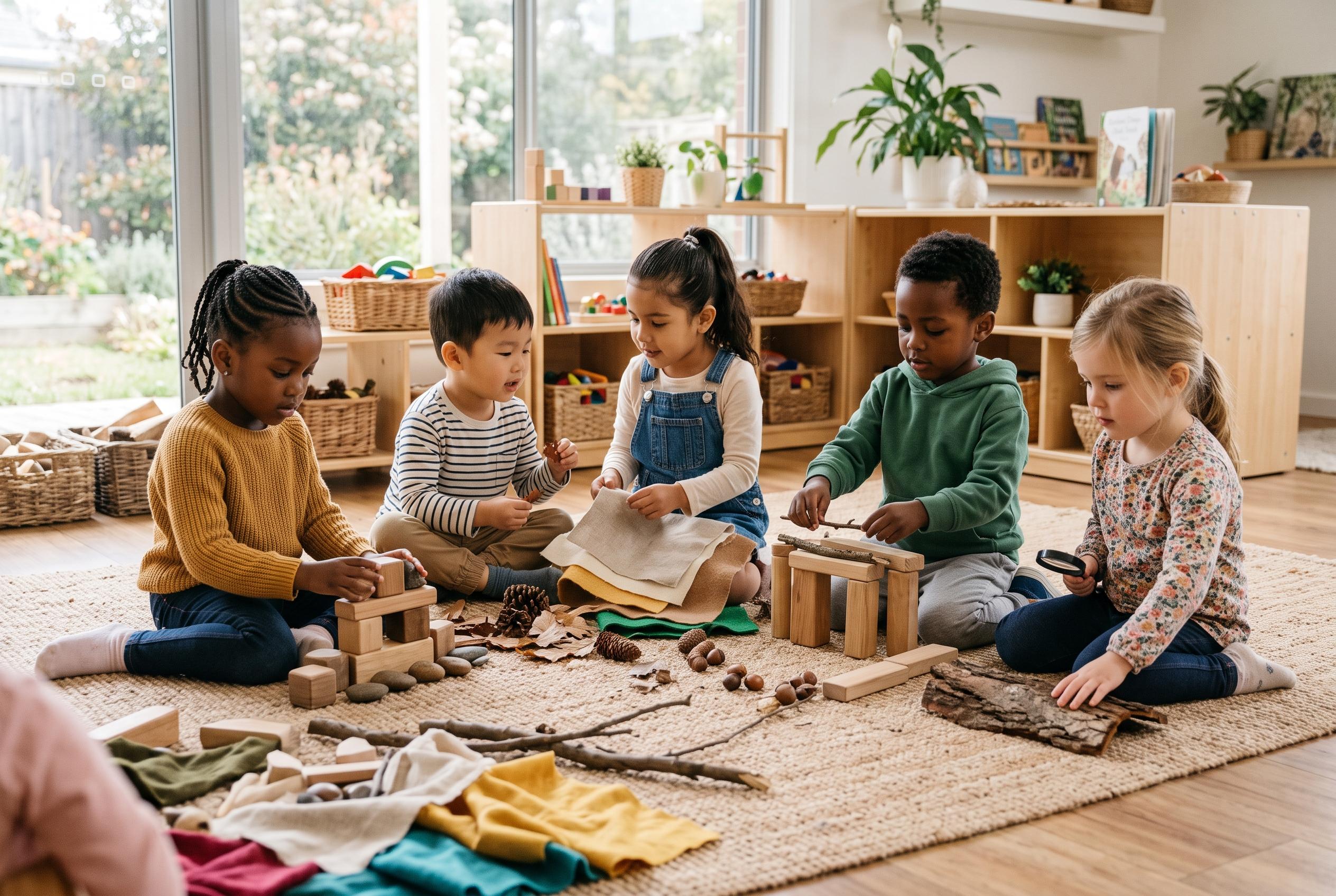

New Zealand’s pioneering early childhood curriculum, Te Whāriki, emphasises holistic development, agency, and community involvement, redefining how children learn through play, exploration, and supportive relationships.
In early childhood, learning is rarely a matter of sitting still and memorising facts. It happens when a child asks questions, plays, experiments, tells stories, solves problems and tries again after something does not work. That philosophy sits at the centre of Te Whāriki, New Zealand’s national early childhood curriculum, whose name comes from a Māori word for a woven mat, a metaphor for learning as a set of connected strands rather than separate subjects.
According to New Zealand’s Ministry of Education, Te Whāriki is designed to guide learning across areas such as science, mathematics, literacy and social development while keeping the child’s overall growth in view. The curriculum rests on four principles: empowerment, holistic development, family and community, and relationships. Together, they reflect the idea that children learn best when they are supported to make choices, recognised as whole people and surrounded by responsive adults.
That approach gives young children space to develop agency. Rather than treating them as passive recipients of instruction, Te Whāriki encourages educators to create environments where children can explore their interests, express ideas and build confidence in their own thinking. A simple choice about what to build, what story to tell or how to solve a problem can become a meaningful lesson in independence.
The curriculum also resists the narrow view that school readiness is mainly academic. Its holistic emphasis recognises that emotional, physical, social and cultural development matter just as much as language or number skills. A child learning to share a toy is also learning about self-regulation, communication and empathy. Te Whāriki treats those moments as central, not incidental, to education.
Families are part of that picture too. The curriculum framework, as set out by the New Zealand Government, places strong emphasis on whānau and community, and on the idea that children’s identities are shaped by the people, language and experiences around them. Teachers and parents bring different knowledge of a child, and when those perspectives are combined, the result is a fuller understanding of how that child learns and belongs.
Te Whāriki is also organised around five strands: wellbeing, belonging, contribution, communication and exploration. Those strands are meant to work together. Children need to feel safe before they can explore. They need a sense of belonging before they can contribute confidently. And they need many ways to communicate, whether through words, movement, art, music or play. The result is a curriculum that sees learning not as a single lesson, but as something woven through everyday life.
Disclaimer: This content is for informational purposes only and is not intended to be a substitute for professional medical judgment, advice, diagnosis, or treatment.