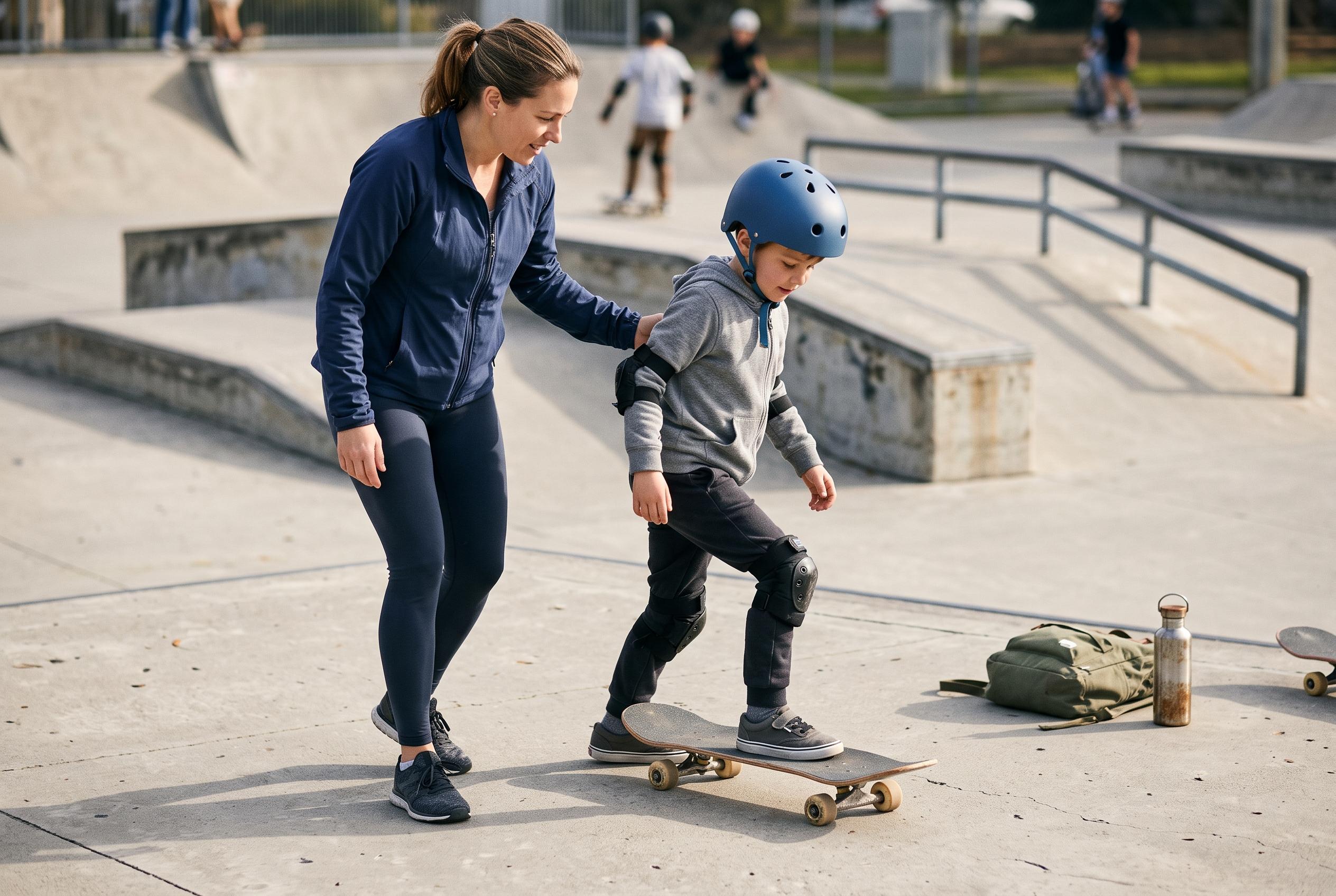

Emerging scientific studies reveal that skateboarding, beyond its cultural image, enhances skills such as attention, balance, and resilience, with promising implications for adults and children with ADHD.
Skateboarders have long been told they will “grow out of it”. But the idea that a skater is merely stuck in a phase does not fit neatly with what researchers are beginning to find.
A viral claim that people who keep skating into adulthood are more intelligent than average is not backed by firm evidence. Even so, the activity itself appears to draw on many skills associated with learning and adaptation: concentration, balance, creativity, spatial awareness, fast decision-making and persistence. In other words, the process of learning a trick, missing it, working out what failed and trying again is not just play; it is problem-solving in motion.
The strongest recent evidence comes from work with children with ADHD. A 2024 study found that after a four-month skateboarding workshop, participants showed better cognitive and motor performance, along with reduced ADHD symptoms. Researchers behind the study said skateboarding may help with attention-focusing skills and postural control, and they recommended longer-term practice to preserve the gains. Similar findings have emerged from studies of inline skating, which reported improvements in executive function, motor ability and, in one trial, cardiovascular fitness.
That broader picture fits with earlier research linking skateboarding and related activities to focus, flow, social connection and mental well-being. Health experts also note that individual sports can be appealing for children with ADHD because they combine movement with personal choice and enjoyment, which can make participation easier to sustain. More recently, researchers have even tested wearable sensors for detecting skateboard tricks and measuring performance, pointing to a growing scientific interest in the sport beyond its cultural image.
So skating does not automatically make anyone smarter. But the science does suggest that the habits it encourages – attention, repetition, adjustment and resilience – are valuable in their own right. Perhaps the better question is not when skateboarders will give it up, but why so many of the skills the sport demands look a lot like the skills people spend years trying to build elsewhere.
Disclaimer: This content is for informational purposes only and is not intended to be a substitute for professional medical judgment, advice, diagnosis, or treatment.