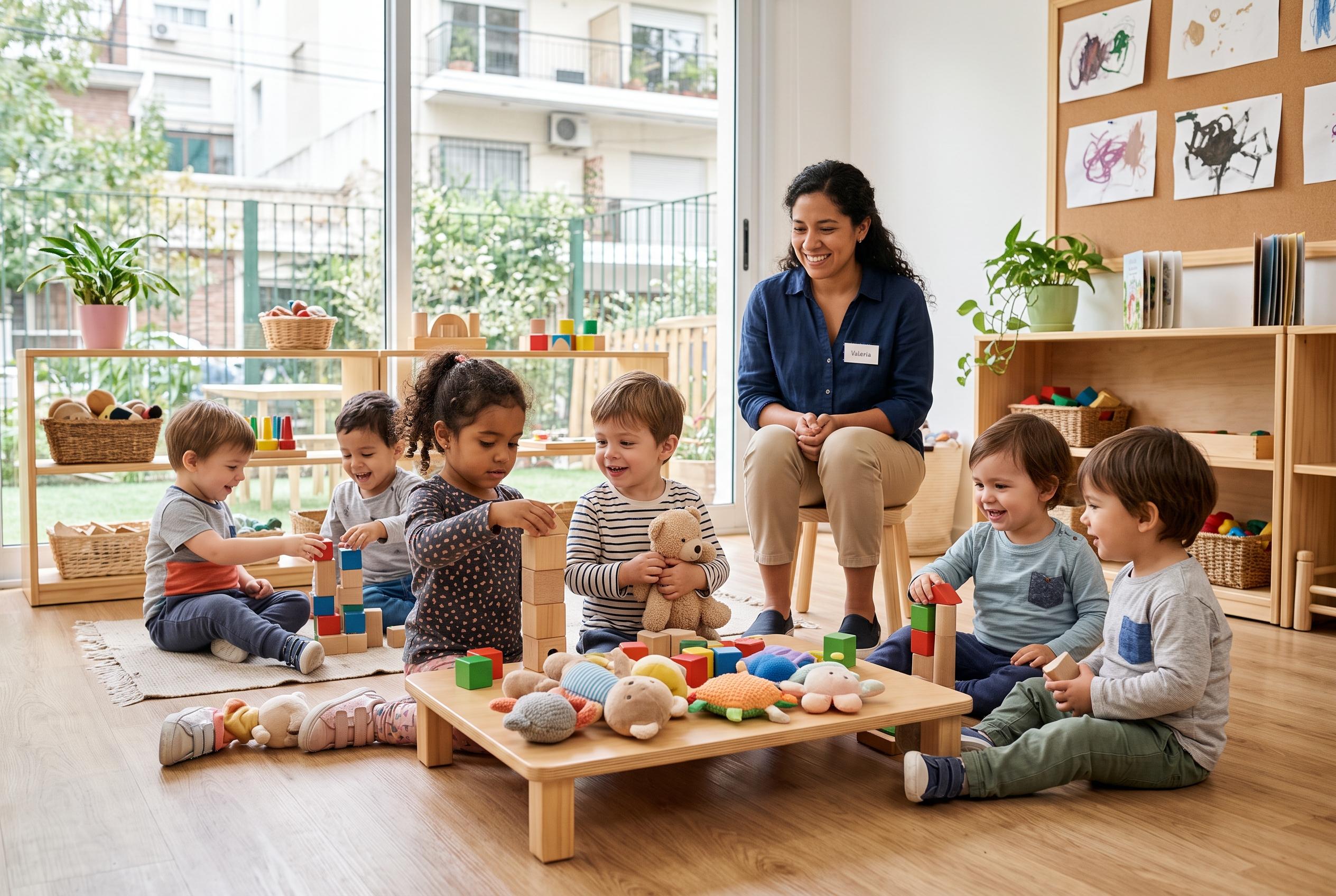

Buenos Aires announces plans to lower compulsory schooling age to three, aiming to increase early access and address regional inequalities in nursery education amid a broader national debate.
Buenos Aires has moved to lower the starting age for compulsory schooling to three, placing the city at the front of a national debate over early education and the state’s duty to provide places for very young children. The measure, approved unanimously by the city legislature and due to take effect from the 2027 school year, reflects a broader push to widen access to the classroom while the country grapples with unequal participation in nursery education.
The change builds on an existing system in which initial education in Argentina covers children from three to five, while attendance is already mandatory from the age of four under national law, according to the federal government. Buenos Aires will now go a step further by guaranteeing state school places for three-year-olds who need them, and by keeping the right to a place from 45 days of age for families that request it.
The policy arrives against a mixed statistical backdrop. Argentinos por la Educación says enrolment for five-year-olds is now almost universal, while coverage for four-year-olds stands at 87% nationwide. For three-year-olds, participation has risen sharply over the past decade, but still reaches only 58% in formal education. The gap is wide between provinces, with Buenos Aires and La Rioja above 70%, while Corrientes, Misiones and Formosa remain below 30%.
Inequality is even sharper when family income is taken into account. According to Argentinos por la Educación, only 41% of three-year-olds from vulnerable households attend school, compared with 71% in middle-income homes. Across the region, Uruguay leads with 93% of children aged three to five in early education, while Argentina stands at 83%, broadly in line with Chile and Peru, according to OECD data and regional comparisons cited in the debate.
Supporters of the Buenos Aires reform argue that demography may make the shift easier to implement. With falling birth rates, the number of children in five-year-old classes has already dropped markedly in recent years, easing pressure on places. In that context, the city hopes it can expand coverage without a major build-out of new infrastructure, while also encouraging a more unified network of nurseries and schools that includes Nucleated, Integral, Common, Maternity and Infant School models.
That administrative reform will matter if the law is to deliver more than a symbolic gain. The city government will have to reorganise existing provision, expand capacity where needed and ensure more flexible attendance options, including double shifts. The bigger question is whether other provinces will follow Buenos Aires’ lead. For now, the city has become the first jurisdiction in the country to guarantee a place for every three-year-old who asks for one, and a test case for whether early schooling can be broadened without deepening existing inequalities.
Disclaimer: This content is for informational purposes only and is not intended to be a substitute for professional medical judgment, advice, diagnosis, or treatment.