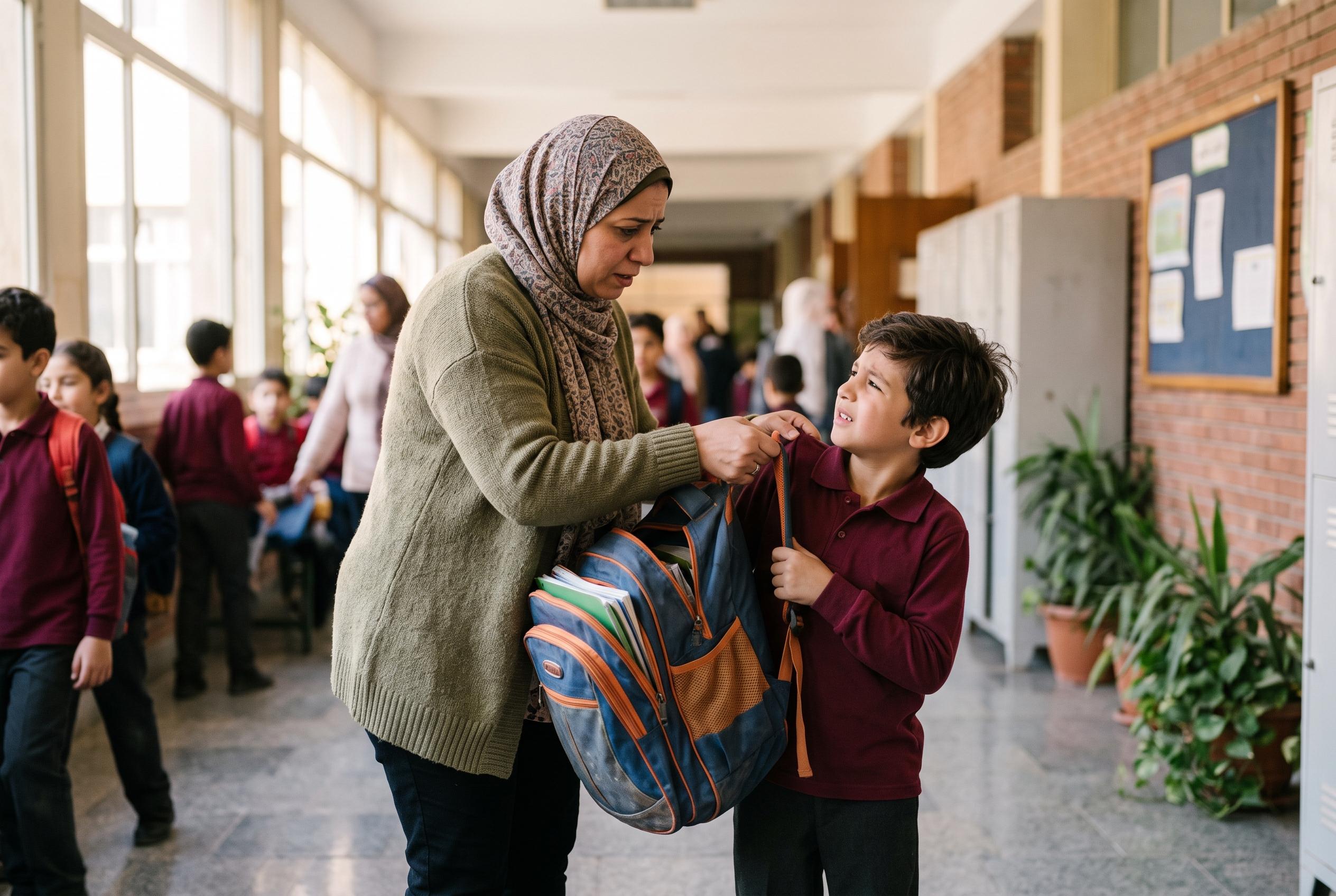

Egypt’s Health and Population Ministry highlights the dangers of heavy and poorly packed schoolbags, urging parents to adopt safer carrying habits amid the back-to-school season.
Egypt’s Health and Population Ministry is urging parents to take a closer look at schoolbags as pupils return to class, warning that poor backpack habits can place unnecessary strain on growing backs and shoulders. The advice is part of the “100 Days of Health” campaign, a state-backed public health drive aimed at improving awareness and everyday prevention.
The ministry said families should start with the bag itself: it should have wide, padded shoulder straps and a padded back, and it should be sized to suit the child rather than simply chosen for appearance. Health guidance from Johns Hopkins Medicine, Cleveland Clinic and HealthyChildren.org broadly matches that advice, stressing that a well-fitted backpack helps spread weight more evenly and reduces pressure on the spine and muscles.
Packing matters as much as design. Heavy items should be placed close to the child’s back, using the bag’s compartments to keep the load balanced, while any unnecessary books or objects should be removed each week. The ministry also said children should wear both shoulder straps, not sling the bag over one shoulder, and keep the bag sitting low enough to rest near the waist.
On weight, the ministry advised that the backpack should not exceed 10% to 20% of the child’s body weight, a range that aligns with recommendations from KidsHealth, while Cleveland Clinic and HealthyChildren.org both suggest a ceiling of about 15%. Orthopaedic specialists have long warned that overly heavy bags and poor carrying habits can contribute to back, neck and shoulder pain, muscle strain and posture problems in children and teenagers.
The ministry said parents can seek further guidance through its health hotlines, 105 and 15335, or through the campaign’s website.
Disclaimer: This content is for informational purposes only and is not intended to be a substitute for professional medical judgment, advice, diagnosis, or treatment.