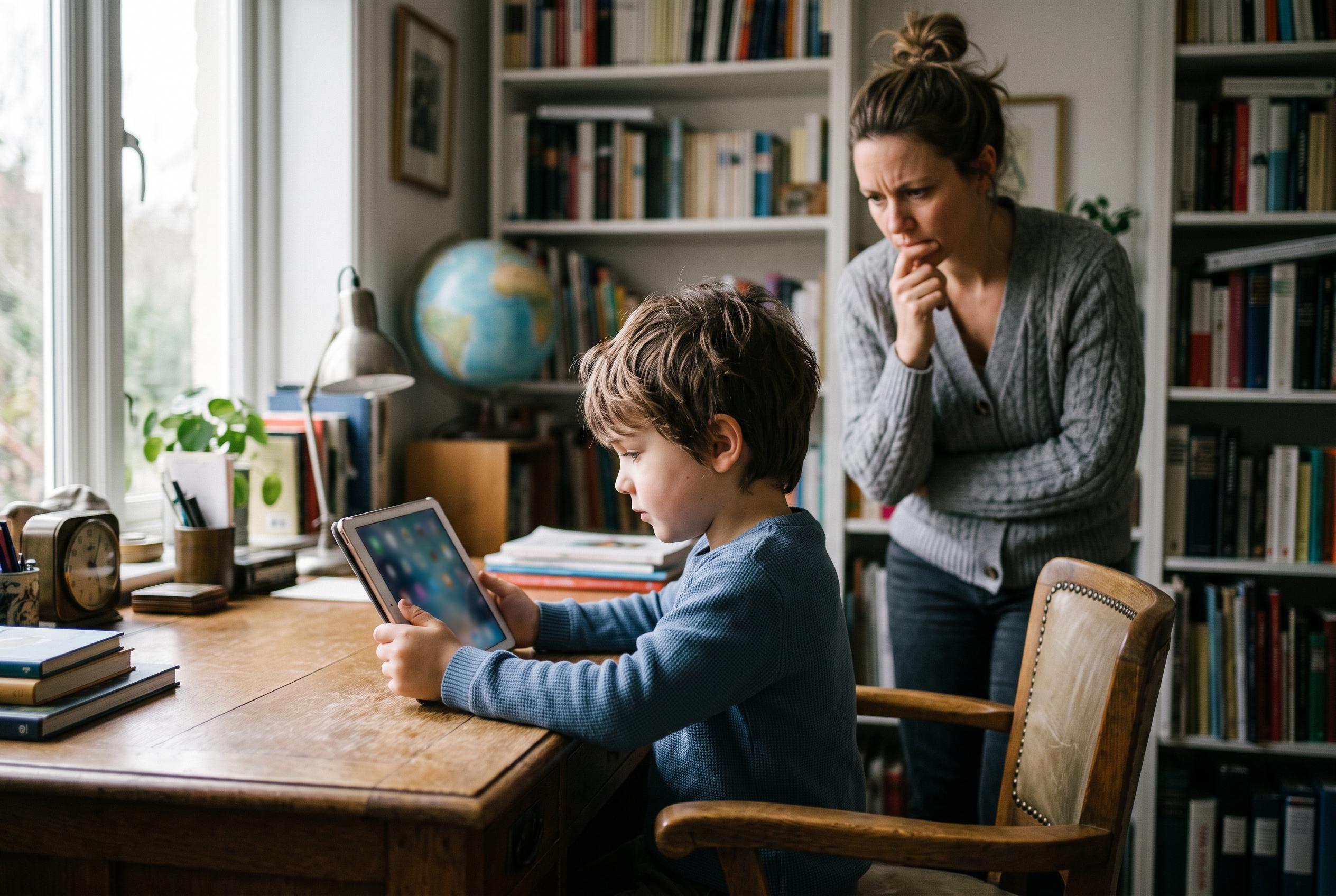

A new study from Singapore reveals that screen time during infancy and early school years is linked to slightly lower academic achievement, emphasising the importance of timing and context in Children’s screen use.
Screens are now part of daily childhood, but new research suggests timing matters. A study of children in Singapore found that heavier viewing in infancy and again around school entry was linked with slightly lower academic performance later on, while the relationship with working memory was weaker and less consistent. The findings add to a broader debate over not whether children use screens, but how much, when and in what setting they do so.
The issue begins early, because the first years of life are a period of fast brain growth. During infancy and toddlerhood, children learn through conversation, touch, movement and back-and-forth interaction, so time spent on a screen can matter less for the device itself than for what it replaces. The American Academy of Pediatrics advises avoiding screen media before 18 months apart from video chatting and limiting high-quality viewing to about an hour a day for children aged two to five. The World Health Organisation gives similar advice, saying less is better and recommending no sedentary screen time for one-year-olds and no more than an hour a day for children aged two to four.
Researchers often point to two possible explanations. One is displacement: screen time can crowd out reading, play, sleep, physical activity and conversation, all of which support learning. The other is that very young children learn less well from two-dimensional images than from real-life interaction. Studies in child development and behavioural nutrition have also found that the type of screen use matters, with passive viewing tending to look less helpful than educational or homework-related use.
In the Singapore cohort, parents reported their children’s screen time at multiple ages from 1 year to 8 years, and psychologists later measured academic skills at age 9 and working memory at 10.5 years. The clearest association was with school performance, especially when screen exposure was reported at 1 year, 1.5 years and 6 years. The links were modest, but they were strongest during infancy and remained relevant near the start of formal schooling.
That nuance matters for parents. The study does not show that every minute in front of a screen is harmful, and it does not mean families should feel guilty about occasional or practical use. It does suggest that screens should not routinely replace the basics that drive healthy development: sleep, play, movement, reading and direct human contact. For younger children especially, the best learning still comes from people, not pixels.
Disclaimer: This content is for informational purposes only and is not intended to be a substitute for professional medical judgment, advice, diagnosis, or treatment.