
Amid rising concerns over excessive training and academic strain, Taiwan accelerates reforms to reshape its youth sports culture and safeguard students’ wellbeing, as new laws and policies aim to curb burnout and promote positive coaching practices.
Taiwan’s planned overhaul of school sport took on fresh urgency on Tuesday, 8 September, when the Children’s Welfare League published a survey suggesting that long training sessions and lost classroom time remain routine for many young athletes. The release came less than a week after the Executive Yuan, on 3 September, approved a draft rewrite of the country’s sports law. In the league’s June survey of 1,904 current junior-high and senior-high sports pupils, 66.6% said they had trained for more than three hours on a weekday and 49.5% said training or competition leave had left them struggling to keep up academically.
The issue reaches well beyond a small elite. The league, citing Sports Administration statistics, said sports classes enrol 6,560 children in primary schools, 19,811 in junior highs and 10,464 in senior highs. Its survey, carried out from 2 to 30 June and covering pupils in sports classes, school teams and clubs, also found strong reasons families still choose that route. More than nine in 10 respondents said sport was enjoyable and made them feel capable, while 91.2% said it helped with entry to the next stage of education or brought extra credit. Public Television Service reported that 43% felt their sporting specialism had, in effect, changed the course of their lives.
The clearest warning sign lay in the hours spent training. Central News Agency reported that 18.6% of respondents said they had been made to continue for more than three hours without a break. Weekend schedules, though not subject to the same formal cap, were scarcely lighter: 60.6% said they had trained for more than three hours in a day and 15.6% said they had done eight hours or more. A separate CNA account said almost six in 10 felt so drained after training that even rest did not properly restore them.
Schoolwork is being squeezed from several directions. According to the league’s figures, 38.7% said training took up most of their study time, 26.2% had been pulled out of ordinary lessons to practise, and 31.6% had taken more than 16 days of official leave in a single term for camps or competition. Hakka Television, in a report carried by Yam News, quoted Huang Yun-hsuan, the league’s research and development director, as arguing that children’s right to education had to remain the first priority because repeated timetable changes, borrowed lessons and public leave left their learning fragmented.
The strain is not only academic. CNA reported that 56.4% of the young athletes had at some point questioned the point of their training, while 46.5% said the enthusiasm they once felt for their sport was ebbing away. Public Television Service said 27.3% were still being required to continue high-intensity training while injured. Read alongside the recovery data, the findings suggest not merely a few extreme incidents but a broader culture in which fatigue and pain are often treated as normal.
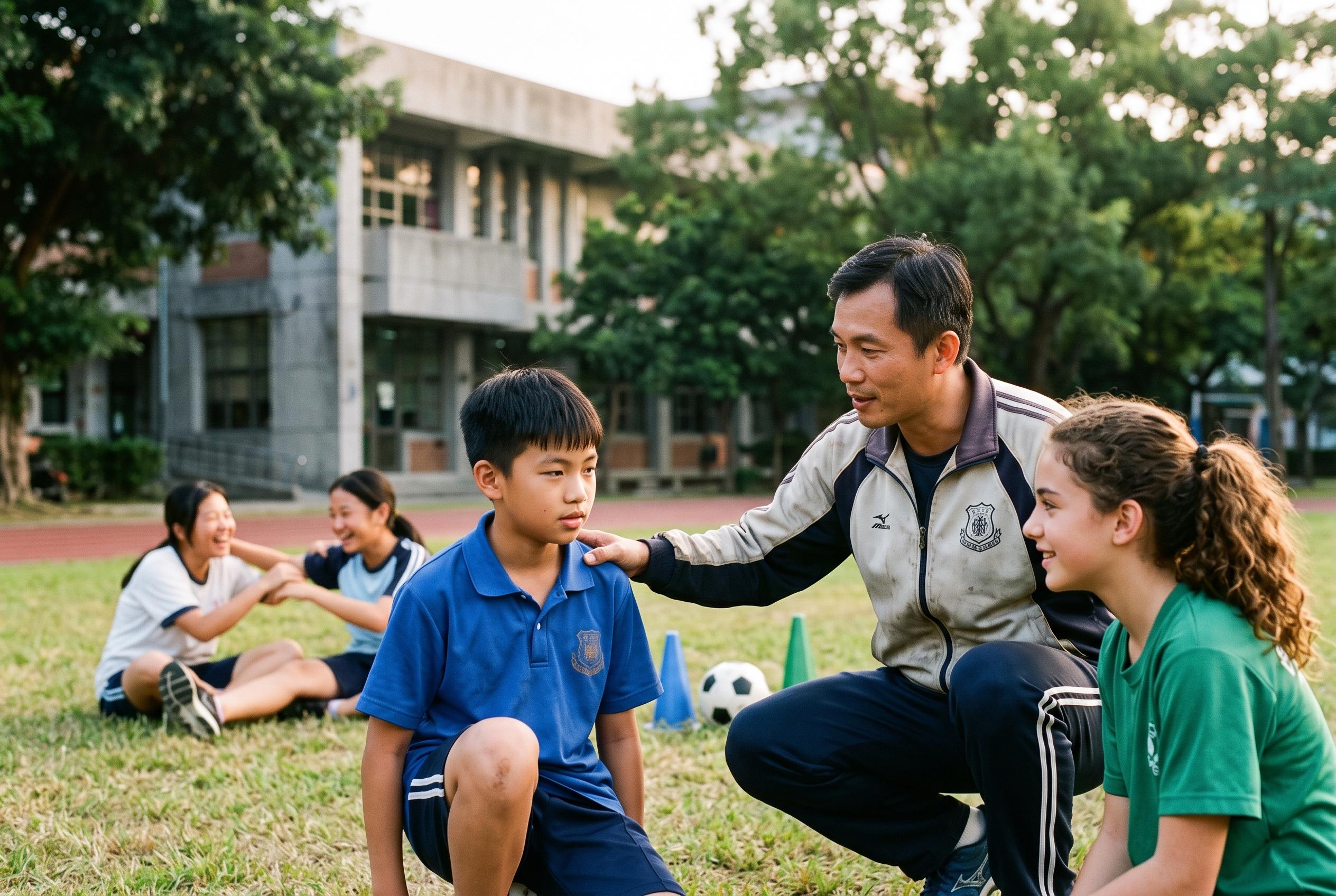
Some groups appear to bear that burden differently. Public Television Service said girls reported greater fatigue and a lower sense of achievement than boys, pointing to the need for coaching and welfare support that better reflects gender differences. United Daily News added that 43.7% of coaches fell into a fully supportive category, but 19.8% were described as high-pressure and authoritarian. Huang said pupils working with more supportive coaches showed higher satisfaction and lower burnout, reinforcing the league’s argument that coaching style is not a secondary matter but a core protection.
The survey also paints a picture of a wider performance culture in which results can outweigh almost everything else. United Daily News said 28.3% of respondents agreed that anything could be sacrificed to win medals, while 22.6% thought coaches should not be questioned. The same report said 44.9% of parents had taken to directing training like a coach and 40.9% said they were criticised at home when performances were poor. CNA’s lifestyle coverage argued that once results become the only accepted measure of success, rest, schoolwork, health and even self-worth are easily pushed aside.
Taekwondo athlete Lo Chia-ling echoed that pressure at the league’s press conference. Public Television Service reported that Lo said balancing study with training was exceptionally difficult, recalling that afternoons were largely taken up by specialist practice and that repeated official leave for competition made it hard to keep pace academically. She also said many peers had heard blunt messages from home telling them to change direction if results did not come, whereas she had been fortunate to have support from both family and school.
The political argument now is over what reform should look like in practice. The Cabinet-backed bill would stop the creation of new primary-school sports classes and shift existing ones towards club-based and community-based models, with a joint transformation plan due by the end of 2026 and a new division of school-sport responsibilities from 1 January 2027. The league says that is the moment to enforce training-hour and leave rules, improve career guidance and train coaches in positive discipline. But the Chinese Taipei Full-time Sports Coach Association has cautioned, in comments reported by Hakka Television, that some disciplines still require early training and will need proper follow-up measures if Taiwan is not to create gaps in its talent pipeline.
Disclaimer: This content is for informational purposes only and is not intended to be a substitute for professional medical judgment, advice, diagnosis, or treatment.