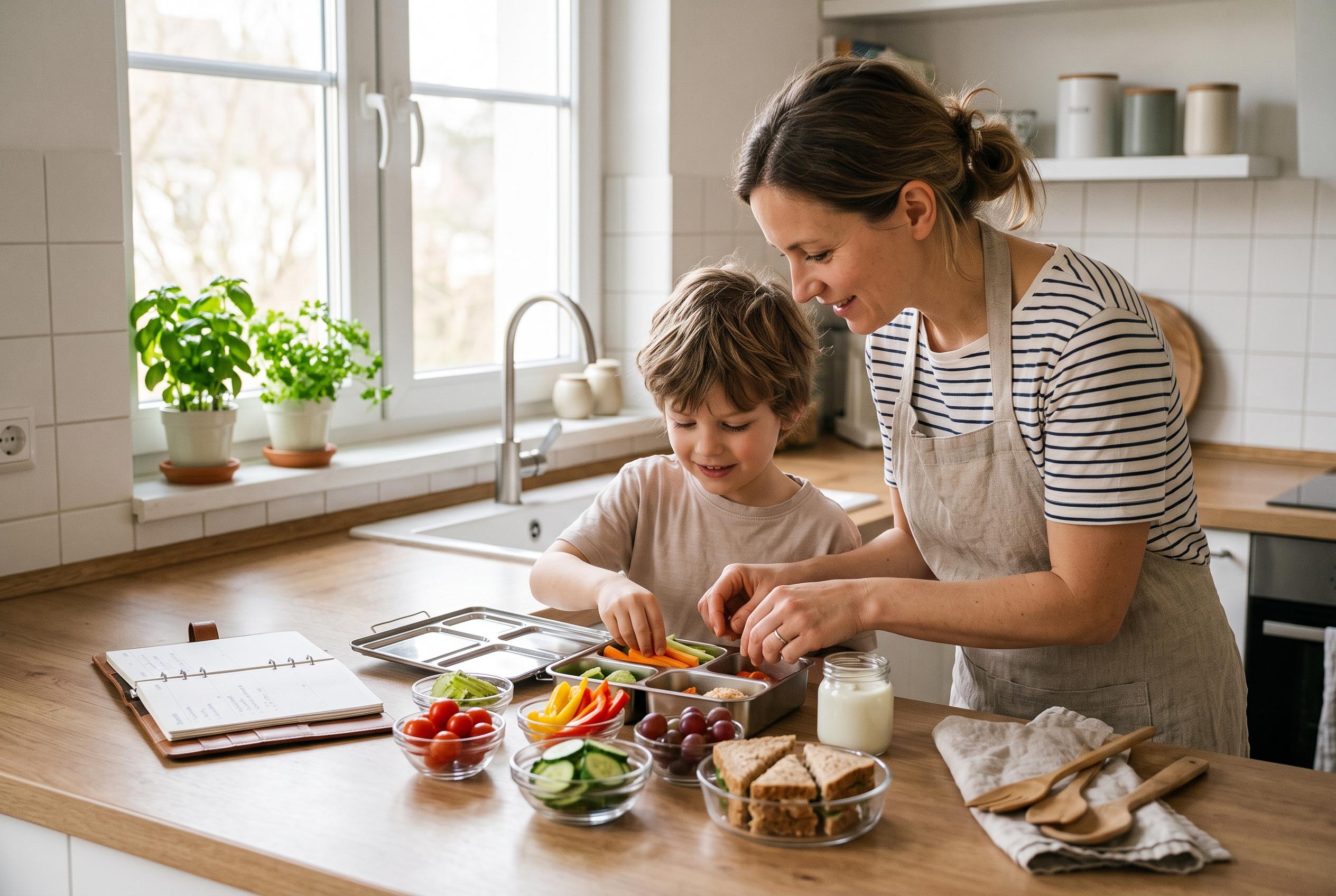

Aldi Ireland’s latest campaign emphasises planning, routine, and usable, child-approved meals over simple cost-cutting, reflecting a broader shift in parent preferences for reliable, stress-free school lunches.
By the end of August, Aldi’s back-to-school message had broadened well beyond the idea of a single bargain lunchbox. Across Irish coverage, the retailer’s pitch was built around a system for getting through the school week: prep at the weekend, keep a shortlist of food children will actually eat, and store homemade snacks in the freezer so the morning rush is less chaotic.
That is a notably wider approach than the price-led version promoted in a GetSurrey article, which set out one sample Aldi lunch at £8.15 for five days, or £1.63 a day, using items such as cheddar, breadsticks or pitta, apples, berries, yoghurt, cucumber and tomatoes. In Ireland, however, the emphasis was less on copying one exact box and more on creating a repeatable routine that parents could adapt around whatever their children like and whatever is on offer in store.
The centre of that campaign was Lou Robbie, the Galway-based chef and food creator who teamed up with Aldi Ireland in late August 2026. Robbie’s advice, reported by RTÉ, the Irish Examiner, Checkout and Irish Country Magazine, was organised into five steps: a “Sunday reset”; a list of foods children already enjoy; giving children a say in what goes into the lunchbox; shopping “backwards” from the lunches planned for the week; and freezing homemade snacks so they can be pulled out as needed.
Robbie told Checkout that lunchboxes are one of the subjects followers ask her about most, especially when parents are “juggling busy mornings”. Her core argument was that planning matters more than perfection. As she put it to RTÉ, “Over the years, I’ve found that the answer is really in the preparation.” She also advised parents to keep a running list of favourites on the fridge, including sandwiches, wraps, pasta salads, hot food, cheese and yoghurt, fruit, vegetables and homemade snacks. Letting children choose from that list, Irish Country Magazine noted, is meant to reduce the chances of an untouched lunchbox coming home at the end of the day.
The make-ahead recipe used to illustrate that approach was Robbie’s ABC muffins, named for apple, banana and carrot. RTÉ said they can be kept in an airtight container for up to three days or frozen for as long as three months and defrosted overnight. The Irish Examiner published the recipe in full, listing 200g of self-raising flour, 50g of instant oats, 80g of caster sugar, 100g of butter, 100ml of milk and two eggs, with the grated fruit and carrot folded through before baking at 180C fan for 20 to 25 minutes.
Parent feedback from an earlier Aldi lunch-range trial suggests that this kind of planning may matter as much as the shelf price. Writing on MummyPages in September 2024, one participant said: “We were delighted to get the chance to try out the lunch range from Aldi,” adding that it made school mornings easier. The combinations they described were practical rather than performative: wholemeal sub rolls with luncheon roll, carrot batons with red pepper hummus, bagels, mini raisins, yoghurt, smoothies, fruit pots and mini rice cakes. Another parent called the range “super affordable” and said the food was fresh and good quality, while also noting that the bagel and wholemeal sub-roll combinations were particular hits.
That feedback also helps explain why Aldi returns to the same theme each school season. In August 2024, Checkout reported that Aldi Ireland tied its back-to-school push to “Super 6” produce deals and a family recipe from value ambassador Caz Mooney, a budgeting mum of three. Mooney’s quick chicken stroganoff used discounted staples including chicken fillets at €2.99, down from €5.59, and the retailer said some fruit and vegetable lines in the promotion were cut by more than 50%. The latest lunchbox campaign looks like a continuation of that strategy: link value messaging to recipes, then wrap both in advice about saving time.
What emerges from the wider reporting is a clearer picture than the simple £1.63 calculation alone. Aldi is still selling thrift, but it is also selling predictability: fewer decisions at 7am, fewer untouched lunches after school, and more use of foods that can be bought once and repeated through the week. Whether parents choose berries and breadsticks, frozen muffins, or bagels with hummus and fruit, the strongest message running through the coverage is that the cheapest lunchbox is not necessarily the one with the lowest sticker price, but the one children will reliably eat.
Disclaimer: This content is for informational purposes only and is not intended to be a substitute for professional medical judgment, advice, diagnosis, or treatment.