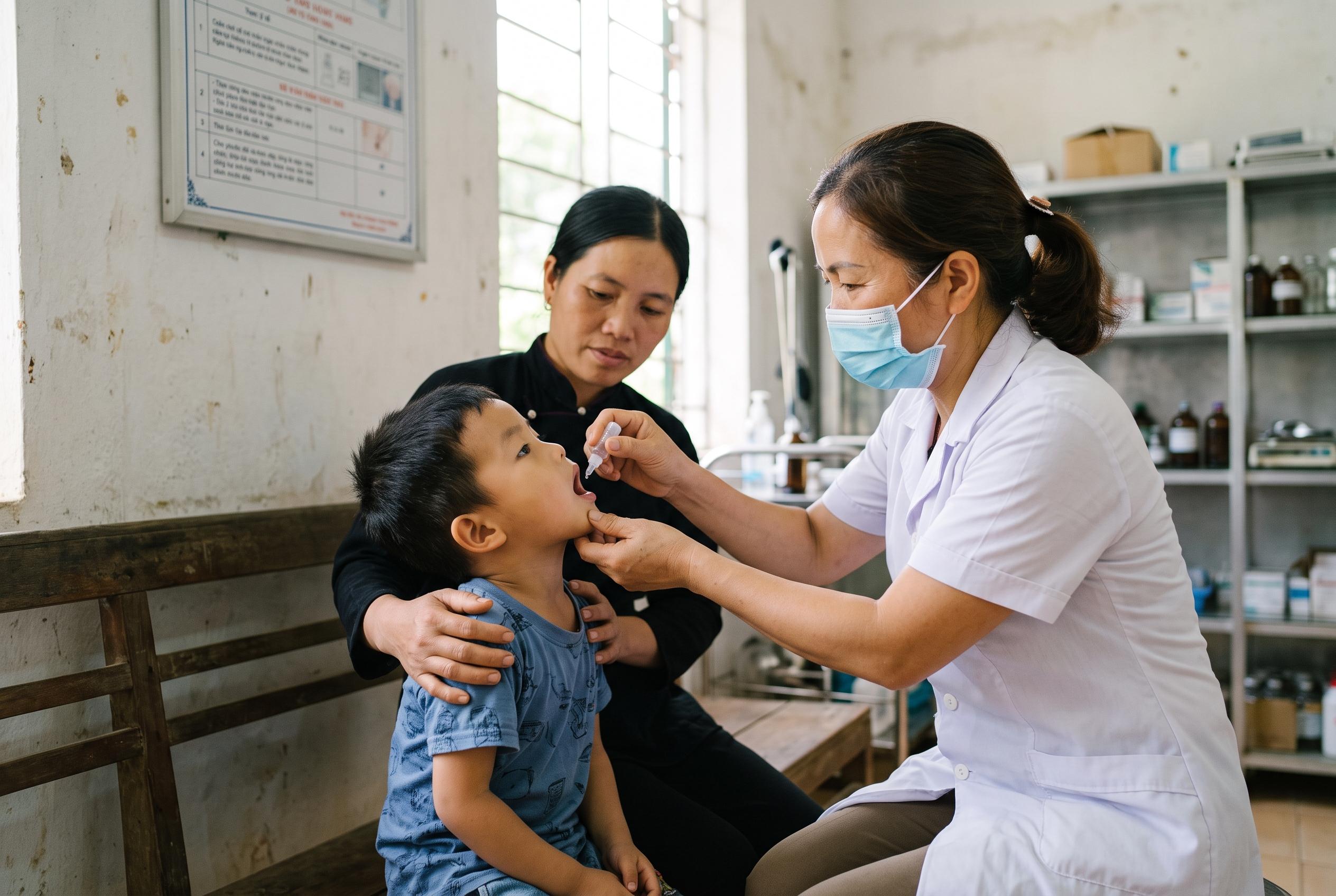

Vietnam has intensified its polio surveillance and vaccination efforts amid regional outbreaks and warnings from the WHO, highlighting the threat of cross-border transmission and the need for renewed vigilance in remote and high-risk communities.
Vietnam has widened its polio precautions, telling provincial authorities, specialist institutes and ministry-run hospitals to step up vaccination and active surveillance, with particular attention to communes along the Laos border, minority communities, remote areas and places with highly mobile populations. The renewed push comes after Laos moved from emergency warnings to a nationwide vaccination campaign on 3-12 March 2026 aimed at more than 800,000 children, showing that the threat identified late last year has not simply faded away. (vietnamplus.vn)
The caution is rooted in an unusually stark assessment from the World Health Organization. At a nationwide teleconference in Hanoi on 12 December 2025, WHO told Vietnamese officials that “The risk of poliovirus entering Viet Nam is very high and imminent,” while health authorities said the danger was sharpened by heavy movement across the Laos frontier and immunity gaps left by missed vaccinations in recent years, especially during the COVID-19 period. Officials also pointed to measles outbreaks in 2024 and 2025 as a warning of how quickly infectious diseases can cross borders when routine protection slips. (en.baochinhphu.vn)
The Laos outbreak itself was small in case numbers but troubling in the way it was detected. Thai PBS reported that Laos notified WHO on 8 October 2025 after vaccine-derived poliovirus type 1 was found in two healthy children in Xonbuli district, Savannakhet Province, following an earlier acute flaccid paralysis case reported on 26 August 2025. Investigators collected 28 stool samples in three villages and Japan’s National Institute of Infectious Diseases confirmed the virus in two girls aged one year and three years and five months, both living about 2km from the home of the paralysed child. Tuoi Tre News said Savannakhet is roughly 100km from Vietnam’s border. There is, however, some disagreement over the formal outbreak date: Vietnam News and VietnamPlus said Laos declared the outbreak on 7 October 2025, while the newer Vietnamese ministry note referred to 17 October 2025. (thaipbs.or.th)
Vietnam’s new instructions are correspondingly practical. Local health departments have been told to meet or exceed the targets in the Health Ministry’s Plan 447, issued on 18 March 2026, and to keep routine bOPV and IPV coverage for children under one at 95 per cent or more at commune level. Provinces are also being ordered to review records and carry out catch-up and mop-up doses, while border areas are expected to tailor risk messages to local languages and customs, enlist village health workers, schools and local organisations, and work directly with Lao counterparts on information-sharing and outbreak control. By December 2025, officials said risk assessments had been completed in all 34 localities nationwide. (vietnamplus.vn)
The directive does not stop at vaccination teams. Regional hygiene, epidemiology and Pasteur institutes have been instructed to guide local Centres for Disease Control in active surveillance for acute flaccid paralysis in clinics and hospitals, especially in higher-risk areas. Ministry-run hospitals, meanwhile, have been told to check that they have enough staff, medicines, equipment and supplies to isolate, resuscitate and treat suspected cases quickly, while local health services are being pressed to train front-line departments in diagnosis, infection prevention and coordination with surveillance teams. Government News also said specialist institutes were tasked with drawing up technical guidance and response plans matched to different levels of outbreak risk. (vietnamplus.vn)
In Nghệ An, one of Vietnam’s key border provinces, the response has already taken on a more granular form. Bao Nghe An reported that local authorities were told to screen incoming travellers under 15 from high-risk areas, check their vaccination histories and arrange supplementary doses where needed. The paper said more than half a million people cross the Vietnam-Laos border each year, a reminder of how easily a virus can hitch a ride if immunity is patchy. It also set the current alarm against a longer history: major polio outbreaks struck Vietnam between 1957 and 1959, the last recorded case was in 1997, and the country was certified polio-free in 2000. In Nghệ An itself, routine coverage slipped below target during 2020-2023; a later oral polio campaign for children aged one to five reached 98.6 per cent, but an IPV catch-up drive managed 74.8 per cent. Chu Trong Trang, director of the provincial CDC, said services would keep pressing on, “ensuring that all required doses of polio vaccine are administered.” (baonghean.vn)
Vietnam’s concern is also shaped by a wider regional pattern rather than Laos alone. Speaking at the Hanoi meeting, WHO expert Vu Huong said recent outbreaks in Indonesia, Papua New Guinea and Laos were linked to genetically mutated poliovirus strains. Tuoi Tre News reported that Indonesia recorded six cases between 2022 and 2024, leading to five supplementary immunisation campaigns that reached more than 32 million children, while Papua New Guinea first detected the virus through environmental surveillance in April 2025 and later recorded 72 cases. The same report said Vietnam’s own 2024 coverage had fallen to 73 per cent for oral polio vaccine and 86 per cent for injectable vaccine, both below the 95 per cent level normally sought for community protection. Pham Quang Thai of the National Institute of Hygiene and Epidemiology said local authorities needed to restore coverage urgently, especially in high-risk areas. (news.tuoitre.vn)
That helps explain why Hanoi is still tightening its instructions in September 2026. In its 4 March 2026 statement, WHO’s International Health Regulations emergency committee still listed Lao People’s Democratic Republic among states infected with cVDPV1 with potential risk for international spread, giving 3 September 2025 as the date of its most recent detection. On 9 March 2026, the US Centers for Disease Control and Prevention added Laos to its global Level 2 polio travel notice, advising travellers to make sure they were up to date with vaccination. For Vietnam, which has spent more than two decades protecting its polio-free status, the message is that the danger lies not in a large outbreak at home today, but in the combination of porous borders, uneven coverage and a virus that only needs one opening. (who.int)
Disclaimer: This content is for informational purposes only and is not intended to be a substitute for professional medical judgment, advice, diagnosis, or treatment.