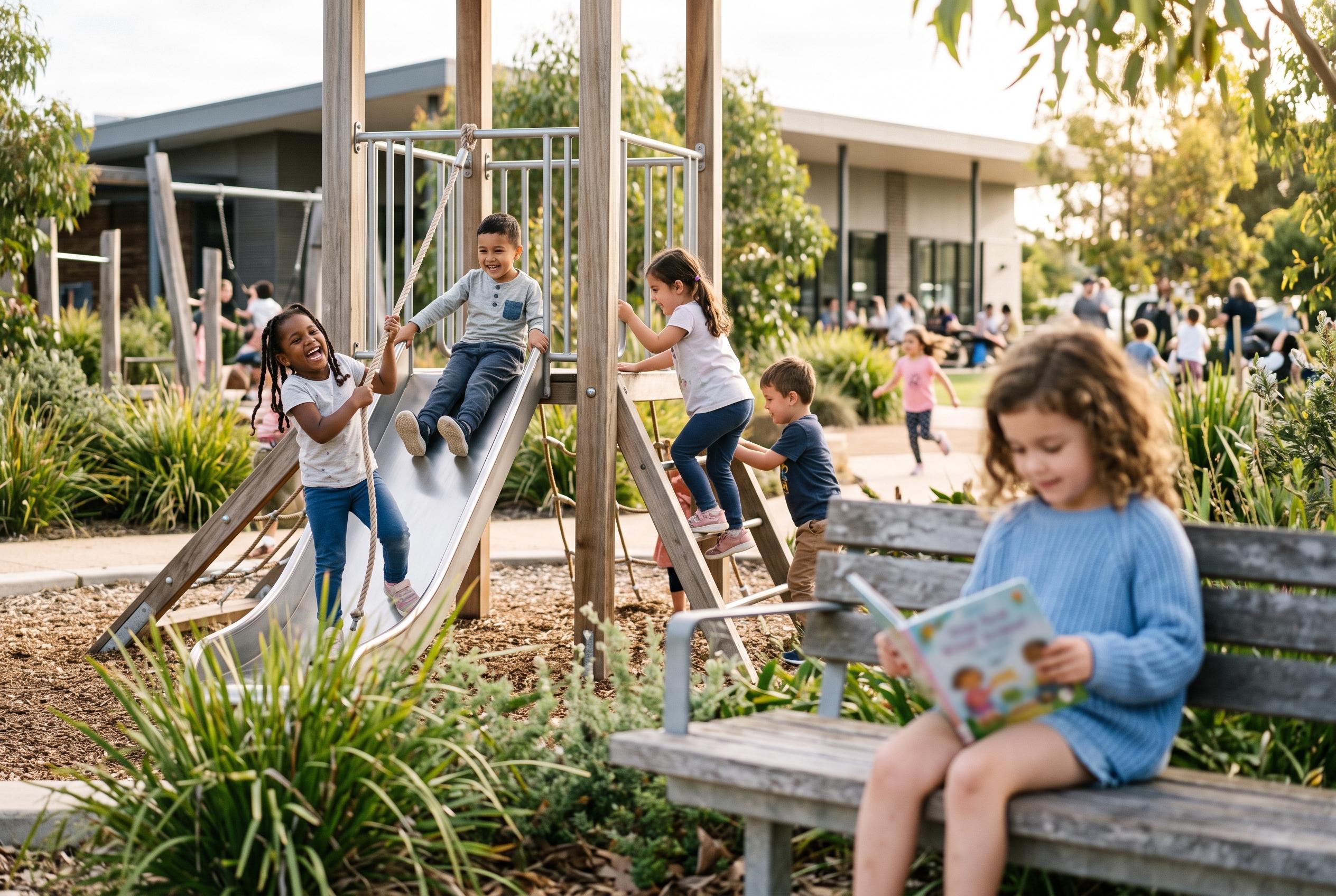

A new study from the University of Georgia highlights that children who enjoy alone time may not be experiencing loneliness, provided they still feel connected to their peer groups. The findings challenge common assumptions about social withdrawal in childhood.
A child spending break time alone may not need rescuing at all. Research from the University of Georgia, first published online on 24 June and carried in the 1 September 2026 issue of The Elementary School Journal, suggests that solitary play is not the same as loneliness for many children. In the paper, “Belief in the Importance of Belonging Mitigates the Negative Effects of Unsociable Withdrawal”, the researchers argue that what matters most is not whether a pupil joins every game, but whether they still feel part of the group around them.
The study looked at 473 fourth- and fifth-grade pupils at several elementary schools in Georgia, an age range Euronews identified as roughly nine to eleven. Rather than relying only on adults’ impressions, the researchers asked children to identify classmates who often kept to themselves even though they got on well with others. The pupils were also asked how important it was to them to fit in, and how satisfied they were with both close friendships and their standing in the wider class. That allowed the team to separate chosen solitude from social exclusion more carefully than a quick glance across a playground would.
What emerged was a split between two very different kinds of child who might both appear quiet at recess. One group preferred their own company but still cared about belonging. According to the University of Georgia’s account of the findings, those children generally remained happy with both their one-to-one friendships and their broader peer relationships. Coverage by Medimap drew the same conclusion in plainer terms: the more useful question for parents is how the child feels, not how their break time looks from the sidelines. In other words, a child can turn down a game today without assuming they have lost their place tomorrow.
The bleaker pattern appeared among children who said fitting in did not matter much to them. News reports based on the study said these pupils were more likely to be unhappy with their relationships at both friendship and class level, and the researchers suspect a self-reinforcing cycle may be at work: children refuse invitations, classmates stop asking, and isolation deepens. Michele Lease, a co-author and professor of educational psychology, summed up the concern in comments reported by UGA Today: “Turning down invitations, like avoiding exercise, leads to poorer outcomes.”
That distinction helps explain another of the study’s more nuanced findings. Children whom classmates saw as withdrawn were not necessarily devoid of friends. Newswise reported that many still managed solid individual friendships even while feeling dissatisfied with their place in the classroom as a whole. Their frustration showed up in small but telling ways: sitting alone at lunch, or not being chosen first for reading groups. The problem, then, is not simply whether a child has any friends at all, but whether they can navigate the social life of a group, which becomes increasingly important as school routines and peer circles harden.
The age of the children in the study also matters. Rachael Pfanz, the paper’s corresponding author, said fourth and fifth grade is a point at which peer groups are more settled and children have enough social experience to spot the difference between someone who is alone by choice and someone who is being edged out. Medimap’s parent-facing write-up made the same point directly, saying children by grade four can distinguish voluntary solitude from exclusion with some accuracy. That makes classmates’ observations more useful, but it also suggests habits of saying yes or no to invitations may start to carry longer social consequences around this stage.
For parents and teachers, the researchers’ advice was not to force every quiet child into the loudest activity on offer. Euronews highlighted Pfanz’s warning: “Maybe don’t ask them to go join the big soccer game right away on the playground.” Smaller groups, familiar peers and occasional invitations may be a better fit, especially for children who like time alone but still want to remain connected. The broader lesson from the study is less alarmist than many adults might expect: playing alone is not automatically a red flag. It becomes a problem when the child feels shut out, stops valuing belonging, or finds that invitations have dried up altogether.
Disclaimer: This content is for informational purposes only and is not intended to be a substitute for professional medical judgment, advice, diagnosis, or treatment.