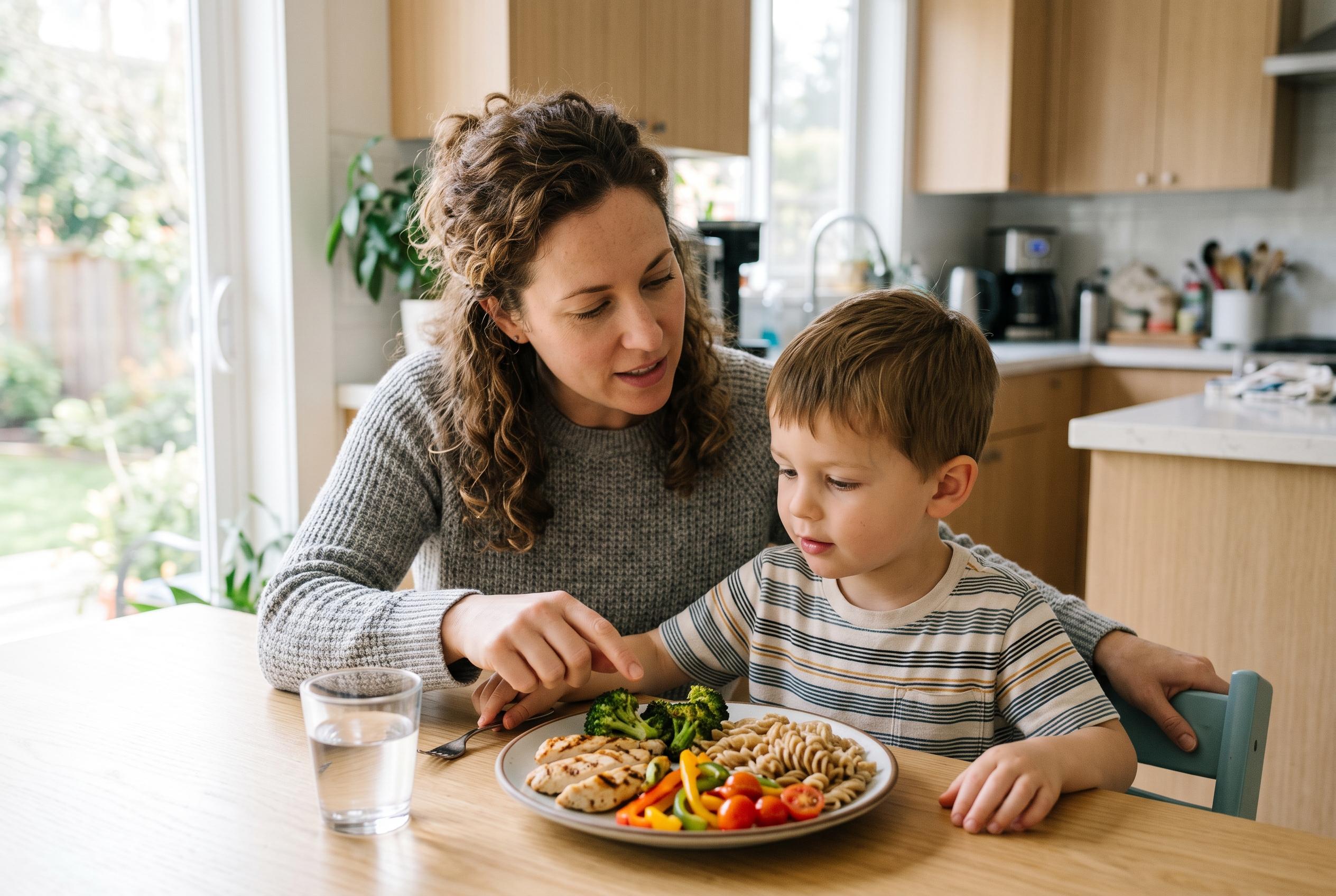

International health authorities emphasise that dietary supplements are not a quick fix for faltering growth in children. Instead, focus on routine, balanced eating, and expert assessment to address underlying issues and promote healthy development.
Parents worried that a child is eating poorly should not assume a bottle of supplements will solve the problem. Egypt’s National Nutrition Institute has warned that dietary supplements are not appetite stimulants and should be used for children with malnutrition or a confirmed nutrient deficiency, following an assessment of the child’s condition and needs. That position is broadly in line with guidance from the American Academy of Pediatrics and the Academy of Nutrition and Dietetics, both of which say the first step is to work out why a child is eating less, not to reach straight for vitamins or tonics. (vetogate.com)
The paediatrics body, in guidance updated on 16 March 2026 for children with faltering weight, says clinicians should begin by comparing what a child is actually eating and drinking with age- and sex-based energy requirements. If intake is genuinely low, it recommends trying food-based measures first, such as fortifying baby cereal with infant formula rather than water, or adding calorie-dense foods including oil, avocado, cream, butter and peanut butter for older infants and children. It also advises families to keep a food journal, and says oral nutritional supplements may be useful in selected cases, where they can provide 25-50% of a child’s estimated energy and protein needs. (aap.org)
That is a much narrower role than many anxious parents may imagine. The Academy of Nutrition and Dietetics says children who eat a balanced diet “usually do not need a vitamin or mineral supplement”. It identifies certain exceptions, including some children on vegetarian or vegan diets who may need vitamin B12, children with coeliac disease, and those whose poor appetite, medicines or chronic conditions interfere with normal intake. The group also warns that excess doses can be toxic, causing symptoms such as nausea, headaches or diarrhoea, and notes that thousands of people end up in emergency departments every year after taking supplements, including children who swallowed them without supervision. It adds that supplement bottles are not required to have child-proof lids. (eatright.org)
Behaviour around food, rather than a hidden vitamin problem, is another recurring theme in the guidance. The American Academy of Pediatrics says too much fluid, including juice, milk and even water, can blunt appetite for solid food, and it tells families to build structured mealtimes instead. Its advice is to model good eating habits and avoid “grazing, force feeding, or catering to limited food preferences”. It also notes that some children become selective because they are asserting independence, and that calmly offering the same foods again in different forms can improve acceptance over time. (aap.org)
Guidance from Saudi Arabia’s Ministry of Health adds practical detail on what that structure can look like for younger children. It says mashed foods can begin from six months, finger foods are suitable for many babies at eight months, and by 12 months most children can move towards the same foods eaten by the rest of the family, provided they are nutrient-dense and safe. The ministry advises two to three meals a day for breastfed infants aged six to eight months, rising to three to four meals a day at nine to 11 months and again at 12 to 24 months, with one or two nutritious snacks if desired. It also stresses the value of animal foods, fish, dairy, legumes and fats, while warning that sugary foods and drinks can reduce appetite for healthier options and that tea and coffee can interfere with iron absorption. It adds that the effects of malnutrition before the age of two can be very difficult to reverse. (moh.gov.sa)
The warnings about screens at the table are also backed by wider child-development advice. Israel’s Ministry of Health, in guidance published on 2 August 2026, says background screens “can interfere with children’s ability to play continuously” and may affect attention and language development, even when children are not actively watching. It says adults also speak less to children when a television or other device is on nearby, and recommends parents “turn off screens when children are present in the room”. The same guidance says children under two should avoid screen exposure altogether, including background screens, while those aged two to five should have no more than an hour a day across all screens combined. (me.health.gov.il)
A report by Jordan’s Alghad adds another risk from allowing devices during meals: overeating rather than undereating. Citing research from the University of Minho in Portugal, it said 735 primary-school children aged six to 10 were studied, with parents asked whether screens were allowed at breakfast, lunch or dinner. After accounting for factors including age and socio-economic status, children who were permitted screens during meals were 15% more likely to have excess weight. Alghad, quoting the Telegraph’s account of the research, said the investigators described the habit as “dangerous” because distraction can stop children recognising when they are full. (alghad.com)
Taken together, the message is less about finding a quick fix and more about restoring routine. If a child is growing well and eating a varied diet, supplements are unlikely to be the answer. If there are signs of faltering growth, a restricted diet, suspected deficiency or an underlying medical problem, the guidance points towards a clinician or dietitian assessing what is really going on. For parents dealing with food refusal alone, the more durable advice is simpler: regular meals, calmer tables, fewer distractions and food used to build trust rather than conflict. (vetogate.com)
Disclaimer: This content is for informational purposes only and is not intended to be a substitute for professional medical judgment, advice, diagnosis, or treatment.