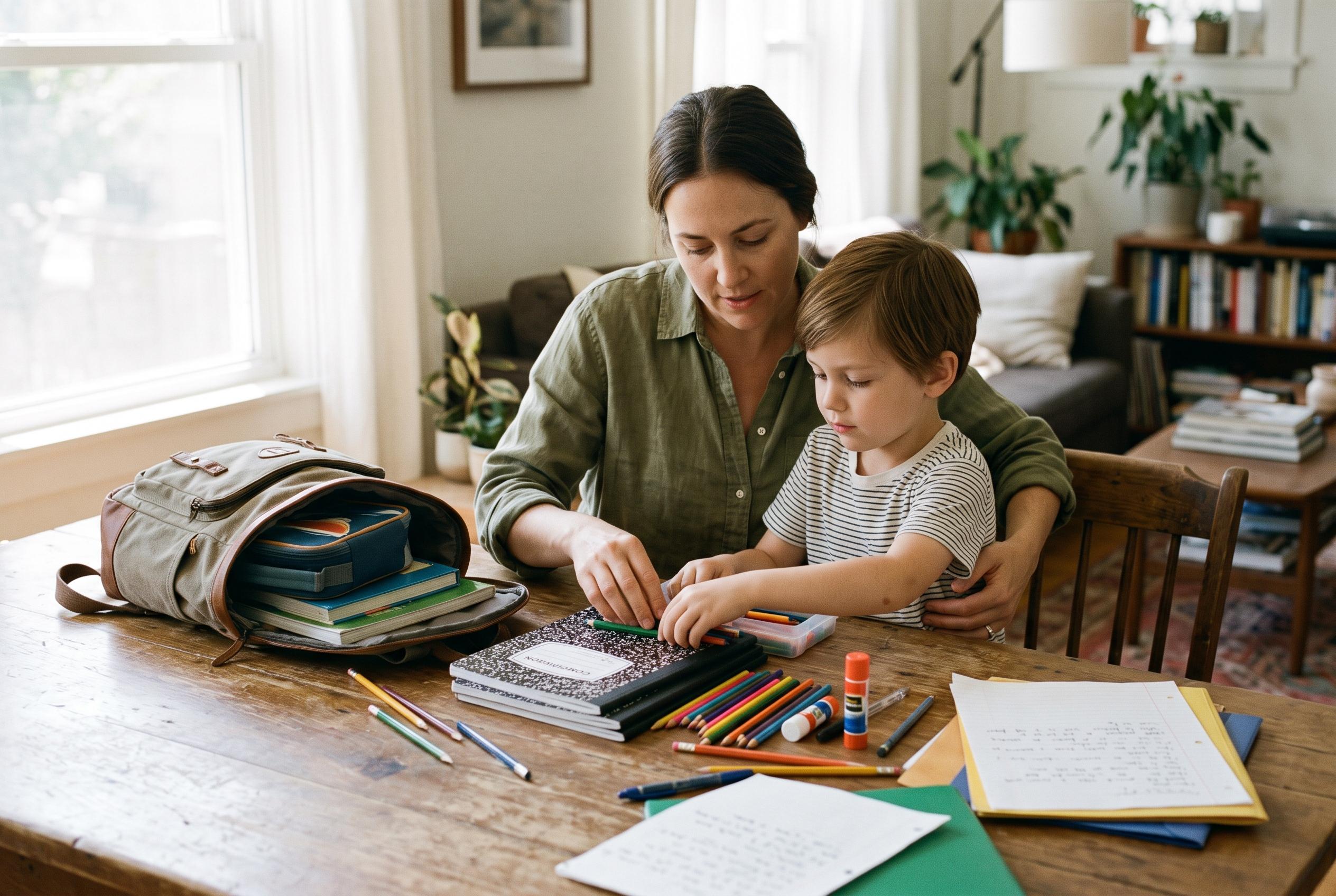

Experts recommend starting school preparations early, easing children into routines, and prioritising emotional and organisational support to ensure a smoother transition after summer holidays.
Parents who try to drag a family straight from holiday mode into a full school timetable in a single evening are usually making the first week harder than it needs to be. Official UK guidance says the reset works better if it starts about a week before term, with school-time wake-ups and bedtimes brought back gradually rather than imposed all at once. The American Academy of Pediatrics makes a similar point, advising families to begin one or two weeks ahead where possible. In guidance published on 1 September, UNICEF Jamaica put the same idea more bluntly, saying a strong start is “not about having everything perfectly organized from day one” but about creating support and structure. (gov.uk)
That matters because the return to school is not only a logistical shift but an emotional one. Lianna Wilson and Sarah Straus wrote for the Child Mind Institute that children’s “nervous or apprehensive feelings about the start of school are normal”, and UK government guidance urges parents to talk in concrete terms about what the day will look like instead of guessing how a child will feel. The same guidance suggests giving children small choices over things like shoes, bags or pencil cases, which can make the change feel less like something being done to them and more like something they can manage. A simple visual timetable for drop-offs, pick-ups and clubs can help make that new pattern feel familiar before the rush of the school run begins. (childmind.org)
Sleep is usually the first battleground. Great Ormond Street Hospital says a bedtime routine can begin anywhere from 30 minutes to two hours before sleep, with calming steps such as a warm bath or shower, reading and repeating the same pattern each night. The hospital also warns that phones, tablets and televisions close to bedtime can delay sleep because the light they emit suppresses the body’s natural sleep signals, and says devices should ideally stay out of the bedroom. HealthyChildren.org, published by the American Academy of Pediatrics, similarly advises switching off electronics well before bed and keeping the home quiet and calm at night, especially for younger children. (gosh.nhs.uk)
The calmer families can make the school day feel before it starts, the less daunting it tends to be. The Department for Education recommends practising the route to school in advance, whether that means walking, taking the bus or simply talking through the journey and looking at pictures if a trial run is not practical. The American Academy of Pediatrics goes further, suggesting a visit to the new classroom or school grounds before term begins, even if it is only to attend an orientation or spend time on the playground. Both UNICEF Jamaica and the paediatrics group also frame the journey as a safety issue: children should be reminded about pedestrian crossings, bus-stop routines and the basic rules of travelling to school. (gov.uk)
Practical organisation matters because small failures pile up quickly at 8am. Government guidance recommends packing bags and choosing clothes the night before, but a Devon NHS article aimed at children goes into more detail, advising them to empty school bags every evening, avoid carrying unnecessary weight and pack by timetable, with the books needed first thing near the top and PE kit lower down if it is for later in the day. It also suggests a simple checklist for essentials, writing reminders down as soon as they are given, using colour-coded files and, where school rules allow, wearing a watch so children are not relying on a phone to keep track of the day. As the article puts it, “organisation isn’t about being perfect. It’s about finding small strategies that make the school day feel easier and less stressful.” (gov.uk)
Homework needs the same mix of structure and realism. Wilson and Straus argue that a clear after-school homework slot can keep children focused, and note that some do better tackling it while they are still in school mode, ideally with a snack close to hand. But they also acknowledge that sport, music and after-school clubs can squeeze the evening badly. HealthyChildren.org recommends a consistent, quiet workspace with television and other electronic distractions switched off, while the Devon NHS advice says larger tasks should be broken into smaller steps and deadlines written into a planner or calendar. The common thread is that children cope better when the work is visible, limited and predictable, rather than hanging over the whole evening. (childmind.org)
The wider lesson from this year’s back-to-school advice is that readiness is about more than alarms, lunchboxes and a decent bedtime. UNICEF Jamaica recommends involving children in organising supplies, planning their own morning routines and setting a few simple goals for the first month, so the term begins with some sense of control. Its advice also broadens the conversation beyond routine, pointing families towards learning support that can continue at home, including Learning Passport Jamaica for pupils in Grades 1 to 6, which works online and offline, and accessible digital textbooks with audio narration, sign-language videos, screen-reader navigation and adjustable text sizes. Even for families outside Jamaica, the message is relevant: school preparation now includes thinking about how children learn best and whether those supports are easy to reach. (unicef.org)
What emerges from all of these sources is a version of the September reset that is gentler and more deliberate than the annual fantasy of the perfect first week. Parents are being told to start earlier, explain more, rehearse the awkward bits, keep evenings calmer and praise the steps that go right. Children, meanwhile, do not need flawless mornings or a colour-coded family command centre by the end of day one. They need repetition, reassurance and a few reliable systems that make school feel manageable again. Or, as UNICEF Jamaica argued this month, the point is not to have everything sorted instantly but to take the return “one step at a time”. (gov.uk)
Disclaimer: This content is for informational purposes only and is not intended to be a substitute for professional medical judgment, advice, diagnosis, or treatment.