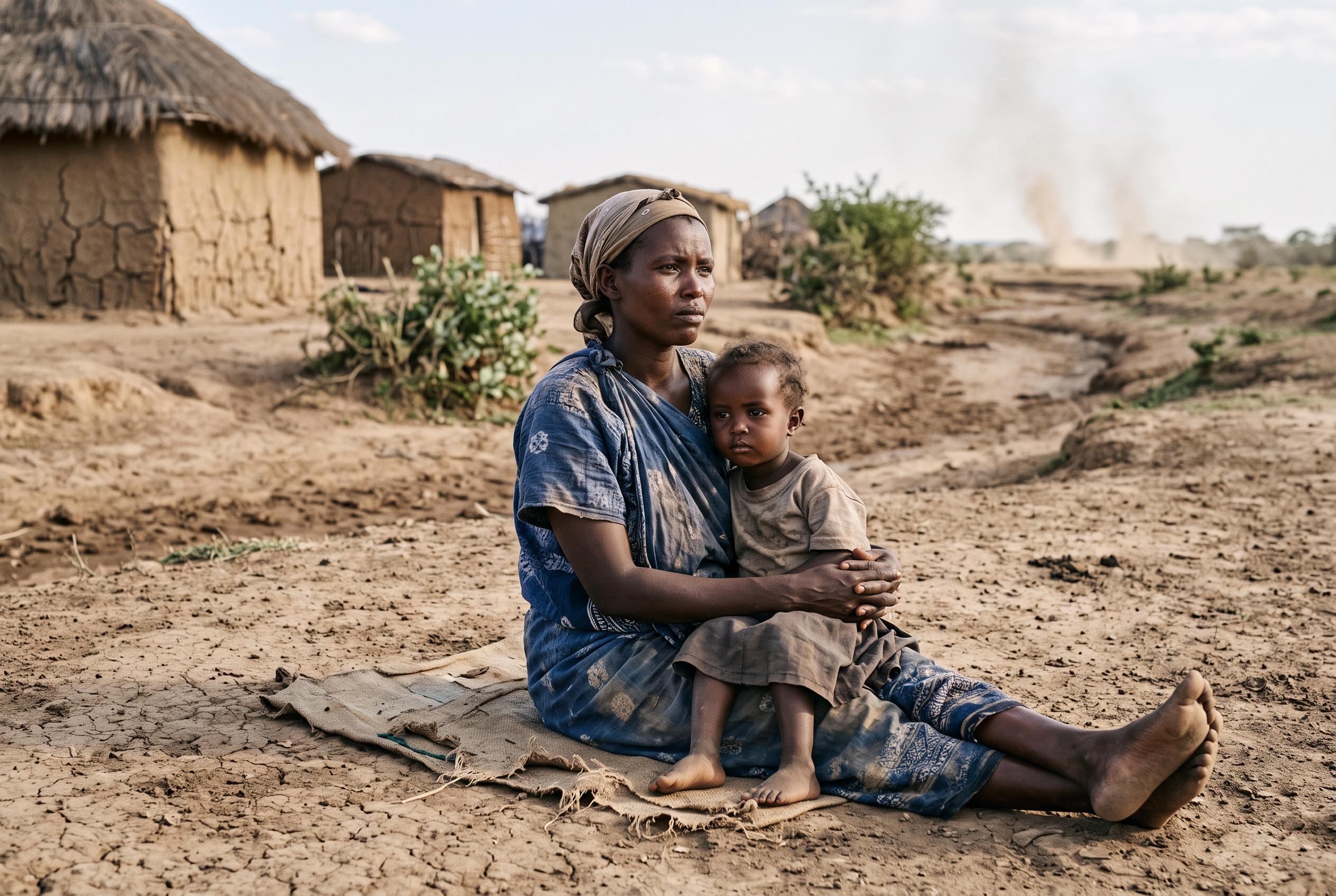

A new review highlights the mounting toll of floods and droughts on child nutrition in vulnerable regions, calling for systemic climate-resilient health strategies amid limited but growing evidence of a direct climate-malnutrition link.
A peer-reviewed review published on 2 September has put numbers on a problem often described more anecdotally: among children living in low- and lower-middle-income countries hit by floods or droughts, the pooled prevalence of stunting was 39%, wasting 19% and underweight 42%. Yet the same paper, in Pediatric Research, also delivers a warning against overstatement, saying the evidence for a direct climate-malnutrition link is still “limited and inconsistent”. (nature.com)
The researchers screened 2,227 records, examined 56 papers in full and ultimately included 26 studies published between 1993 and 2024, covering more than 320,000 children. Although their search strategy ranged across heatwaves, storms, cyclones, heavy rainfall and wildfires, only studies on floods and droughts met the inclusion test. The analysis found wasting was more common after droughts than after floods, at 22% against 13%, while the pooled estimate for stunting showed no statistically significant long-term association. A small rise did appear in the three months after floods, suggesting that the nutritional shock may be sharpest immediately after an event rather than years later. (nature.com)
Those findings land against a very large existing burden. PreventionWeb’s summary of the study notes that about 150.2 million children under five are stunted worldwide and 42.8 million are wasted. UNICEF’s 2026 climate risk report says droughts and floods already damage crops, disrupt food supply chains and drive malnutrition, and warns that without timely action climate change could leave an additional 28 million children wasted and 40 million stunted by 2050. The same report says nearly 160 million children already live in areas of high or extremely high drought severity, while more than 270 million live in extremely flood-prone zones in countries where fewer than half of people have access to improved sanitation. (preventionweb.net)
Recent crises in East Africa help explain how that damage unfolds. In Kenya, the World Health Organization said on 22 January 2026 that more than two million people were facing worsening food insecurity after the October-December 2025 short rains brought only 30 to 60 per cent of the long-term average in most areas, making it the driest such season since 1981 in parts of the east. WHO said the drought was pushing up malnutrition, raising the risk of disease outbreaks and disrupting essential health services. Ten counties were already in drought conditions, with Mandera in the “alarm” phase, and WHO’s Abdourahmane Diallo Martins said: “We are seeing multiple health threats converging.” (afro.who.int)
In Somalia, the sequence is even more brutal because one hazard is now arriving before the last has passed. The Norwegian Refugee Council said on 27 August 2026 that six million people – roughly one in three Somalis – were facing crisis hunger or worse after repeated drought seasons, while more than 700,000 had been displaced this year, including over 500,000 by drought alone. An MSF survey of displaced families in Baidoa found every second child malnourished. At the same time, forecasters expect the Deyr rainy season in October to be intensified by El Niño, raising the prospect of the worst flooding since 2023, when 1.2 million people were displaced, 8,000 farm animals were killed and 11,000 hectares of farmland were damaged. NRC secretary general Jan Egeland warned that “Newborns are in danger of dying from malnutrition.” The organisation said the 2026 humanitarian response was still 70 per cent underfunded. (nrc.no)
Afghanistan shows the same pattern outside Africa. In June, UNICEF Afghanistan said more than 8.8 million children in the country, or 41 per cent, were exposed to at least three overlapping climate hazards. More than 75 per cent were exposed to drought, more than half to longer and more frequent heatwaves, and more than 1.7 million to riverine floods. UNICEF said these shocks were weakening food systems and reducing access to safe water, with millions of children under five expected to need treatment for wasting this year; it also said almost half of Afghan children live in severe food poverty. Dr Tajudeen Oyewale, UNICEF’s representative in Afghanistan, said: “Children in Afghanistan are already living on the frontlines of the climate crisis.” Reporting on the country findings, The Jerusalem Post highlighted the same combination of drought, floods and extreme heat pushing up acute malnutrition. (unicef.org)
What the study argues for is less a single nutrition fix than a system response. Its authors call for climate-resilient health services, safe water and sanitation, stronger surveillance and immunisation systems, access to specialised nutritious foods, and support for climate-smart agriculture and livelihood recovery. That chimes with UNICEF’s wider finding that in 2024, 634 million children still lacked safely managed drinking water, 1 billion lacked safely managed sanitation and 489 million lacked basic hygiene services. It also fits the field response already visible in Kenya, where WHO said it had pre-positioned cholera and pneumonia supplies before conditions worsened, and in Somalia, where NRC is pressing for early-warning systems, evacuation planning and cash support before the next floods arrive. (nature.com)
Just as important are the paper’s limits. The authors say definitions of “extreme weather events” vary from study to study, growth charts are not standardised and reliable pre-disaster nutrition baselines are often missing. Evidence is thin for children over five, especially adolescents, and scarcely exists for tropical storms, hurricanes and wildfires in poorer countries. None of the included studies addressed overweight or obesity either, despite the paper noting that by 2025 obesity had overtaken underweight among school-age children and adolescents in every region except sub-Saharan Africa and South Asia. The message, then, is not that the science is settled in every detail, but that the overlap between climate shocks and child undernutrition is now too substantial, and too widespread, to be treated as a marginal issue. (nature.com)
Disclaimer: This content is for informational purposes only and is not intended to be a substitute for professional medical judgment, advice, diagnosis, or treatment.