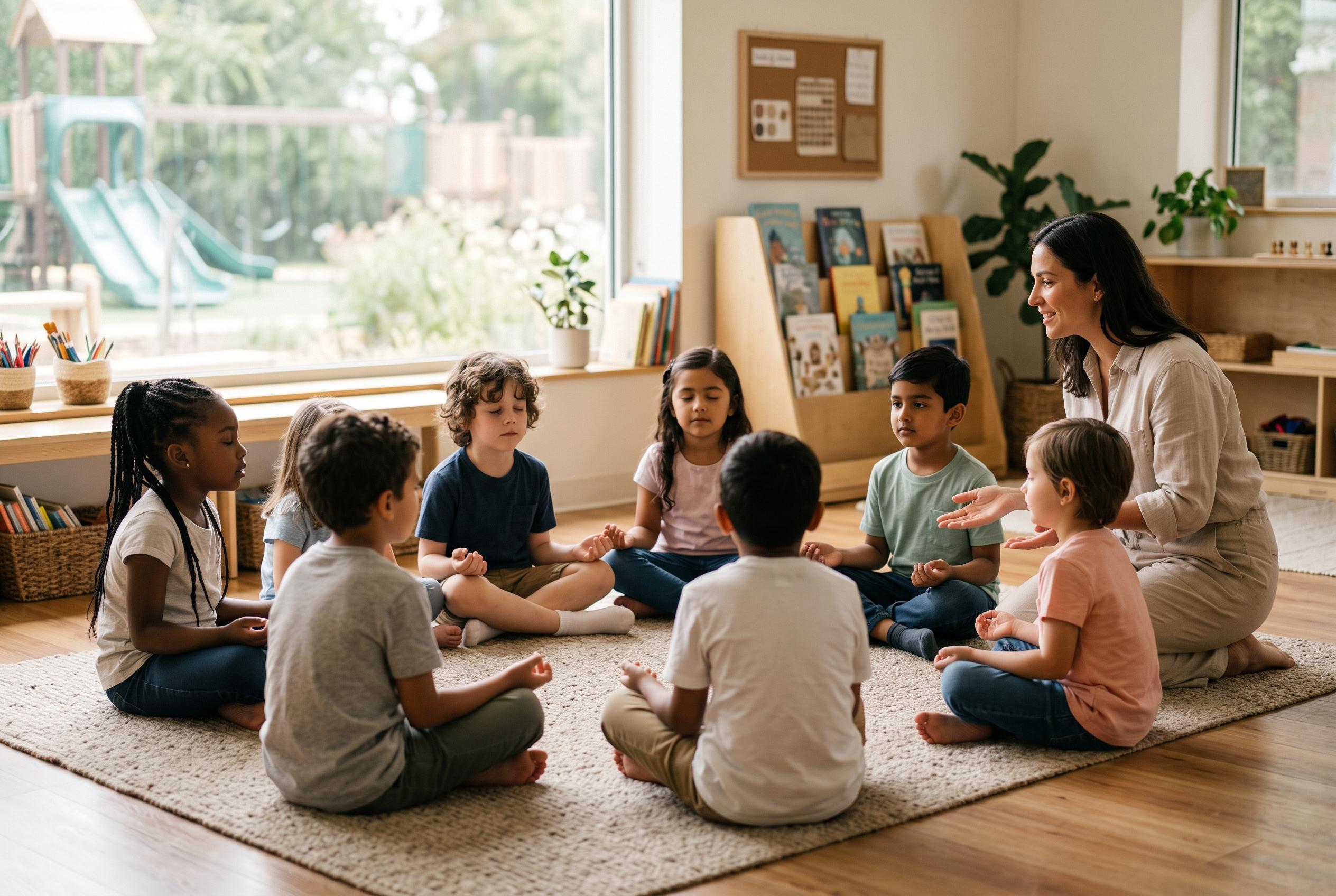

Schools across the UK are increasingly integrating yoga, mindfulness, and breathwork into daily routines, moving beyond fringe activities to recognised tools for emotional wellbeing and classroom management, driven by evidence and policy shifts.
The latest episode of The Kids Wellness Podcast, posted on Apple Podcasts on Sunday, 6 September 2026, makes a straightforward claim: yoga, breathwork and mindfulness should sit inside the ordinary rhythm of the school day rather than on its fringes. In the conversation, host Giselle Shardlow and school yoga practitioner Hannah Butterill present those practices not as enrichment for a small group of enthusiasts, but as practical tools for emotional regulation, calmer classrooms and staff support. That argument matters because Butterill’s work is no longer confined to one interview or one school; across the supporting material, her approach is already turning up in timetables, training offers and school spending plans. (podcasts.apple.com)
Shardlow’s platform gives that case a wider audience than a single school newsletter ever could. Apple describes The Kids Wellness Podcast as a weekly show for educators, paediatric therapists, yoga instructors, counsellors, parents and others working with children, promising “practical tools, engaging stories, and expert insights” to help children thrive emotionally and physically. At the time the listing was viewed, it carried a 5.0 rating from 25 reviews. The Hannah Butterill episode therefore sits within an established wellness series, not a one-off discussion, and within a brand Shardlow has built since founding Kids Yoga Stories in 2012 after teaching in Guatemala, Australia, Canada and the United States. (podcasts.apple.com)
Butterill brings a classroom pedigree to that argument. Her Insight Timer profile identifies her as a York-based children’s yoga teacher, primary school teacher and founder of The School Yoga Project, adding that she has taught since 2010 in the UK and abroad and trained in Ashtanga/Vinyasa yoga, children’s yoga, mindfulness and positive psychology. On her own website, Butterill says her work grew out of bereavement and later into a mission to improve the education system through yoga, mindfulness and meditation. She now describes The School Yoga Project as support for children’s and teachers’ mental health in a “kind and nurturing environment”, drawing together breath-work, gentle movement, relaxation and emotional literacy. (insighttimer.com)
There is also evidence that schools are trying to make that approach fit the curriculum rather than bolt it on. In November 2023, Kellington Primary School in Goole said weekly yoga sessions had been added to its PE offer for all pupils, with Butterill designing classes linked to PSHE and PE objectives. Melanie Laurence, the school’s executive headteacher, said it was “vital to introduce our pupils to activities that they can continue to participate in as they grow”. Butterill, speaking in the same article, argued that yoga belongs in the curriculum because it can help children cope with “the ever-changing world we live in”, adding: “Since Covid-19 this has become a mission of mine, to aid children with their mental and physical health.” (web.starmat.uk)
A longer view comes from Ebor Academy Trust’s 2024 annual report, which suggests the work has spread across more than one setting. The trust, which said it had 25 primary schools by the end of the reporting year, described The School Yoga Project as a programme “specifically designed to nurture children’s emotions” at a number of its schools. Feedback in the report ranged from a Year 6 boy at Tockwith CE Primary Academy saying, “I would give Miss Butterill’s Yoga lessons 5 stars because it helps me control my anger”, to a Year 5/6 teacher at Sigglesthorne CE Primary Academy reporting that many pupils had “used the breathing techniques in school”. The report also broadened the picture beyond children, saying positive feedback followed the introduction of 20-minute mindfulness lunch breaks for staff, with one Year 4 teacher at Riston CE Primary Academy calling it “the most effective way to improve my wellbeing at work”. (eboracademytrust.co.uk)
The model is also being translated into formal professional learning. The Kansas Technical Assistance System Network’s School Mental Health Initiative says it has partnered with The School Yoga Project to create an online video series for school communities. The material is presented as “evidence-based, universal, trauma-responsive” and intended to be “instructionally embedded” and “accessible to all”. The same page points educators towards a school-based yoga e-learning course and an evidence brief on the effects of mindfulness and yoga for children and young people, although the course itself is currently limited to Kansas educators. That language is significant: it frames yoga not as a nice extra, but as a structured intervention that schools can be trained to deliver. (ksdetasn.org)
Perhaps the clearest sign that the idea is moving from advocacy into operations comes from school budgeting. Hook CE Primary’s pupil premium strategy for 2025 to 2028 lists specialist yoga through The School Yoga Project as part of its support for pupils’ wellbeing, coping strategies and relaxation methods. The document states that yoga can influence not only physical and mental health but also academic performance and classroom behaviour. Butterill’s current programme offer has become more defined, too: her website now describes a six-week in-school wellbeing programme for Key Stages 2, 3 and 4, with weekly 45-minute sessions and eligibility for Sports Premium funding. (hookprimary.co.uk)
None of this proves that every school should adopt yoga, or that it can substitute for specialist mental health support where children need it. But taken together, the latest podcast episode, trust reports, training pages and school strategy documents show a notable shift in how this work is being pitched. The emphasis is on small, repeatable practices, adult modelling, curriculum links and measurable school benefits. In other words, the case Butterill and Shardlow make in conversation is already being tested in practice: yoga in schools is being treated less as a fringe wellness idea and more as a routine tool for regulation, resilience and classroom life. (podcasts.apple.com)
Disclaimer: This content is for informational purposes only and is not intended to be a substitute for professional medical judgment, advice, diagnosis, or treatment.