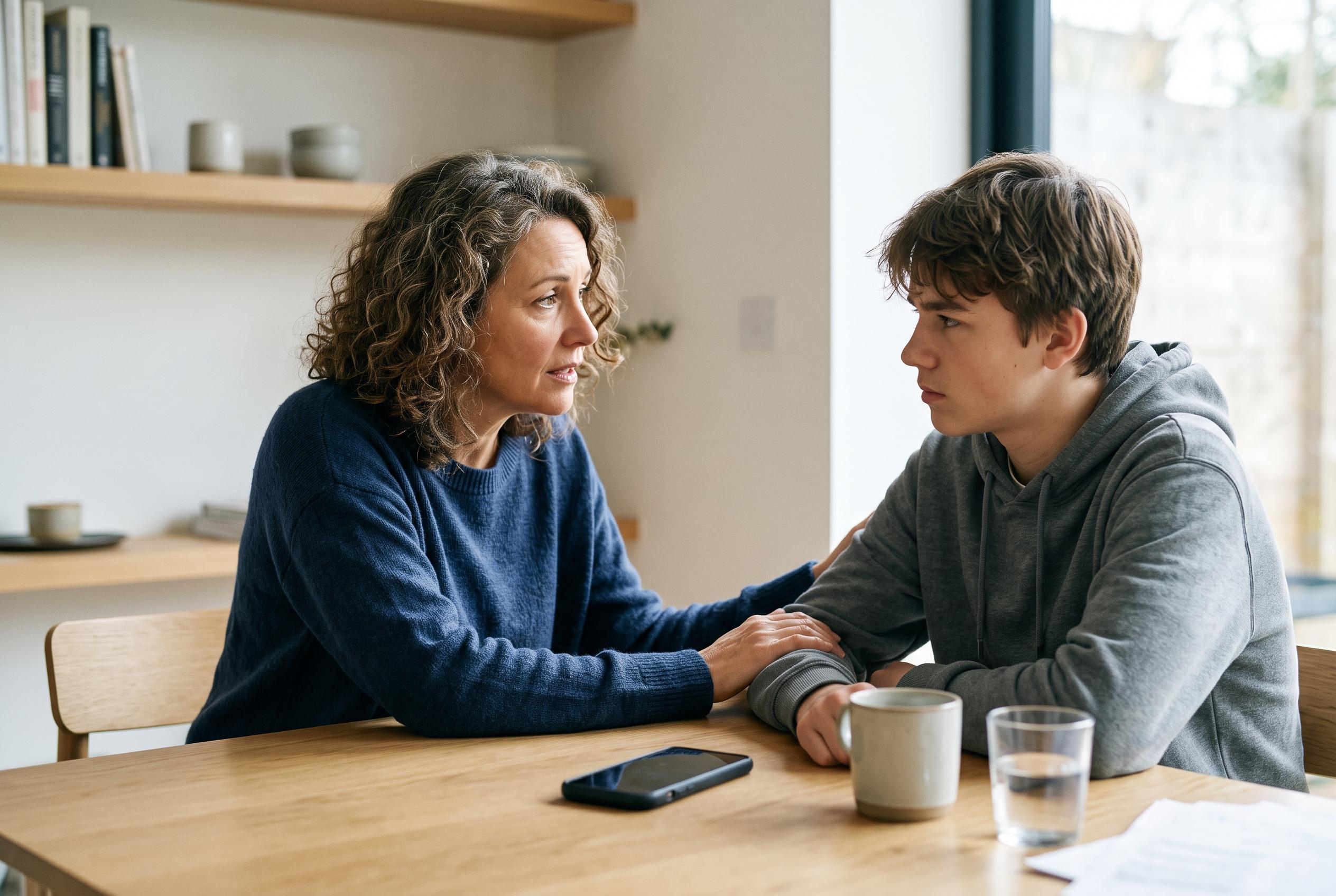

The UK government is set to implement a social media ban for under-16s in spring 2027 after new findings show escalating online risks for children, including exposure to harmful content and sexual messaging.
Ministers are pressing ahead with plans to bar under-16s from social media from spring 2027 after new data suggested harmful material has become part of ordinary online life for many children. The Office for National Statistics found that 48% of 13- to 15-year-olds had seen “a lot” or “a fair amount” of hateful content in the previous year, while 37% of children aged 10 to 15 had come across violent or criminal material online. (gov.uk)
The figures land alongside a wider government evidence pack which argues that children are facing “severe, overlapping risks” online rather than one isolated problem at a time. The Youth Justice Board said the harms ranged across cyberbullying, sexual abuse, radicalisation and exploitation, and warned that non-consensual image sharing and exposure to harmful material had become increasingly normalised, especially for girls. It added that, for some children, online harm is directly connected to violence offline and said: “The way it is implemented will be critical” as the social media ban is developed. (gov.uk)
The ONS results suggest much of this material is not being actively sought out. Among 13- to 15-year-olds who had seen harmful content, 88% said at least some hateful material appeared without them looking for it; the equivalent figures were 83% for eating-disorder content, 82% for self-harm content and 80% for sexual images or videos. Girls reported heavier exposure to several of the most troubling categories: 10% said they had seen a lot of content encouraging eating disorders, compared with 3% of boys, while boys were more likely to say they had searched for sexual content, at 18% against 11% of girls. The same survey also underlined how embedded online life is for children, finding that 84% of 10- to 15-year-olds spent at least three hours online on a weekend day and a quarter spent seven hours or more. (ons.gov.uk)
One of the starkest parts of the release concerned sexual messaging. The ONS estimated that 12% of 13- to 15-year-olds had received at least one sexual message in the past year, including 13% of girls and 10% of boys. A quarter of those who received such messages said it had happened more than 10 times, and 19% said at least one sender was an adult aged 18 or over. Among girls who had received sexual messages, a quarter said they had come from an adult, compared with 12% of boys. Comments and texts were the most common format, ahead of photos and videos. Most recipients regarded the messages as unwanted, yet only just over half told someone, and 11% of children who had sent sexual messages said an image or message had later been posted or shown elsewhere without their agreement. (ons.gov.uk)
That pattern of children keeping harmful experiences to themselves has also been picked up by Ofcom. In research published in May, the regulator said seven in 10 children aged 11 to 17 had encountered harmful content online, but only 15% had told an adult. Ofcom said “personalised feeds are the primary route through which children encounter harmful content” and publicly criticised TikTok and YouTube, saying their feeds were still not safe enough for children despite company assurances about safety tools and age checks. Its research also found that 51% of children had been asked to verify their age online, most commonly through facial scanning. (news.sky.com)
That has sharpened a disagreement over whether bans alone can work. The Guardian reported in June that the Molly Rose Foundation warned a hurried under-16 restriction could be circumvented, with children simply moving into less regulated spaces such as gaming. The charity argued that ministers should force platforms to meet strict child-safety standards, particularly around recommendation systems, rather than rely mainly on age gates. The same debate has continued as ministers have explored limits on addictive design features such as infinite scrolling and tighter rules on AI chatbots. (theguardian.com)
Evidence from Ireland points in the same direction. CyberSafeKids found that 70% of children aged eight to 12 had accounts on social media services officially meant for those aged 13 and over, with sign-up on YouTube, TikTok, Snapchat and Instagram still based on self-declared age. Among younger children, 94% had their own smart device and more than half spent most of their time online gaming, with Roblox the most used app; 26% said something online had bothered them, and more than half said it happened on Roblox. Among 12- to 15-year-olds, WhatsApp was the most popular app at 85%, while 48% of those bothered by something online said it happened on Snapchat. Alex Cooney, CyberSafeKids’ chief executive, said: “The intense debate over banning under-16s from social media is missing the point. We’re arguing over whether to lock the door while the laws already meant to protect children inside go unenforced.” (irishtimes.com)
For now, the government says the first regulations will be laid before Parliament by the end of 2026, with restrictions expected to take effect in spring 2027. Its July response said under-16s would be blocked from covered social media services, while 16- and 17-year-olds would get default overnight restrictions, muted push notifications and autoplay and personalised feeds switched off by default. Ministers have also said media-literacy teaching will be strengthened in schools from September 2026. The policy argument, however, is moving beyond whether children should be online at all: the harder question is whether platforms can still design services around maximum engagement when the evidence increasingly suggests that is where the harm begins. (gov.uk)
Disclaimer: This content is for informational purposes only and is not intended to be a substitute for professional medical judgment, advice, diagnosis, or treatment.