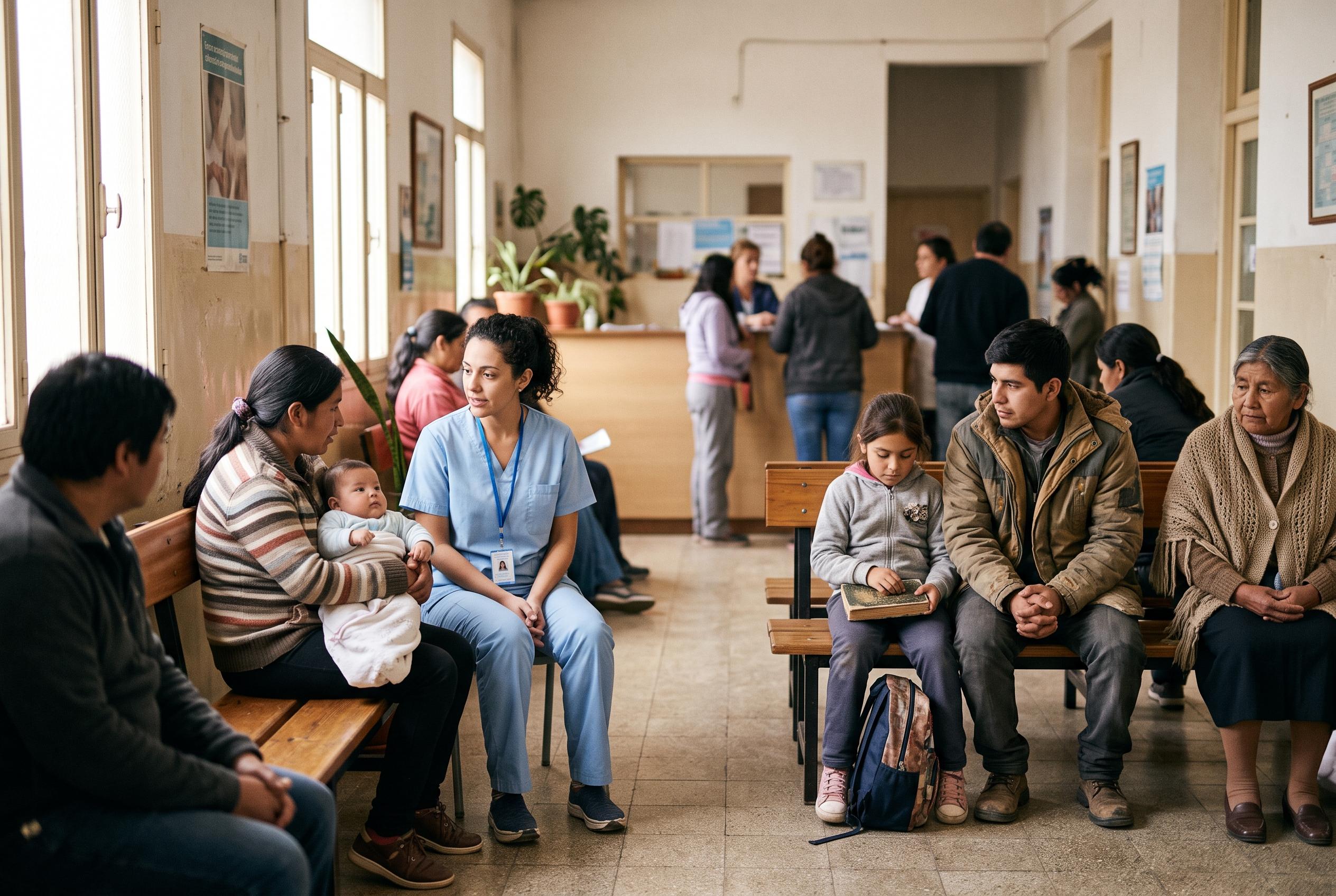

Argentina’s vaccination programme has rebounded among infants but gaps remain in booster coverage for older children and adults, with outbreaks of hepatitis A, whooping cough, influenza, and tuberculosis highlighting persistent vulnerabilities across provinces.
Argentina’s vaccination picture is moving in two directions at once. Official data published in July showed that the five tracer jabs given in the first year of life all rose above 90% coverage in 2025, the best levels in several years. Yet that recovery has not prevented fresh outbreaks and resurgences from opening in the groups left behind: young adults in the hepatitis A alert, newborns exposed to whooping cough before they can start their own doses, and a winter influenza wave that has generated the largest case load seen in a decade. A new public map from the health ministry is now laying those territorial gaps bare province by province. (argentina.gob.ar)
Hepatitis A offers the clearest example of how the epidemiology has shifted. By epidemiological week 16, Argentina had confirmed 34 cases and moved into an alert situation against its recent five-year baseline. Three-quarters of the cases were in people aged 20 to 39, with only three cases in under-20s, and the heaviest concentration was in Buenos Aires city, Buenos Aires province and Salta. The national bulletin said the pattern was mixed rather than a single chain: seven infections were linked to travel and seven to local transmission. Wastewater monitoring run by ANLIS Malbrán and AySA has meanwhile detected hepatitis A and E in the Buenos Aires metropolitan area, prompting the ministry to treat both as prioritised and emerging events. (argentina.gob.ar)
The outbreak is also exposing how uneven prevention remains. The ministry reported that by 27 April it had distributed 212,800 paediatric hepatitis A doses, or 44% of the 2026 plan, and sent a further 2,200 adult doses to Embarcación in Salta as cases climbed there. At the end of April, national coverage for the single hepatitis A dose given at 12 months stood at 20.8%, with Buenos Aires city on 13% and Buenos Aires province on 20%; provinces such as Chubut and Chaco were only at 24%. Those are early-year figures, but they show why the new map matters: monthly updates now make shortfalls harder to miss. (argentina.gob.ar)
Whooping cough is hitting the age group with the least room for error. In the first four months of 2026, Argentina logged 1,174 suspected cases and 274 confirmed ones, the highest level for that stretch of the year since 2019. Three babies younger than two months have died this year, according to Chequeado’s review of ministry data, and all were too young to have begun their own primary schedule. Last year the country recorded 1,214 confirmed cases and 11 deaths, all in children under two; among the four babies under two months who died in 2025, only one had a recorded maternal vaccination history, and in 2026 only one of the three fatal cases did. (chequeado.com)
That does not mean the entire childhood programme has collapsed. Ministry figures show that 2025 coverage reached 93.5% for BCG, 92% for hepatitis B at birth, 91.6% for the first quíntuple dose, 91.3% for IPV polio and 90.1% for pneumococcal vaccine. The weaker point comes later. The second measles, mumps and rubella dose at age five reached 54.8% in 2025, while the age-five triple bacterial booster was 58.3%, IPV booster 57.2% and varicella booster 56%. In other words, Argentina has done better at getting babies started again than at getting children, adolescents and pregnant women back for the doses that keep community protection intact. (argentina.gob.ar)
Influenza shows how a different weakness, seasonal uptake, can turn a routine winter virus into a national surge. Diario Jornada reported 790,523 flu cases in the first 30 weeks of 2026, more than in the same period of 2025 or 2024, with children under 10 accounting for almost half of diagnoses. Ministry and laboratory reporting linked the season mainly to influenza A(H3N2) subclade K, which made up 96% of sequenced samples earlier in the year, while influenza B Victoria began to regain ground later in the winter. By week 32, the ministry had recorded 853,798 influenza-like illnesses overall, though notifications had been falling since week 22 and remained within expected alert bands. (diariojornada.com.ar)
The government says vaccine supply itself has not been the main bottleneck in flu. By the end of May it had completed the planned inter-jurisdictional distribution and shipped more than 7.47 million influenza doses, later adding over 550,000 more adult shots. Uptake, however, remained patchy: as of 1 June, flu coverage in pregnant women was 22.68% in Buenos Aires city and 38% in Buenos Aires province. Beyond immunisation, the pressure on the health system is visible in tuberculosis as well. By week 22, Argentina had notified 6,482 tuberculosis cases, 133 more than at the same point of 2025, and 66.1% of 2025 cases were concentrated in Buenos Aires province and the capital. The ministry has been trying to shore up diagnosis and adherence with 40,500 molecular testing cartridges and 546 ongoing second-line treatments. (argentina.gob.ar)
The emerging picture is less one of a single failure than of accumulated gaps. Argentina has rebuilt much of its infant vaccination base since the pandemic-era slump, and the health ministry says the open map is meant to help provinces target catch-up work more quickly. But the diseases now flaring are finding the cracks: adults who were never covered by the universal hepatitis A childhood programme introduced in 2005, school-age children missing boosters, and newborns whose safety depends on doses given during pregnancy rather than after birth. Unless that next layer of the schedule improves, better first-year figures alone will not be enough to stop fresh clusters reappearing. (argentina.gob.ar)
Disclaimer: This content is for informational purposes only and is not intended to be a substitute for professional medical judgment, advice, diagnosis, or treatment.