
Specialist swimming lessons tailored for neurodivergent children are emerging worldwide, seeking to bridge safety gaps and reduce drowning risks amid alarming mortality data and limited access to inclusive aquatic education.
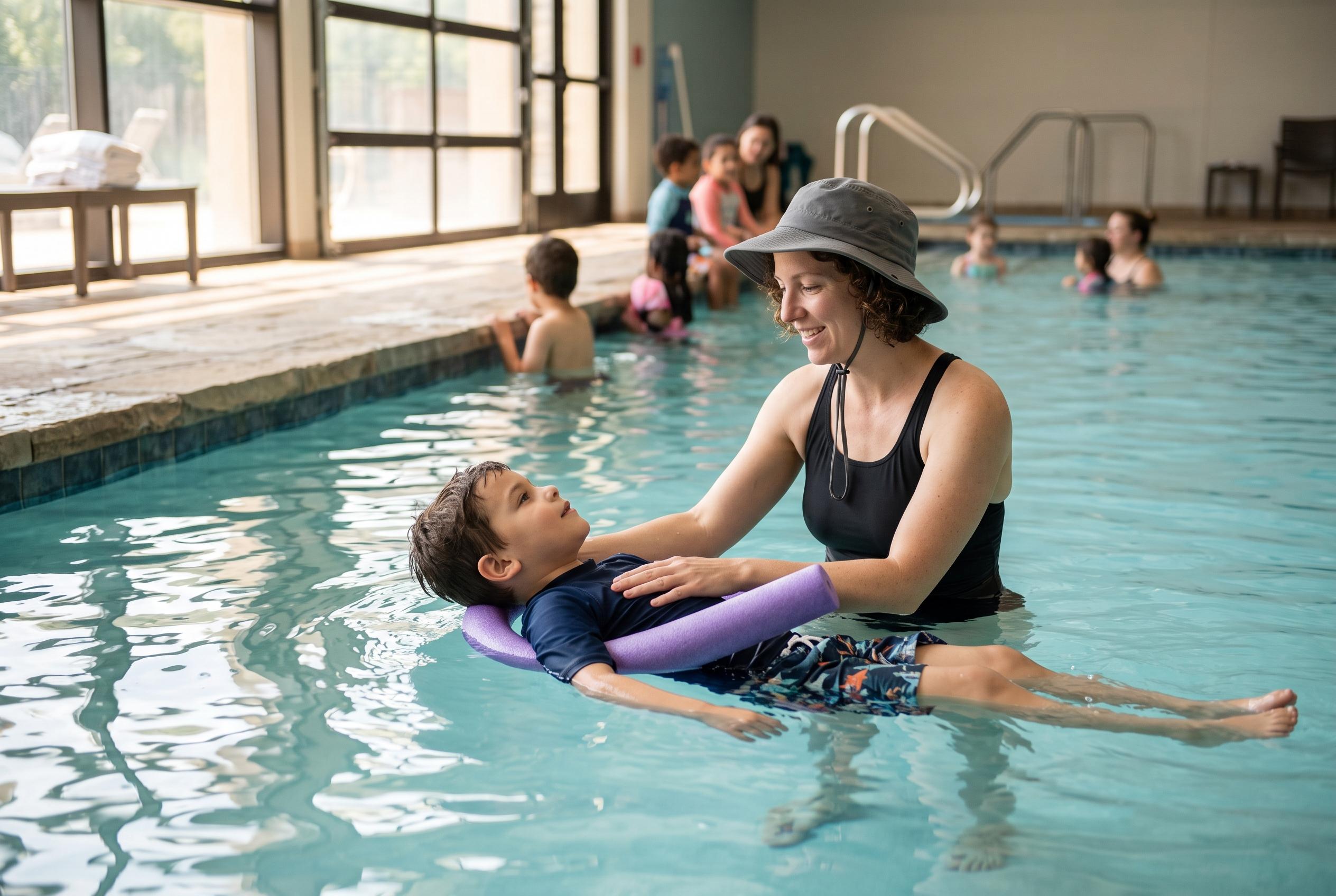
For many families, the problem is not whether swimming lessons matter but whether there is any class their child can realistically use. At Huia Pool in Lower Hutt, instructor Ashlee Cooper is teaching Roc in a one-to-one setting designed for neurodivergent children, using visual supports and a more flexible pace after Hutt City Council staff completed specialist Autism Swim training. The urgency is not hard to understand. Public-health officials in the US now describe wandering, or elopement, as one of the biggest safety concerns for autistic children, warning that it can become life-threatening within minutes and that water should be the first place searched when a child disappears.
That warning rests on research more detailed than the headline figure often repeated in news reports. Columbia University researchers said they screened more than 32 million death certificates in the US National Vital Statistics System and identified 1,367 people with an autism diagnosis who died between 1999 and 2014. The average age at death was 36, compared with 72 in the general population. Injury accounted for 28 per cent of those deaths, and suffocation, asphyxiation and drowning together made up nearly 80 per cent of injury deaths among autistic children. Dr Guohua Li, one of the researchers, put the implications starkly: “Swimming lessons should be a first-line treatment for autism.”
New Zealand’s own numbers are far less complete, which is part of the problem. Figures supplied to 1News by Water Safety New Zealand show 12 known drownings of neurodiverse children aged 14 and under since 2000, though the organisation cautioned that historical records do not always capture whether a child was neurodivergent and that earlier cases were likely under-reported. Beki Barker of Waikato University’s Applied Verbal Behaviour Lab says the danger is more visible than the official figures suggest, pointing to two cases reported in the media this year, including the rescue in July of an autistic boy found in Auckland mangroves after leaving a property. Overseas reporting suggests the same pattern. Associated Press said more than 100 children in Florida who had autism, or were being assessed for it, had drowned since the start of 2021, citing the Children’s Services Council of Palm Beach County. One mother, Lovely Chrisostome, told AP that her six-year-old son had wandered from home and had previously refused to enter a public-pool lesson.
That gap between need and access is shaping how specialist lessons are being run. Cooper says visual aids can help instructors follow what a child is ready to do, rather than forcing them through a standard class. In West Palm Beach, AP described a starter class at Small Fish Big Fish where teachers worked one-to-one, or even two to a child, used cards so pupils could communicate by pointing instead of speaking, and did away with whistles to keep the pool calm. The principle is simple: adaptation is not an optional extra but the teaching method itself. Dane Dougan, chief executive of Autism New Zealand, said mainstream pool environments can be overwhelming because of noise, smells and the number of children around, making it harder for families to build water confidence in the first place.
The shortage, though, is not just of classes but of people trained to teach them. Florida International University has highlighted that problem through the work of occupational therapist Tana Carson, who created an evidence-based programme for graduate students training to become physical, occupational and recreational therapists. Carson’s argument is that therapists are routinely taught to help children master everyday skills such as handwriting or riding a bike, but not what may be a lifesaving skill: swimming. Her pilot project with the YMCA of South Florida’s Swim Buddies programme uses one-to-one instruction and visual flashcards to teach skills step by step while tracking children’s progress over time. The same logic sits behind the Lower Hutt approach, which is trying to make public lessons usable for families who have often found mainstream programmes unmanageable.
Safety specialists also stress that lessons are only one layer of protection. HealthyChildren, the American Academy of Pediatrics’ parent information site, advises four-sided pool fencing with a self-latching gate, locked or alarmed doors and gates where possible, and constant supervision even if a child can already swim. It also recommends visual schedules or social stories to prepare children for pool rules. Autism Speaks goes further, saying it is “never too early” to begin teaching water safety, urging parents to use picture cards, introduce children to lifeguards and pool staff, and teach them how different bodies of water behave. It also advises teaching a child to roll on to their back to float and breathe, and warns families not to rely on lifeguards alone.
Barker’s work in New Zealand points in the same direction: layered prevention, not a single fix. She says one family came to her in desperation after their child repeatedly escaped towards water and could not get into conventional lessons; a simple “stop, check, go” routine taught the child to seek supervision and permission before entering. That approach fits with the CDC’s latest advice, which tells families and carers to act immediately if an autistic child goes missing, tell emergency responders about any communication differences, and make nearby ponds, pools, rivers and other water hazards the top search priority. For Amarie Carnett, Barker’s colleague at Waikato, the hope is that practical research and more inclusive teaching can turn that knowledge into something families can actually use before another near miss ends in tragedy.
Disclaimer: This content is for informational purposes only and is not intended to be a substitute for professional medical judgment, advice, diagnosis, or treatment.