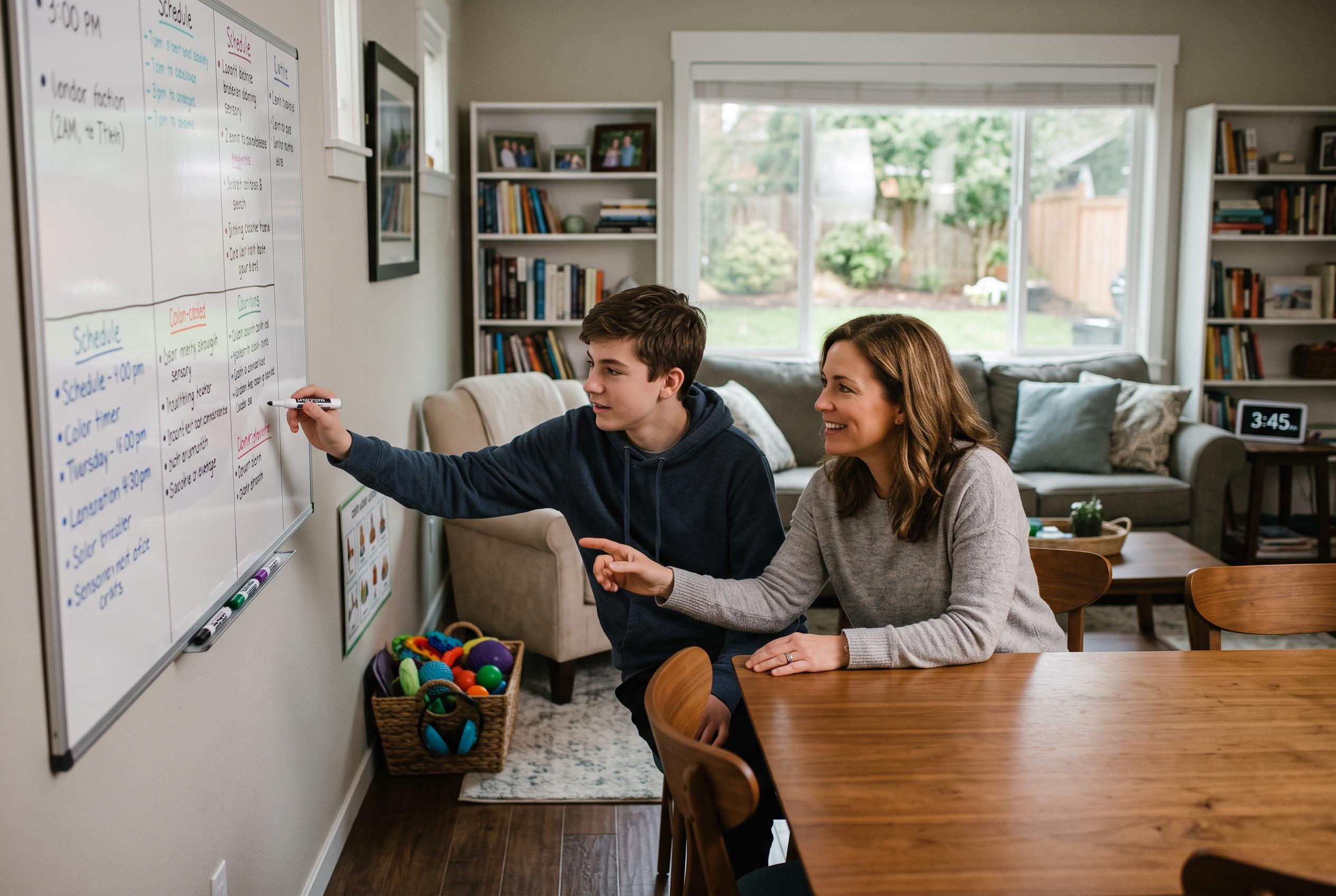

Expert consensus now underscores teaching strategies and environmental adjustments rather than punishment for effective ADHD management, with an emphasis on behavioural therapy, structure, and support for children, teens, and adults.
Current public-health guidance is blunt: shouting, slapping or trying to lecture a child out of ADHD is not treatment. The US Centers for Disease Control and Prevention says parent training in behaviour management is the recommended first choice for children under six, while the American Academy of Pediatrics says most experts use behaviour therapy together with medication more broadly. In a National Institute of Mental Health interview, psychologist Mary Rooney said the most effective interventions for children and teenagers are those that also involve parents or teachers. (cdc.gov)
That matters because ADHD is not simply a discipline problem, and the wider evidence on punishment is poor. In its policy statement on effective discipline, the American Academy of Pediatrics says aversive strategies including corporal punishment and “yelling at or shaming children” are “minimally effective in the short-term and not effective in the long-term”. HealthyChildren, the academy’s parent-facing site, is equally direct: “Physical punishment, such as spanking or slapping, is not helpful.” (pubmed.ncbi.nlm.nih.gov)
What clinicians recommend instead is structure. HealthyChildren advises families to set specific, doable goals, pair them with rewards and consistent consequences, keep a daily schedule, cut distractions during homework, use charts and checklists, and keep rules steady from day to day. The CDC says a therapist working with parents should teach positive reinforcement, structure and consistent discipline, then monitor progress and adjust the plan as needed. (healthychildren.org)
That does not mean behaviour should be ignored. Understood, a US education and neurodevelopment charity whose article was expert-reviewed by psychologist Ellen Braaten, says: “Having ADHD doesn’t excuse bad behavior. But it can explain why it happens.” The same guide urges adults to give clear warnings, stay calm, use logical consequences and accept that the same mistake may happen repeatedly because many children with ADHD struggle to switch tasks and learn from errors in the way other children do. It also cites research suggesting that cutting back on yelling and harsh punishment can make a meaningful difference to behaviour. (understood.org)
Diagnosis also needs care, especially in younger children. Mayo Clinic notes that language delays, sleep problems, anxiety, depression, autism spectrum disorder, seizure disorders and hearing or vision issues can all resemble ADHD. For preschool-age children, it says assessment is more likely to involve a specialist such as a psychologist, psychiatrist, speech pathologist or developmental paediatrician rather than a quick judgement that a child is merely naughty or inattentive. (mayoclinic.org)
When ADHD is confirmed, treatment usually has several parts rather than one dramatic fix. Mayo Clinic says standard care can include medicines, behaviour therapy, counselling and education services, while HealthyChildren says many specialists recommend combining behaviour therapy with medication. Mayo adds that stimulant medicines appear to boost and balance neurotransmitters, and Rooney told NIMH that doctors sometimes have to try different medicines or doses before finding one that works well. (mayoclinic.org)
Schools and family routines are part of the treatment picture too. Rooney said classroom management strategies can include teacher-run reward systems, point schemes and daily report cards that go home so parents can reinforce progress, while Mayo Clinic says some pupils may qualify for support through Section 504 plans or the Individuals with Disabilities Education Act. Mayo also recommends simple one-step instructions, regular meal and bedtime routines, and activities that build self-esteem through small, repeated successes; children receiving treatment should also be reviewed regularly, often every three to six months once symptoms are stable. (nimh.nih.gov)
The common thread across the guidance is that ADHD is managed by teaching skills and reshaping the environment around the child, not by humiliation. For older children, teenagers and adults, Rooney said cognitive behavioural therapy can help with self-monitoring, time management and stress, while both NIMH and HealthyChildren point families towards support groups, counselling and stress-management tools so adults can respond calmly when things are difficult. Reasoned, firm boundaries still matter, but the evidence-backed version looks far more like coaching than scolding. (nimh.nih.gov)
Disclaimer: This content is for informational purposes only and is not intended to be a substitute for professional medical judgment, advice, diagnosis, or treatment.