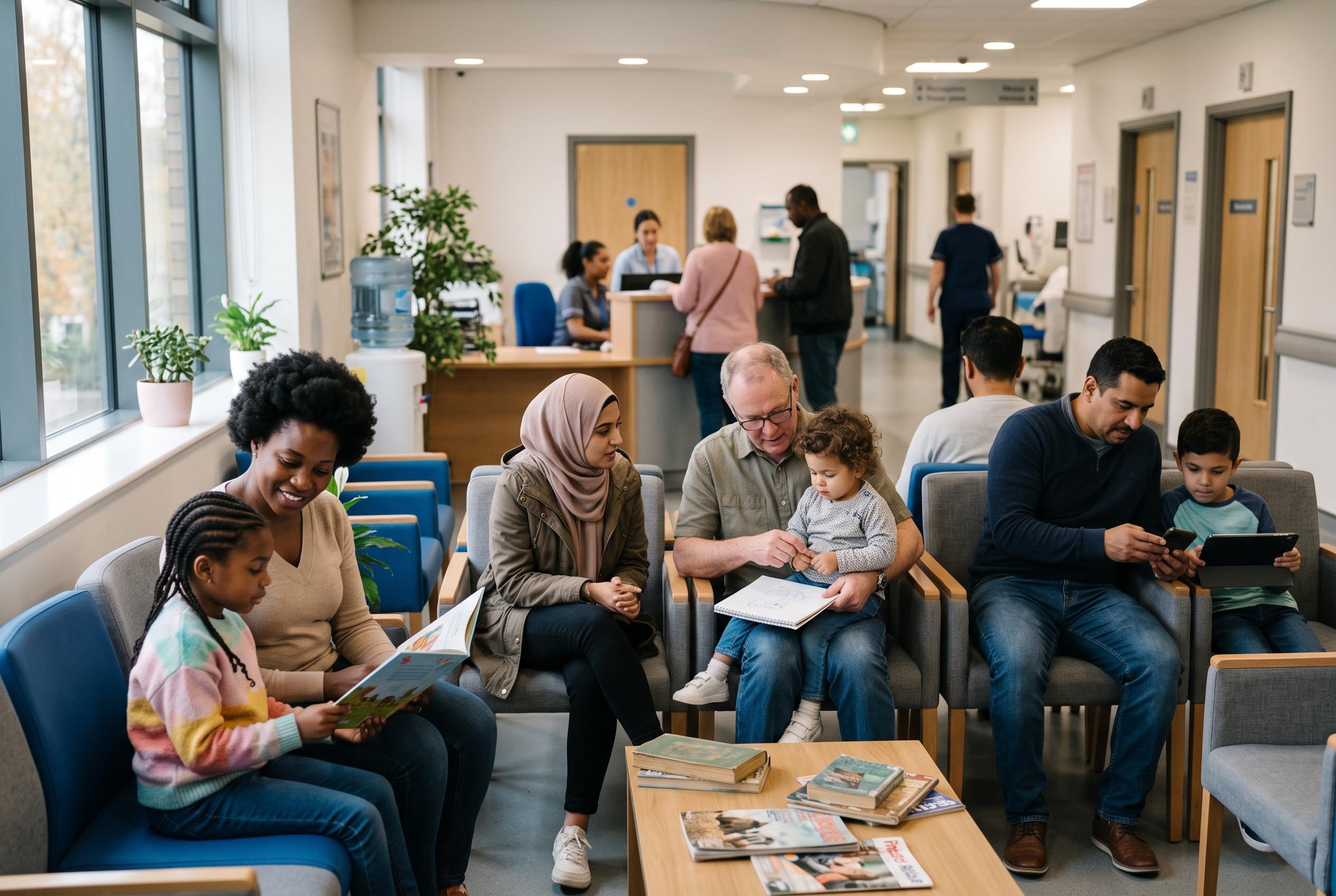

Specialist NHS clinics for children with severe obesity report better health outcomes, but experts warn that rising school absence rates may be influencing the growing number of families seeking help, highlighting the complex links between education, health, and well-being.
Specialist NHS clinics for children with severe obesity are reporting better health outcomes, even as doctors warn that England’s school attendance crisis may be feeding the problem that brings more families through their doors. Leeds Beckett University researchers said more than 6,000 children and young people in England have been treated through Complications from Excess Weight clinics since pilots began in 2021. Official Department for Education figures published on 6 August 2026 show that 18.1% of pupils were persistently absent in autumn term 2025/26, while the Health Survey for England estimated that 15% of children aged 2 to 15 were living with obesity in 2024. (leedsbeckett.ac.uk)
One of those patients is Ibbie, now 16, whose case illustrates how closely weight, mental health and school life can become entangled. Mediafax reported that during the Covid lockdowns she began eating more and later stopped attending school after being bullied; by the age of 12, she weighed about 140kg and had developed serious liver problems. Her treatment included GLP-1 injections. In comments published by Leeds Beckett in May 2026, Ibbie said: “When I first came to the clinic, I was in a very negative place and terrified of being judged for my weight and appearance. Instead, I was met with kindness, understanding and support.” There is, however, a discrepancy in the accounts of her progress: Mediafax said she had lost about 64kg, while Leeds Beckett, quoting Ibbie directly, said she had lost seven stone, or roughly 44kg. (mediafax.ro)
At Cambridge University Hospitals, where Professor Ken Ong is the clinical lead for childhood obesity, the specialist service is based at the Weston Centre at Addenbrooke’s Hospital and works with a second centre at Norfolk and Norwich University Hospital. CUH says children are eligible if they are aged 2 to 17, have severe obesity, have a significant obesity-related condition that would benefit from weight loss, and are part of a family that wants help to change lifestyle behaviours. Care can involve nurses, consultants, dietitians, psychologists and family therapists, with follow-up appointments sometimes taking place every two weeks and, in some cases, remotely. (cuh.nhs.uk)
That local model sits inside a national NHS programme aimed at children whose weight is already causing clinical harm. NHS England says obesity affects one in four children in the UK and can raise the risk of conditions including type 2 diabetes, liver disease and early heart disease. The exact size of the network is not entirely clear: NHS England’s public information page currently lists 36 active sites, while the Mediafax account of the BBC report referred to 39 specialist clinics. Leeds Beckett said the support on offer can include dietary and lifestyle help, mental health treatment and specialist medication, delivered by teams that also include social workers and family support workers. (england.nhs.uk)
Ong is among the clinicians arguing that attendance needs to be seen as part of the health story, not only an education one. The Department for Education’s latest termly absence release shows 1.29 million pupils, or 18.1%, were persistently absent in autumn 2025/26. In the comparable pre-pandemic autumn term of 2018/19, the rate was 10.9%. Overall absence in autumn 2025/26 stood at 6.47%, and illness remained the commonest reason. Mediafax’s account of the BBC reporting said doctors believe the school day may protect some children through routine, movement and meals that are subject to nutritional standards. (explore-education-statistics.service.gov.uk)
The wider research base supports a link between excess weight and missing school, but stops well short of proving simple cause and effect. A 2017 systematic review and meta-analysis indexed by PubMed examined 13 studies from seven countries and found that 11 reported a statistically significant positive association between childhood overweight or obesity and school absence, while two found no effect. In the pooled analysis, the odds of being absent were 27% higher among children with overweight and 54% higher among children with obesity than among peers of normal weight. The authors said better study designs were needed to explain the pathways, leaving open the possibility that the relationship runs in both directions through illness, stigma and mental health problems. (pubmed.ncbi.nlm.nih.gov)
The scale of the underlying problem helps explain why that unresolved question matters. The Health Survey for England 2024 found that 15% of children aged 2 to 15 were living with obesity and 26% were either overweight or living with obesity. It also showed a steep deprivation gap: among children aged 11 to 15, obesity affected 8% in the least deprived areas and 30% in the most deprived. Leeds Beckett’s ENHANCE evaluation said CEW clinics appeared to be reaching many of the children other services often struggle to engage, including those from more disadvantaged areas, minority ethnic groups and young people with neurodevelopmental needs. (digital.nhs.uk)
What the clinic evidence suggests, researchers say, is not that injections alone can solve childhood obesity, but that joined-up treatment works better than fragmented care. Leeds Beckett reported that children and young people using CEW clinics were better able to maintain weight loss over time than those relying on separate community and GP services, and Professor Louisa Ells described the model as “compassionate, joined up, patient-centred specialist care”. CUH says its own treatment plans can combine diet plans, coaching and mental health support, while NHS England’s criteria are aimed at children whose obesity is already accompanied by serious complications. If attendance is indeed part of the same picture, the next phase of the debate may focus as much on keeping vulnerable children connected to school as on what happens once they arrive in clinic. (leedsbeckett.ac.uk)
Disclaimer: This content is for informational purposes only and is not intended to be a substitute for professional medical judgment, advice, diagnosis, or treatment.