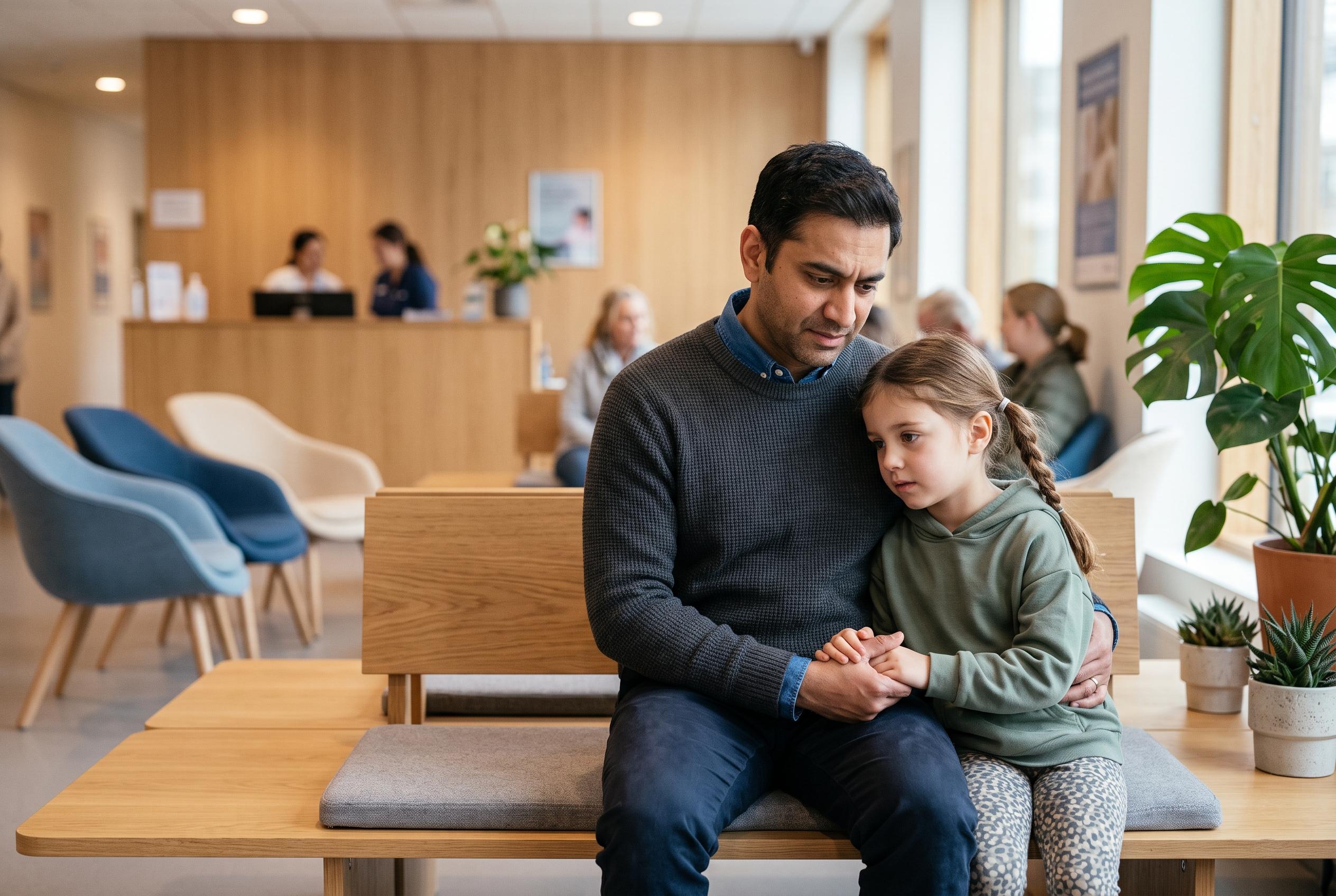

A sharp rise in mental health emergencies among children under 10 has overwhelmed A&E departments across England, with calls mounting for earlier intervention and expanded community services to prevent crises.
England’s emergency departments are seeing far more children arrive in acute psychological distress than before the pandemic, and the steepest surge is no longer among teenagers but among primary-age pupils. Data obtained from NHS England by the Royal College of Paediatrics and Child Health show 75,491 attendances by six- to 17-year-olds with a recorded mental health concern in 2025, compared with 55,525 in 2019. Among six- to nine-year-olds, the tally rose 62%, from 3,870 to 6,269. (rcpch.ac.uk)
The increase has been matched by a striking growth in time spent inside A&E. The paediatricians’ college said 6,235 children and young people were there for more than 12 hours in 2025, up from 1,964 in 2019, while 338 remained for more than 72 hours, against 55 six years earlier. It said many were effectively stuck while staff searched for specialist mental health support or somewhere safe for discharge, and argued that children in crisis should be treated in psychologically safe, trauma informed settings rather than ordinary emergency departments. (rcpch.ac.uk)
Evidence gathered earlier this year suggests the waits can continue even after a decision has been made to admit a child to mental health care. Reporting in May, The Guardian said freedom of information requests by the Royal College of Nursing found the number of under-18s waiting at least 12 hours in A&E before transfer to a mental health unit had climbed from 237 in 2019 to 802 in 2025. Three trusts – Barts Health, Lewisham and Greenwich, and Morecambe Bay – reported waits of three days or more, and one nurse described them as “frankly barbaric” and “becoming far more normal”. (theguardian.com)
The nursing college argues that the problem is much larger than the latest annual snapshot. Based on responses from 80 acute trusts, it calculated that hospitals recorded 330,367 mental health-related A&E attendances by under-18s between 2019 and 2025 and extrapolated that England as a whole may have seen about 492,350 such cases. The same data showed sharp local rises: University Hospitals Bristol and Weston went from 681 to 1,196 attendances, University Hospital Birmingham from 1,306 to 1,789, and Royal Berkshire’s 12-hour-plus waits rose from three to 40. (rcn.org.uk)
Paediatricians say the age profile matters as much as the volume. The college called the jump among six- to nine-year-olds particularly alarming because of the vulnerability of young children’s neurodevelopment, while Sam Jones of RCPCH said the clinical picture is changing, with “more younger children” affected and self-harm and eating disorders still rising. Ronny Cheung, another college officer, warned that failing to intervene sooner risked storing up future damage, including more young people dropping out of education, employment or training. (itv.com)
Therapists and counsellors are making a similar case for earlier help. Martin Bell of the British Association for Counselling & Psychotherapy said A&E remained an essential safety net but should not become the default destination for distressed children who could not get help elsewhere. The organisation said emergency departments can be frightening and overwhelming, and argued for qualified therapeutic support in schools and communities, especially for children who fall between universal provision, school mental health teams and specialist CAMHS thresholds. (bacp.co.uk)
NHS England says alternatives to A&E do exist, though clinicians contend they are too patchy. Responding to the RCN’s earlier findings, an NHS spokesperson said children can obtain round-the-clock help through NHS 111, including crisis assessment, rapid response and home treatment, and said 70% more children are accessing mental health support than before the pandemic. The latest figures have nevertheless intensified pressure on ministers as a government-commissioned review of ADHD, autism and mental health services progresses and a broader national mental health strategy is prepared. (theguardian.com)
What the professional bodies are now demanding is less tinkering inside A&E and more support before children get there. The RCN wants faster expansion of dedicated mental health emergency units and warned that any new strategy will “die on the page” if poverty, insecure housing and social isolation are treated as secondary issues. RCPCH has also urged ministers to strengthen community services and crisis pathways, while BACP says children should not have to reach crisis point before they can get therapy. After years of rising attendances, the shared message is that emergency care has become the backstop for failures elsewhere. (rcn.org.uk)
Disclaimer: This content is for informational purposes only and is not intended to be a substitute for professional medical judgment, advice, diagnosis, or treatment.