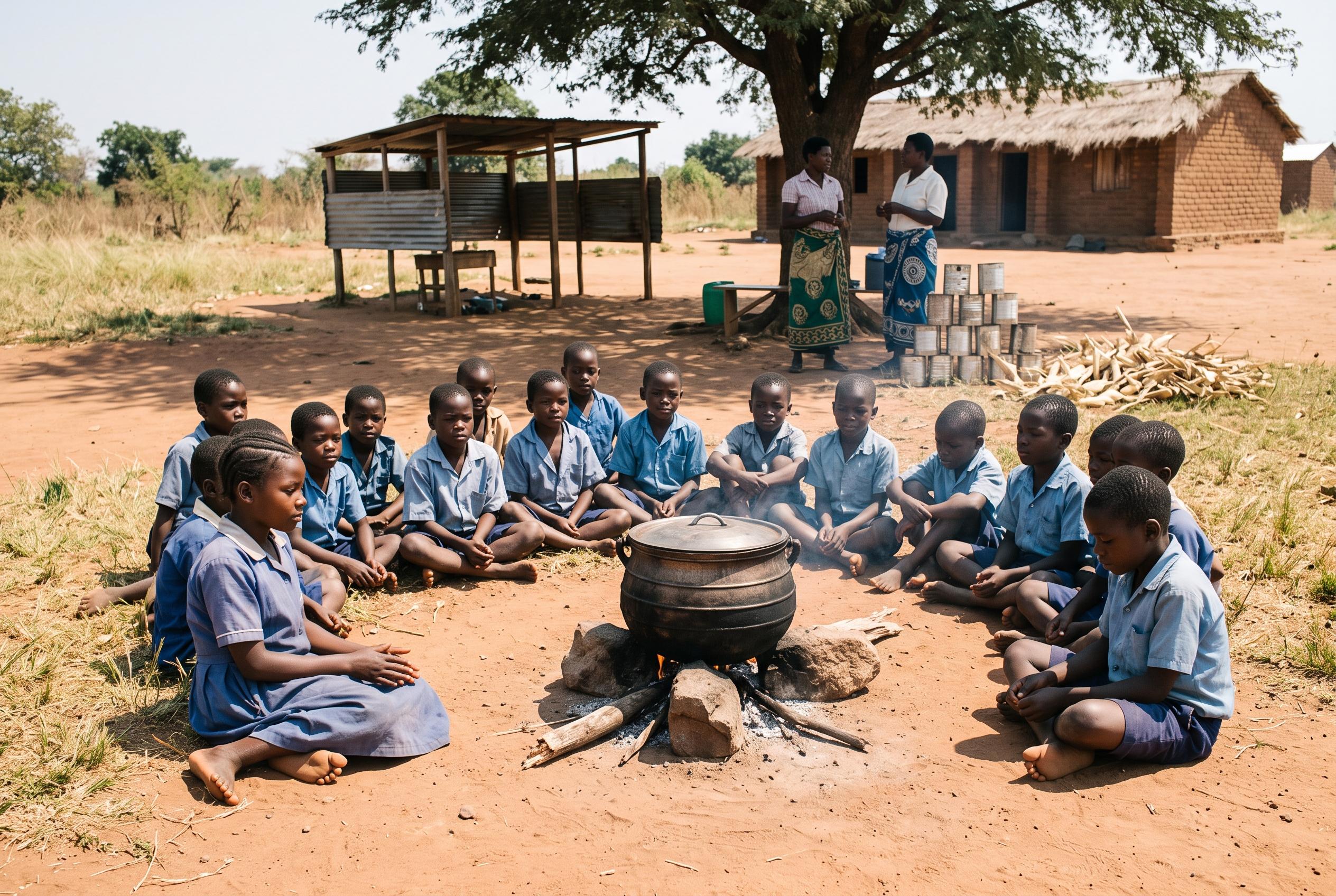

Malawi’s ambitious plan to expand its school meal programme by 2030 is at risk as a funding shortfall threatens to halt WFP-supported meals for hundreds of thousands of children by September 2026, amid broader food security challenges.
Malawi’s plan to deliver school meals to every public primary school by 2030 is colliding with a far more immediate problem: unless fresh money is found this month, World Food Programme-supported meals for 611,800 learners are due to stop from September 2026. WFP says $19.7 million is needed to keep the service going through the 2026/27 academic year, a gap that threatens to open just as ministers are promising a nationally owned expansion of the scheme.
The risk to classrooms sits inside a wider food-security squeeze. The Malawi Guardian reported on 31 August 2026 that WFP was also seeking about $17 million for food assistance to 600,000 vulnerable people during the 2026/27 lean season, with a broader $96 million hole in its Malawi operations between August 2026 and January 2027. The agency has warned that specialised nutritious foods could be exhausted by November, while an official lean-season response plan is meant to be finalised in the first week of September ahead of an October roll-out.
That timing matters because school feeding in Malawi is no small add-on. On its country page, WFP says it is providing daily meals to 825,000 schoolchildren in 788 primary schools and 140 pre-primary schools, and that since 2022 it has shifted to a home-grown model in which fresh food is bought from more than 35,000 smallholder farmers. During the 2024-2025 lean season response, school meals formed part of assistance that reached 1.6 million people, and the agency says it extended emergency school feeding to more than 343,700 children during El Niño operations.
The government has been publicly adamant that the programme will not be allowed to wither. In Lilongwe on 22 July 2026, education minister Bright Msaka said Malawi would preserve the gains of the EU-funded TSOLATA II scheme after it phases out this month. According to the Ministry of Education and the Malawi Observer, TSOLATA II has supported more than 460,000 learners and was built as a €28.3 million programme launched in August 2023 across seven districts. Msaka called school meals “a strategic investment in education, nutrition, agriculture and human capital development” and said coverage should rise from 44 per cent of public primary schools to full coverage by 2030.
European officials, while backing that ambition, have been blunter about what it will take to make the handover real. Daniel Aristi-Gaztelumendi, the EU ambassador to Malawi, said the programme’s future required a transition plan setting out institutional responsibilities, financing mechanisms and accountability structures. That warning now looks pressing: July’s ministerial assurances about stronger national systems, greater domestic financing and continued partner support have been followed by WFP’s August alert that the immediate financing gap has still not been closed.
There are examples of donors still investing in the model, but at a scale that underlines the size of the remaining hole. In April 2025, WFP announced a €4 million contribution from Italy to expand home-grown school feeding and climate-smart agriculture in Chikwawa district. The money was earmarked to feed 20,800 children in 17 primary schools, with the Ministry of Agriculture, the Ministry of Education, WFP and Save the Children sharing implementation. Simon Denhere, WFP’s country director ad interim at the time, said: “This initiative goes beyond school meals; it strengthens entire communities.” Italy’s ambassador, Enrico de Agostini, linked school feeding to wider economic stability and self-reliance.
The case for protecting the scheme is visible in attendance figures and in girls’ retention. Malawi Broadcasting Corporation reported that in Nkumba Zone, Mangochi, dropout rates that had been above 15 per cent fell to 5 per cent after school feeding was introduced, while the zone went on to top 22 zones in district national examination results. At Nambande Primary School in Zomba district, headteacher James Makale said enrolment passed 1,000 at the start of term and classrooms filled once porridge started to be served. A 12-year-old Standard 7 pupil told the broadcaster that “most of my friends are still in school” because food is available before lessons.
Those gains are especially fragile in communities already hit by weather shocks. The same broadcaster said Cyclone Freddy and El Niño had deepened shortages in parts of southern Malawi, while WFP’s own reporting describes a country heavily exposed to drought and cyclone-related flooding. For ministers, donors and aid agencies, the next few weeks now matter more than the 2030 target line: unless bridge financing arrives in September 2026, Malawi could enter the new term with a national school meals strategy on paper, but hundreds of thousands of children facing the school day hungry.
Disclaimer: This content is for informational purposes only and is not intended to be a substitute for professional medical judgment, advice, diagnosis, or treatment.