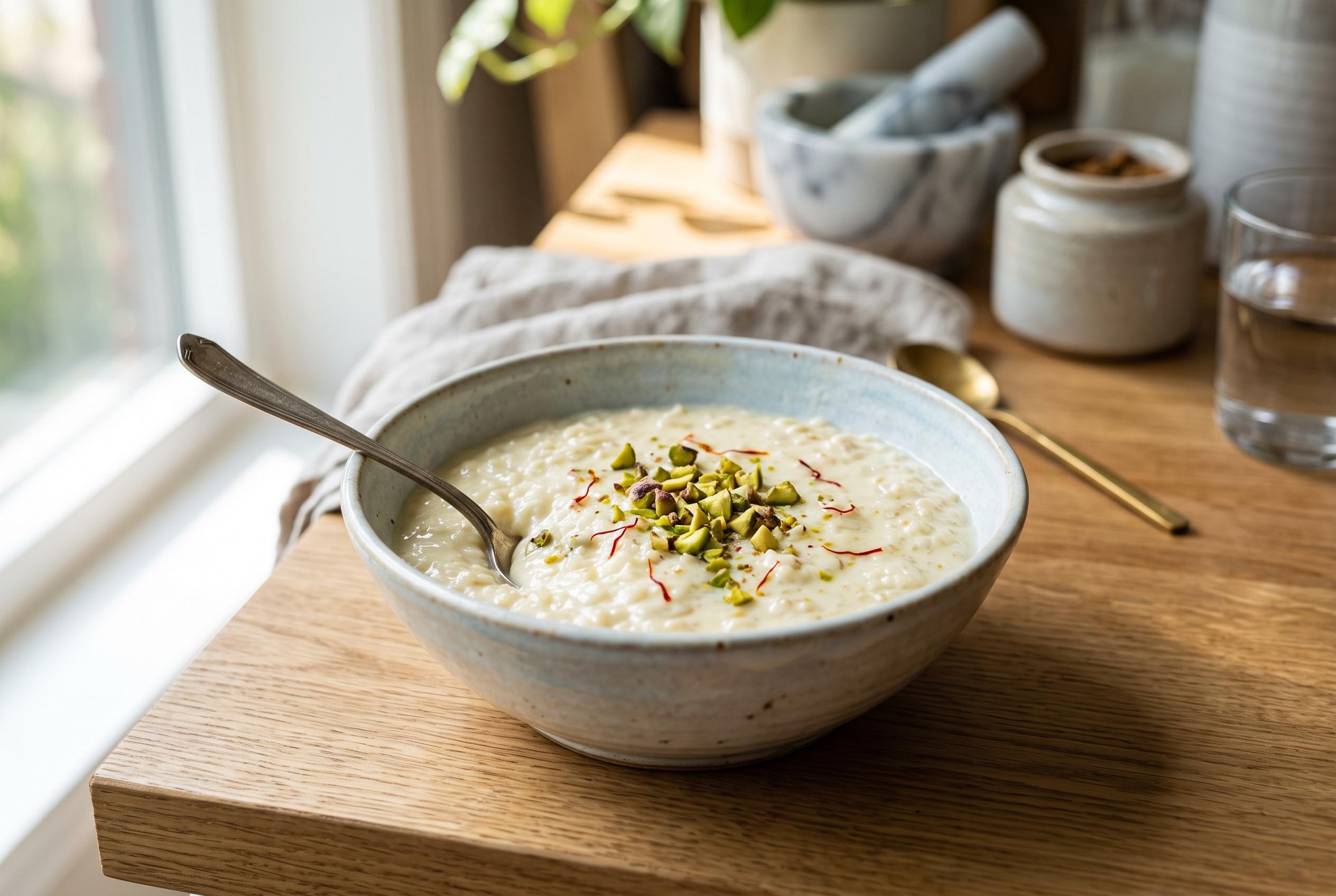

Despite ongoing debates over authenticity and tradition, Indian rice puddings like phirni and kheer continue to ascend global taste charts, inspiring chefs to innovate healthier versions steeped in cultural significance.
TasteAtlas’s rice-pudding table has turned into more than a one-day rankings story for India. The guide’s current page, last updated on 15 August 2026, still places six Indian dishes in its global top 32, led by Phirni at No 3 and Kheer at No 7. By 5 September, Free Press Journal had pushed the story into a new phase, asking chefs to rethink those same classics with millets, lighter milk and less refined sugar rather than treating them as untouchable festive indulgences. (tasteatlas.com)
The broader international picture helps explain why the list travelled so widely. TasteAtlas keeps Türkiye’s fırın sütlaç at No 1 and Thailand’s khao niao mamuang at No 2, while another Turkish entry, zerde, sits at No 13. TasteAtlas also says its rankings are based on audience ratings filtered to discount bot, nationalist and other suspect voting. The April 2026 snapshot cited by the Times of India was built from 2,496 ratings, of which 1,576 were judged legitimate; the live page now says 2,599 ratings were logged, with 1,654 accepted, even though the Indian line-up has held. (tasteatlas.com)
There is little disagreement about which Indian dishes made the cut, but there was some muddle over the arithmetic. The Indian Express, Curly Tales and Inshorts all carried the same six names and the same positions in April 2026. Yet Curly Tales briefly told readers that “seven Indian items” had made the list before its own FAQ later reverted to six. Inshorts, in a short repackage that directed readers back to Curly Tales, also listed only six, matching the official table. (indianexpress.com)
What gave the story weight beyond rankings was the way several outlets framed these dishes as carriers of ritual and memory. Sadaf Hussain told The Indian Express that “Kheer from Mānasollāsa and today has not changed much”, making the case that some of India’s best-known puddings have survived precisely because they remain conservative, slow-cooked dishes. On sakkarai pongal, Hussain said, “When someone eats pongal during harvest, they are participating in a cycle of land, labour, and belief.” In that reading, the list was not merely rewarding sweetness or texture, but endurance. (indianexpress.com)
Phirni and kheer, the two highest-ranked Indian entries, also arrive with the richest back story. The Times of India described phirni as a chilled pudding of ground rice, milk, saffron and cardamom, traditionally served in clay shikoras. TasteAtlas’s own note on kheer calls it an ancient dessert made in versions using rice, wheat or tapioca, and says it is believed to have begun about 2,000 years ago at the Jagannath temple in Odisha. That longer arc matters because India Today’s October 2023 report on an earlier TasteAtlas puddings table featured only these two Indian desserts in the global top 10, with phirni seventh and kheer tenth. (timesofindia.indiatimes.com)
The south Indian cluster on the 2026 list shows how elastic the rice-pudding label can be. Curly Tales described sakkarai pongal as a Makar Sankranti offering made with new rice, jaggery, ghee, coconut, sesame seeds, raisins, milk and cashews. The Times of India said pongal is traditionally cooked in a clay pot over an open fire, with the boil-over treated as a sign of good luck and abundance. Ven pongal, meanwhile, reaches the list not as a dessert in the usual sense but as a savoury combination of rice and moong dal sharpened with black pepper, cumin, curry leaves and ghee. (curlytales.com)
Doodhpak gives western India its place in the ranking and rounds out the regional spread. Curly Tales rendered it in stripped-back terms as rice, milk and sugar, while the Times of India account added saffron, cardamom, nutmeg and nuts, making it sound closer to a ceremonial cousin of kheer than a mere variant. Taken together, the six dishes map a wider story than a national honour roll: Punjab or north India for phirni, Odisha for kheer, Tamil Nadu for three pongal-style entries, and Gujarat for doodhpak. India’s success on the list lies in plurality rather than in one signature pudding. (curlytales.com)
That may be why the latest Indian treatment of the ranking has moved away from chest-thumping and towards adaptation. Free Press Journal’s chefs proposed barnyard millet for phirni, foxtail millet and date paste for kheer, black rice for sakkarai pongal, coconut oil instead of ghee for ven pongal, and lower-fat or almond milk for doodhpak. Whether those lighter versions catch on is a separate question. What is clearer, seen across the 2023 and 2026 TasteAtlas lists, is that Indian rice puddings have moved from two token appearances in a general pudding ranking to a half-dozen places in a specialised global table, without shedding the temple, harvest and household meanings that made them endure in the first place. (freepressjournal.in)
Disclaimer: This content is for informational purposes only and is not intended to be a substitute for professional medical judgment, advice, diagnosis, or treatment.