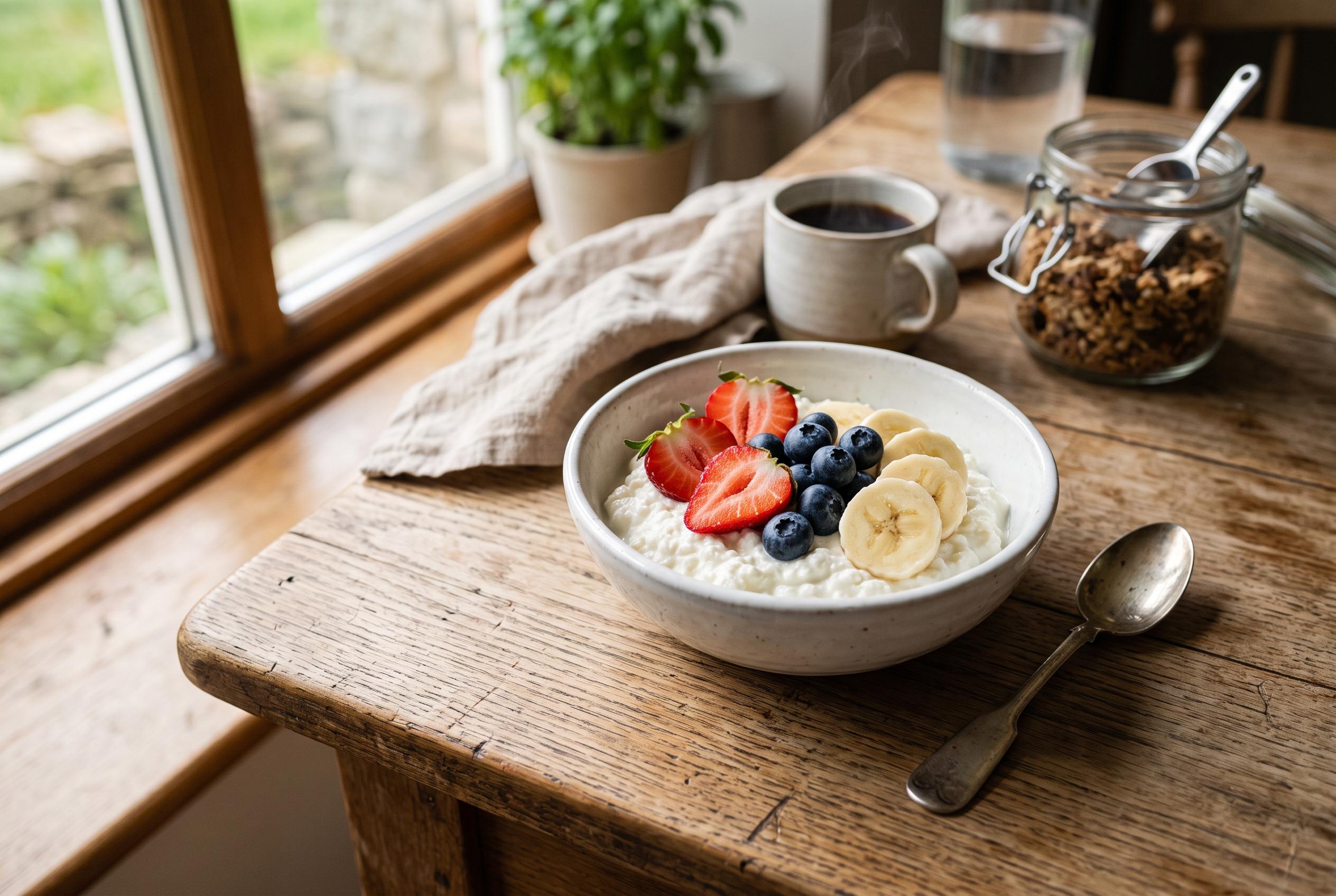

A growing culinary trend is turning cottage cheese from a diet staple into a colourful, flexible base for breakfast, pudding, or snacks, with fruit combinations enhancing both taste and nutritional value, according to nutrition experts and recipe guides.
Cottage cheese is increasingly being treated less as a diet food and more as a flexible base for breakfast, pudding or a quick afternoon snack, with recipe and nutrition sites largely agreeing that fruit is the easiest way to make it work. Across recent round-ups from Daily Dish, Walder Wellness and Healthline, the same combinations come up again and again: berries for sweetness and colour, pineapple for sharpness, peaches and other stone fruit for juiciness, and kiwi, mango, pears and cherries for texture and contrast. The appeal is not just taste. These pairings turn a plain bowl of curds into something that feels closer to a complete meal.
The nutrition case is straightforward. Healthline says a half-cup serving of low-fat cottage cheese provides 14 grams of protein, while protein accounts for more than 70% of the food’s calories. Carrie Walder, a registered dietitian writing for Walder Wellness, puts a one-cup serving at about 28 grams of complete protein and notes that cottage cheese also supplies calcium, vitamin B12, selenium, phosphorus, riboflavin, magnesium, folate and vitamin B6. Fruit then fills in the other side of the equation, contributing fibre, vitamin C, potassium and antioxidant compounds that dairy alone does not offer in the same way.
That balance helps explain why so many of the suggested pairings are practical rather than fussy. Walder argues that protein helps slow digestion and make fruit more filling, which is why the combination works so well for people who want a breakfast or snack that lasts. Daily Dish makes the same point in simpler terms, describing cottage cheese as an everyday staple that becomes more interesting when topped with fruit. It says a handful of strawberries, blueberries or raspberries adds natural sweetness and fibre, while crisp apple slices bring the contrast of crunch against creaminess. Pears, by comparison, offer something softer and juicier, turning the bowl into a lighter, more delicate snack.
Stone fruit appears to have an especially strong claim on the cottage cheese bowl. The Kitchn, in an older but still strikingly current breakfast note, describes peaches with cottage cheese as a classic combination and says very ripe peaches called for “something a little more savory than yogurt”. That more savoury edge is part of the appeal: sweet fruit offsets the gentle saltiness of the cheese rather than simply duplicating it. Walder also recommends plums and nectarines alongside peaches, while Daily Dish says pineapple works for a similar reason, its sweet tang cutting through the dairy’s richness and making the mixture feel brighter and less heavy.
Other fruit choices lean more on texture and variation. Daily Dish says kiwi brings a tangy note as well as vitamin C, while mango makes the bowl taste almost like a tropical pudding and contributes vitamin A. The Dizzy Cook, which approaches the subject as a quick recipe rather than a nutrition explainer, is especially useful on combinations rather than single toppings. Its suggestions include cherries with mixed berries, mango with kiwi, mango with strawberries, and peaches with either mangoes or strawberries. That shifts the idea away from a rigid ranking of “best” fruits and towards mix-and-match bowls built around sweetness, tartness and bite.
The serving ideas are also broader than a spoonful of fruit on top. Alicia, writing at The Dizzy Cook, gives a five-minute method using 8 ounces of cottage cheese, 1 cup of assorted fresh fruit and 1 to 2 teaspoons of honey, with optional chia seeds, flaxseed or granola. Her version can be blended until smooth and fluffy, which matters for people put off by the usual curd texture. She adds that frozen fruit works best when blended with the cheese, producing something closer to flavoured yoghurt. Walder offers two different directions from there: a sweeter bowl with mint and honey, or a more savoury version with basil, balsamic glaze and black pepper.
For people who want something portable, Walder suggests packing the mixture into reusable jars or containers for work or school, arguing that this is a better option than buying ready-made fruit cups that often contain more added sugar and preservatives. Chowhound pushes the idea further into presentation, suggesting “creating a cottage cheese board” with the cheese in a bowl as the centrepiece and fruit arranged around it. Its preferred companions include peaches, apricots, berries and even citrus such as oranges or grapefruit, with nuts or shredded coconut added for extra texture.
There are, however, a few cautions that are easy to miss when cottage cheese is being sold as a universal health food. Healthline notes that because it is a fresh, unripened cheese, it contains more lactose than aged cheeses such as Cheddar or Parmesan, which may make it harder for some people with lactose intolerance to digest. It also points out that sodium levels can be high, so reduced-sodium or sodium-free versions may be worth seeking out. The Dizzy Cook similarly recommends a lower-sodium option for people watching salt intake. And while The Kitchn is mostly nostalgic about the pairing, it adds a useful warning that many commercial brands are dry or pasty, arguing that fuller-fat versions generally taste better. In other words, the best fruit pairing may matter less than choosing a cottage cheese you actually want to eat.
Disclaimer: This content is for informational purposes only and is not intended to be a substitute for professional medical judgment, advice, diagnosis, or treatment.