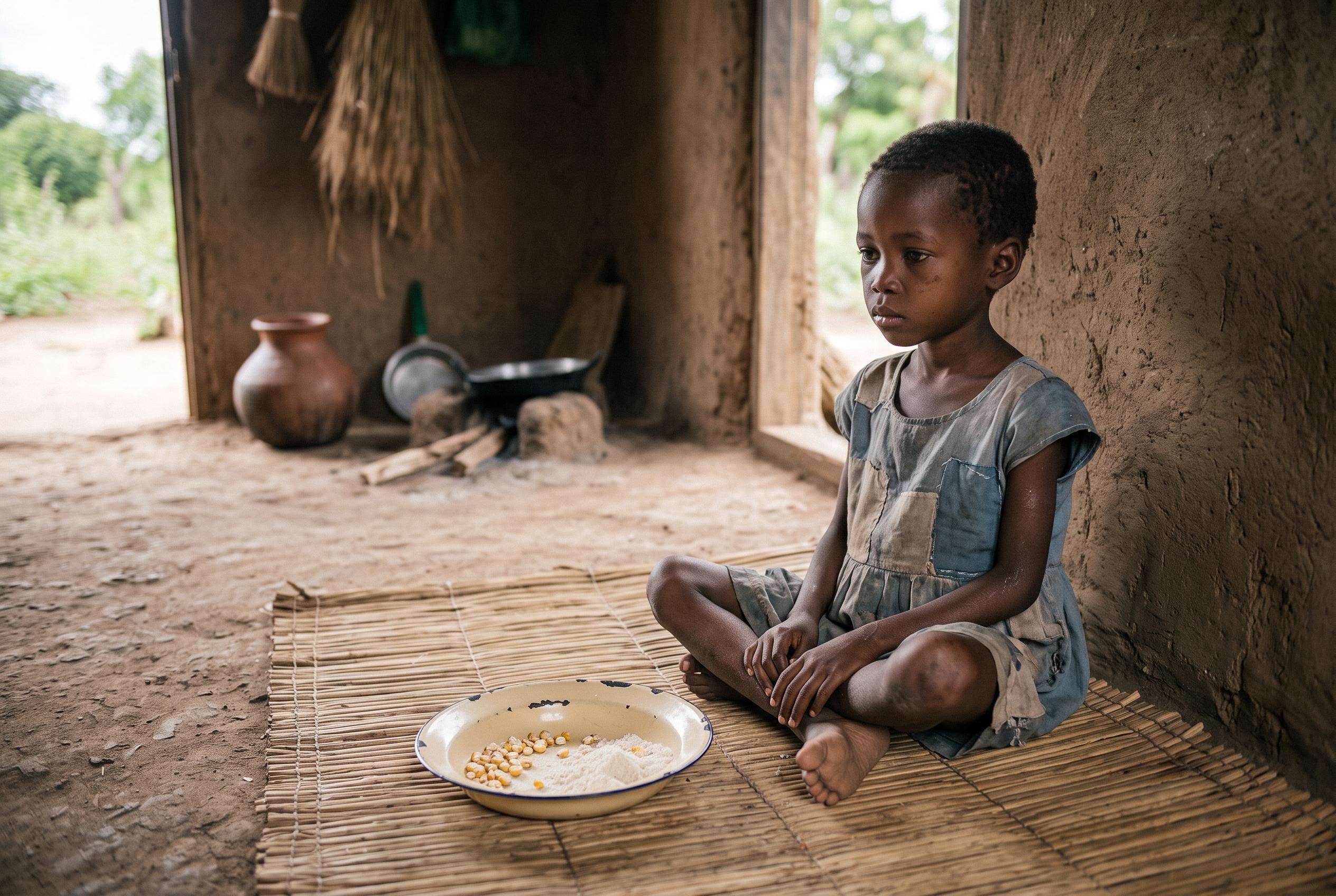

Despite a modest decline in child deaths this year, Nampula province continues to face severe malnutrition affecting over 16,000 children, with entrenched socioeconomic factors hampering recovery efforts.
Nampula’s health services say acute malnutrition killed 13 children in the first six months of 2026, while more than 16,000 others were diagnosed, a toll that has eased from last year’s level but still leaves staff bracing for the annual surge that usually begins in October and runs into March.
That improvement is only relative. Reporting in September 2025, Lusa said provincial health director Selma Xavier had recorded 30 deaths among children under five in the first half of that year, up from 24 in the same period of 2024, alongside nearly 24,576 cases of acute malnutrition against 21,833 a year earlier. Xavier said 968 children left the Nutritional Rehabilitation Programme before completing treatment, although 16,770 were listed as cured. She described the province as still facing “high rates of child malnutrition”, with an overall burden of about 46.7%, above the national average of 38%.
The spread is province-wide. Deutsche Welle reported that all 23 districts in Nampula have registered child malnutrition cases, with Nampula, Eráti, Meconta, Monapo, Mossuril and Ilha de Moçambique among the districts reporting the heaviest caseloads. UNICEF’s provincial profile points to reasons the emergency keeps renewing itself: rapid population growth, limited infrastructure, recurring climate shocks and weak access to quality services, especially in rural districts. It also says urban poverty is worsening as people move in from the countryside and informal settlements expand.
At household level, the diet described by local reporters is narrow and heavily reliant on dried cassava milled into flour for xima, locally known as caracata. Repórter Nacional said clinicians link the pattern to weak breastfeeding practices and to meals that provide calories but too little protein and too few essential micronutrients. The nutritionist and UniLúrio lecturer Cecília Boaventura has urged families to pair cassava or maize with beans, fish or meat, as well as green leaves and fruit, rather than treating starch alone as a complete meal.
That makes Nampula’s predicament especially stark. Vatican News described the province as Mozambique’s agricultural breadbasket, yet reported that 46.7% of children under five live with chronic malnutrition. The same account said Nampula, home to 6.7 million people, also records low birthweight at 2.9% and acute malnutrition at 9.1%. Preaching in Anchilo in July 2025, Archbishop Dom Inácio Saúre warned that “a nossa província de Nampula bate o recorde em desnutrição das crianças”, adding that chronic undernutrition can lead to rickets and serious cognitive harm.
Officials and aid agencies say the response has to be broader than hospital care. According to Deutsche Welle, the government and World Vision launched the “Já Chega” programme in Cazuzu, in Murrupula district, with a target of reaching about 2.6 million children across Nampula, Zambézia, Tete and Gaza by 2028 and mobilising more than US$2 million, including US$1.7 million. Diolene Gimo of World Vision said “A ideia é envolver diferentes setores da sociedade, de forma integrada”, while also trying to expand the national school feeding programme through public and private investment.
Official statistics suggest the roots of the crisis run far deeper than one bad season. Data published by the Ministry of Agriculture, Environment and Fisheries show that the share of households in Nampula with an adequate diet rose to 55.4% in 2013 from 40.2% in 2006, yet 23.2% of households were still classed as chronically food insecure. The same ministry series shows acute malnutrition in the province at 12.0% in 2013 and 8.4% in 2014/15, while chronic malnutrition remained at 50.3% in 2014/15.
For now, the lower death toll in the first half of 2026 offers only limited comfort. UNICEF says child wellbeing in Nampula is tied not only to nutrition, but also to shortcomings in health, water, sanitation, education and protection services. With the province moving towards the months when admissions usually rise, the fact that more than 16,000 children had already been diagnosed by June suggests the coming lean season will test whether prevention campaigns, treatment programmes and efforts to diversify diets can finally begin to shift a crisis that has persisted for years.
Disclaimer: This content is for informational purposes only and is not intended to be a substitute for professional medical judgment, advice, diagnosis, or treatment.