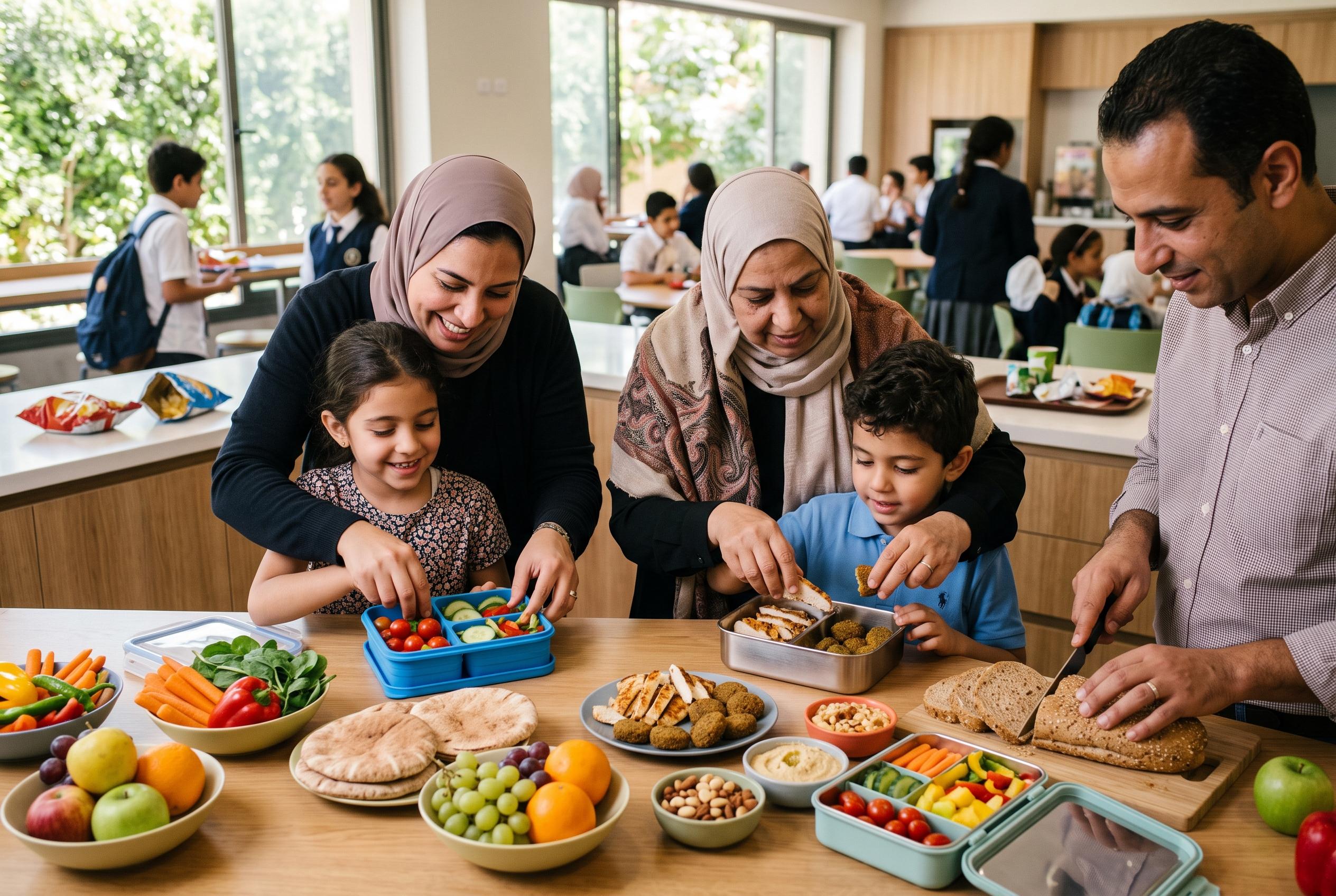

Egyptian families are advised to overhaul school lunchboxes, prioritising fresh proteins, wholegrain starches, fruits, and vegetables over processed foods, amid warnings about health and safety concerns.
As Egyptian families prepare school meals for the new term, nutrition specialists are converging on a broader message than a simple list of banned foods: a lunchbox should be built around fresh protein, wholegrain starches, fruit, vegetables and water, rather than processed meats, sugary spreads and highly manufactured snacks. Recent reports in Youm7, Al-Dustour and Egypt Telegraph all frame the issue as one of energy, concentration, satiety and safety during the school day, not just convenience. (youm7.com)
That has still produced some blunt warnings. One recurring target is the familiar combination of white fino bread and luncheon meat, both of which appear across this week’s Egyptian coverage as foods parents should cut back. Youm7 said the main concern was regular reliance on processed meats such as luncheon meat, sausages, nuggets, hot dogs and other preserved products, while Al Ain quoted a nutrition specialist urging parents to reduce fino bread in favour of more nutritious alternatives. (youm7.com)
The medical case was spelt out most sharply by Youm7, which said processed meat is meat preserved by salting, curing, smoking or fermentation and linked that warning to the World Health Organization and its cancer research arm. WHO says processed meat is in Group 1, “carcinogenic to humans”, and that eating 50 grams a day is associated with about an 18% increase in colorectal cancer risk. Youm7 also pointed to recent PubMed-indexed research exploring links between heavier intake and metabolic dysfunction-associated steatotic liver disease. (youm7.com)
Several outlets, though, argued that parents would be better served by a blueprint than by a blacklist. Al Ain quoted Doaa Hamed Al-Sebkhawi, an assistant professor of nutrition at Cairo’s National Nutrition Institute, saying “نقسم اللانش بوكس إلى 4 أرباع” – vegetables, fruit, protein, and carbohydrates or starches. She also said children should have a light breakfast before leaving home. Al-Masry Al-Youm, citing Harvard’s Nutrition Source, suggested a near-identical formula: half the box for fruit or colourful vegetables, a quarter for whole grains and the last quarter for healthy protein, with water alongside. (al-ain.com)
That shift away from refined bread is one of the clearest areas of agreement. Al-Sebkhawi said white bread, especially fino, should be reduced in favour of baladi bread because it is richer in fibre. Mohamed Helmy, a nutrition consultant quoted by Egypt Telegraph, likewise recommended brown toast, oat bread and baladi bread instead of baked goods made from white flour. For fillings, he pointed parents towards boiled eggs, cottage cheese, chickpeas, beans and grilled chicken, while suggesting tuna only once or twice a week. (al-ain.com)
Practicality runs through much of the advice. Al-Dustour said a child’s school meal should not depend on one large, repetitive item, but on a mixed box suited to age and appetite: perhaps cheese with cucumber or tomato, a boiled egg sandwich with vegetables, grilled chicken with lettuce, tuna with vegetables or cottage cheese with cucumber, plus fruit and water. Egypt Telegraph added snack ideas such as nuts, yoghurt, oil-free popcorn and dates, and advised against tinned fruit, ready-made juices, fizzy drinks and energy drinks. (dostor.org)
Food safety is another concern, especially in warm weather. Magdy Nazeh, head of the Scientific Foundation for Food Culture, told Al-Watan that cooked meals are best kept out of plastic lunchboxes because heat and storage conditions can cause problems, while Al-Dustour warned parents to be careful with foods that spoil quickly if they are not kept at the right temperature. Nazeh also said processed items such as sausage, beef luncheon and similar meats should be limited to one or two times a week at most because of their effect on health and concentration. (elwatannews.com)
There is some variation at the edges. Some reports take a harder line on processed cheese, but Marwa Shaeer, an assistant professor in food studies quoted by Al-Watan, drew a distinction between more artificial options and cheeses made from milk, saying cheddar, flamank, gouda and cottage cheese were preferable. She also backed a two-sandwich approach: one containing protein and carbohydrates, and another with a sweeter filling such as peanut butter, jam, halva or chocolate. (elwatannews.com)
For busy households, the most useful advice may be the least dramatic. Al-Masry Al-Youm recommended preparing chopped fruit, vegetables and cooked proteins in advance and involving children in packing their own lunch the night before. Taken together, the week’s coverage suggests that the real aim is not a perfect-looking box but a balanced one: less ultra-processed food, more whole ingredients, a drink that hydrates, and portions a child will actually finish. (almasryalyoum.com)
Disclaimer: This content is for informational purposes only and is not intended to be a substitute for professional medical judgment, advice, diagnosis, or treatment.