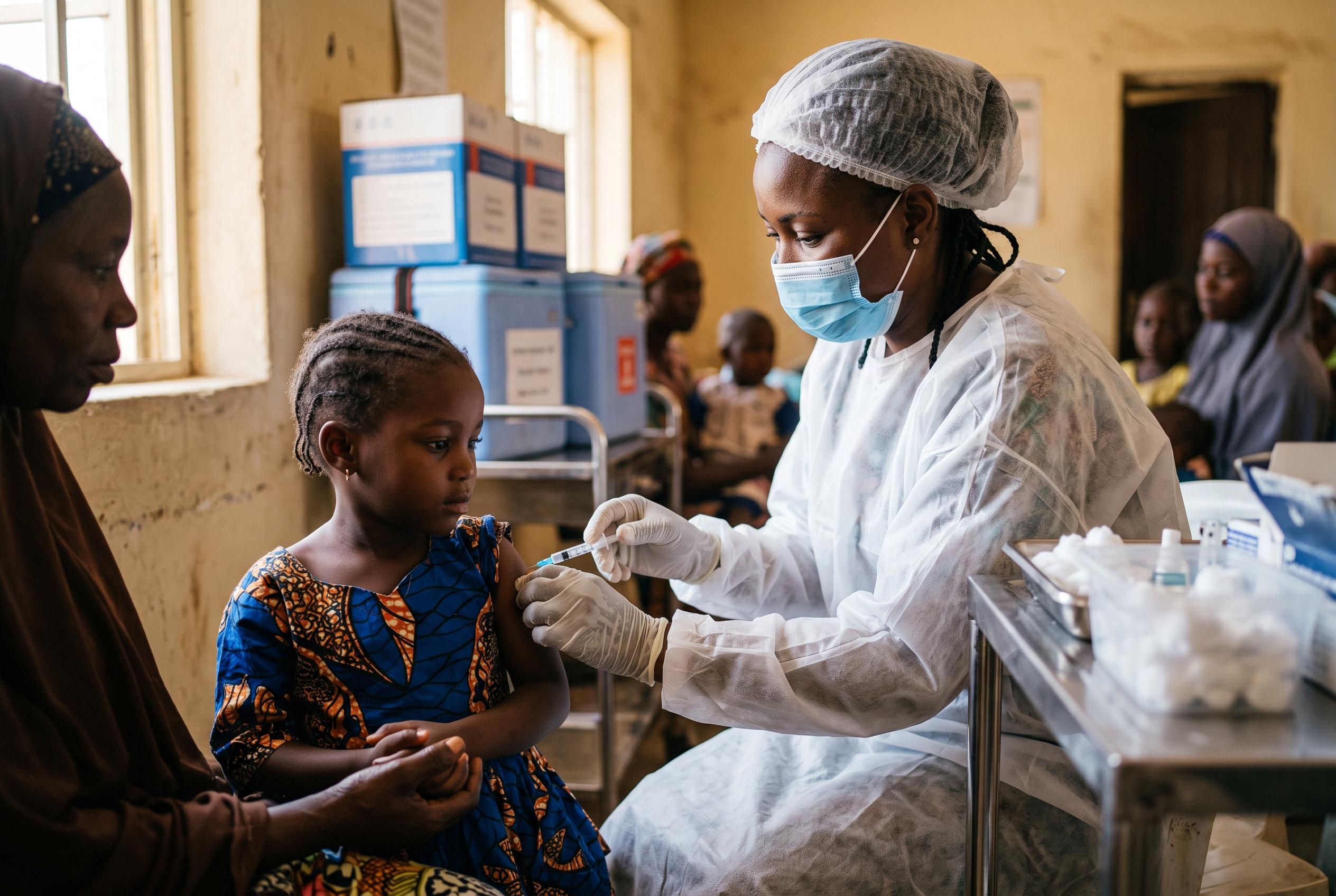

Nigeria’s health authorities have intensified efforts to combat a deadly diphtheria outbreak, deploying emergency teams and millions of vaccine doses amid rising cases and vaccine supply challenges in the northern states of Katsina and Kano.
Nigeria’s federal health authorities have escalated their response to diphtheria in the north, creating an emergency task force for Katsina and Kano and dispatching 500,000 vaccine doses to the two states after the disease’s spread among under-immunised children deepened concern in Abuja. The Federal Ministry of Health and Social Welfare said on 28 August (health.gov.ng) that the intervention was being launched as the Nigeria Centre for Disease Control and Prevention, or NCDC, warned separately that the country had already recorded more than 10,000 confirmed diphtheria cases in 2026. Premium Times and The Sun reported those national figures from a briefing by NCDC director-general Jide Idris. (premiumtimesng.com)
That national warning was sharpened by Michael Okali of the NCDC, who said 68 per cent of confirmed infections involved people who had not been vaccinated, while another 28 per cent were in people who did not know their vaccination status. He also said most deaths had occurred among the unvaccinated, underlining how heavily the outbreak is falling on those without protection. In the week from 24 to 30 August, Nigeria recorded 69 suspected cases, 48 confirmed cases and four deaths, according to Okali’s interview with Channels Television as described by Leadership. The same wider NCDC briefing carried by Premium Times and Vanguard stressed that too many children were still either unvaccinated or only partly vaccinated. (premiumtimesng.com)
The federal response goes beyond vaccine deployment. The health ministry said the new task force would be co-chaired by Jide Idris and Godwin Ntadom, the director of public health, and would include the health commissioners of Katsina, Kano, Zamfara and Sokoto, alongside the National Primary Health Care Development Agency, the World Health Organisation, UNICEF and the National Tuberculosis and Leprosy Control Programme in Katsina State. According to the ministry statement (health.gov.ng), the team has been ordered to pursue three lines of action at once: containment and immunisation, wider access to treatment, and emergency support for referral care, with weekly reports to Coordinating Minister of Health and Social Welfare Muhammad Ali Pate.
Katsina illustrates why the response has been stepped up. Channels Television reported from the state on 30 August (channelstv.com) that about 1,000 suspected cases had been recorded there since January, with roughly 5 per cent of those affected dying. Shaima’u Abba, acting executive secretary of the Katsina State Primary Health Care Agency, said suspected cases had been logged in 29 local government areas by Epidemiological Week 35, with Funtua worst hit, followed by Kankia, Bakori, Katsina, Mashi and Daura. She said a reactive vaccination campaign had begun on 25 August in 15 high-risk wards across Bakori, Charanchi, Funtua, Mashi and Kankia, with UNICEF support, while surveillance, contact tracing, case investigation and preventive treatment for contacts were continuing.
The pressure is also showing in the hospitals. Channels said (channelstv.com) the Federal Teaching Hospital Katsina had told the public that its children’s ward had been stretched beyond capacity by the volume of referrals. The federal ministry’s statement added (health.gov.ng) that treatment annexes were to be established in Katsina, Daura and Funtua to bring care closer to patients, while urgent support, including diphtheria antitoxin, intravenous antibiotics, extra clinical staff and personal protective equipment, would be sent to the teaching hospital. That is a more detailed treatment plan than the national vaccination message alone suggests.
Nationally, officials are describing the outbreak in slightly different ways, though not incompatibly. Okali said eight states accounted for 98 per cent of confirmed infections, naming Kano, Kaduna, Katsina, Borno, Bauchi, Plateau, Sokoto and Zamfara. Idris, in the NCDC briefing reported by Premium Times, The Sun and Vanguard, singled out Kano, Borno and Bauchi as carrying the heaviest burden and said the proportion of confirmed cases ending in death had fallen compared with the same period last year. He said, “The central issue is that too many children remain unvaccinated or incompletely vaccinated.” (premiumtimesng.com)
The picture has also shifted since those late-August briefings. On 1 September, Muhammad Abbas of the Kano State Centre for Disease Control told Channels Television (channelstv.com) that Kano had counted 39,536 suspected cases and 32,633 confirmed cases since the outbreak began, with 1,744 deaths affecting all 44 local government areas. Kano is now seeking more vaccine supplies: The Sun reported on 29 August and 1 September (thesun.ng) that the state agency disputed an assembly claim that more than 50 children had died in Rano this year, but acknowledged supply shortfalls, saying it needed about six million doses and had received 300,000. That state-level dispute underscores both the difficulty of tracking deaths outside health facilities and the pressure on vaccination stocks.
What has not changed is the official explanation for why transmission continues. Idris told reporters, in remarks carried by Premium Times and Vanguard, that hesitancy, insecurity, displacement, population movement and the challenge of reaching underserved communities were all undermining control efforts. (premiumtimesng.com) Health authorities are urging parents and caregivers to complete routine immunisation and to seek treatment quickly when a child develops symptoms such as sore throat, fever, neck swelling, difficulty swallowing or breathing, or the tell-tale grey membrane in the throat. In Okali’s account, booster doses are available for people unsure of their status, and he said the routine vaccines remain free at primary healthcare centres.
Disclaimer: This content is for informational purposes only and is not intended to be a substitute for professional medical judgment, advice, diagnosis, or treatment.