
Nigeria faces a surge in diphtheria cases across multiple states, with authorities implementing school closures and mass immunisation efforts amid concerns over low vaccination rates and rising fatalities.
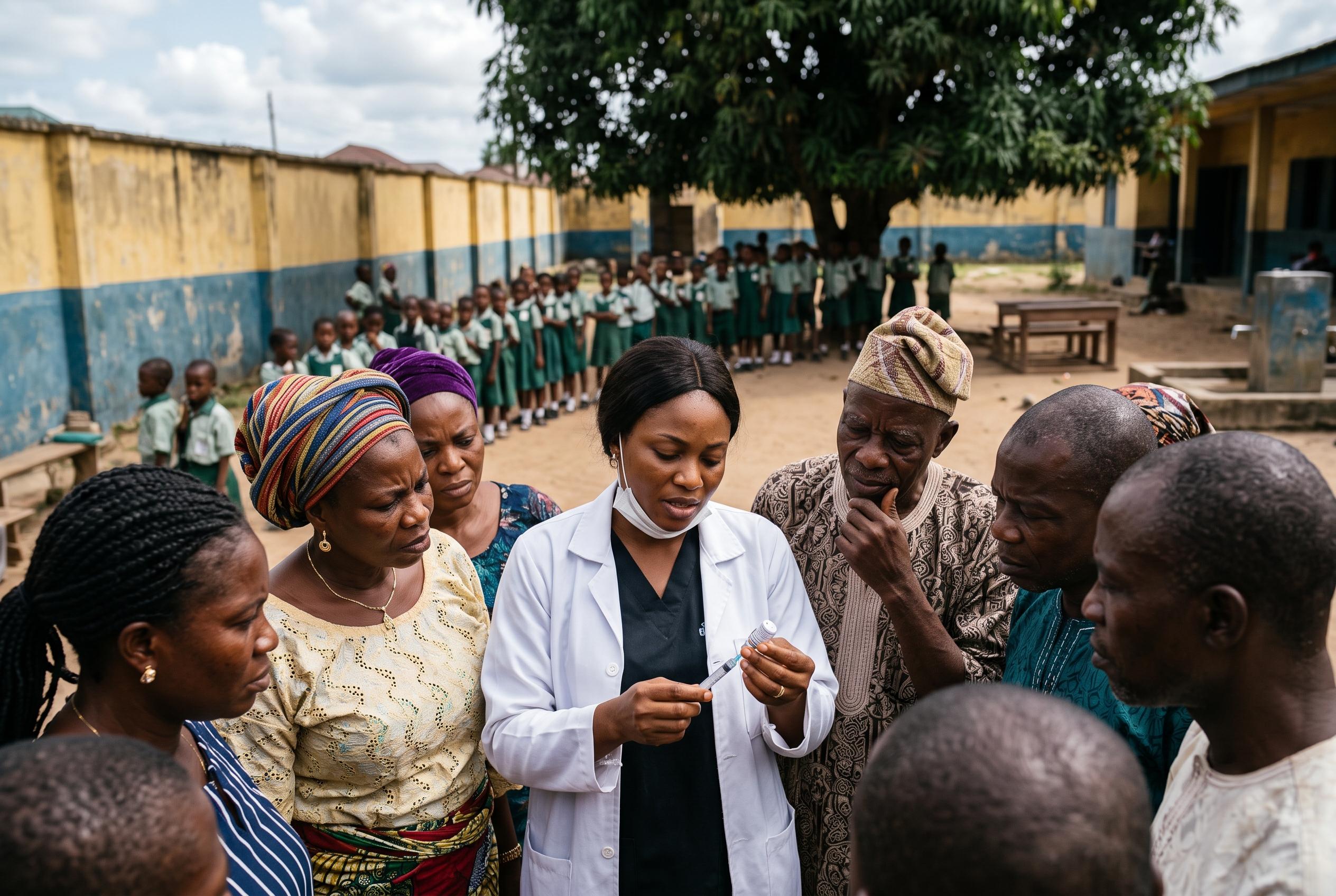
Plateau State has ordered all public and private primary and secondary schools to shut from Monday, 7 September, after suspected diphtheria cases were identified in Jos North, Jos South, Bassa and Wase, a sign that Nigeria’s latest wave is no longer confined to its worst-hit north-western states. The move comes as the Nigeria Centre for Disease Control and Prevention says the outbreak continues to track closely with gaps in routine immunisation: Michael Okali, the agency’s principal health communication officer, said available data showed about two-thirds of confirmed cases were in people who had not been vaccinated, while many others did not know their status.
Abuja has already escalated its response. In a 28 August statement, the Federal Ministry of Health and Social Welfare said Coordinating Minister Muhammad Ali Pate had activated a multi-agency emergency task force for Kano and Katsina, to be co-chaired by the NCDC director-general and the director of public health. The team brings together federal agencies, the health commissioners of Katsina, Kano, Zamfara and Sokoto, alongside the World Health Organization and UNICEF. The ministry said 500,000 vaccine doses had been deployed to Kano and Katsina, while treatment annexes were to be opened in Katsina, Daura and Funtua and extra antitoxin, intravenous antibiotics, clinical staff and protective equipment sent to the Federal Teaching Hospital in Katsina.
The wider picture is severe. The ICIR reported that the NCDC had recorded more than 10,000 confirmed diphtheria cases nationwide in 2026 by 28 August, with Kano, Borno and Bauchi carrying the heaviest burden. Health officials have linked persistent transmission not only to low vaccine coverage, but also to hesitancy, insecurity, displacement and poor access to underserved communities. Fresh flare-ups have also been reported outside the main epicentres. In Plateau, state officials said 23 people had died in the previous two weeks and 143 suspected cases had been logged. In Niger, the state primary health care agency said 17 people had died since January and 124 cases had been confirmed between January and early August.
Kano remains the clearest example of how entrenched the outbreak has become. Speaking to Channels Television in remarks carried by Vanguard, Kano State Centre for Disease Control director-general Muhammad Abbas said the state had recorded 39,536 suspected cases and 32,633 confirmed cases since the outbreak began in December 2022, with 1,747 deaths across all 44 local government areas. He said 40.5 per cent of confirmed patients had been hospitalised. The vaccination profile was equally stark: only 24.35 per cent of confirmed cases were fully vaccinated, while 75.65 per cent were either unvaccinated or only partially vaccinated. Abbas said Kano would need close to nine million doses to mount a full mass campaign, far beyond the emergency supplies already received.
There is also open disagreement over the scale of recent deaths in Rano. After a member of the Kano State House of Assembly said more than 50 children had died there, Kano health authorities pushed back. Punch reported that a state investigation confirmed two diphtheria-related deaths in the local government area. Abbas later said active case searches had revised that figure to three, not 50, and insisted the larger claim was unsupported by surveillance data. Even so, officials have not downplayed the seriousness of the outbreak. According to Punch, they blamed low vaccination coverage, late presentation at health facilities, misinformation and harmful traditional practices for worsening outcomes.
Katsina, meanwhile, has become the other major pressure point. State officials told Channels Television that the case fatality rate had climbed to about 5.6 per cent, which they attributed largely to patients arriving too late for effective treatment. About 1,000 suspected cases have been recorded in the state since January 2026. Punch said the outbreak had spread to 29 local government areas, with Funtua the worst affected, followed by Kankia, Bakori, Katsina, Mashi and Daura. In response, the state launched reactive vaccination in 15 high-risk wards, and by the third day of the exercise 67,670 eligible people had received Td vaccine while 24,103 children had received pentavalent doses. Officials also said another 650,000 doses had been secured for high-risk communities, and a later campaign was expected to cover 167 wards across 30 affected local government areas.
Local reporting from Radio Nigeria underlined the strain on the health system in Katsina. The broadcaster said at least 50 people had died there and that more than 1,000 had been infected, with most secondary health centres no longer having enough bed space. It reported that three new isolation centres had been opened in Daura, Funtua and the General Amadi Rimi Orthopaedic Hospital in Katsina to ease the pressure, while complicated cases continued to be referred to tertiary facilities. Clinicians have warned that the disease can initially resemble an ordinary cold. Consultant paediatrician Olajide Aladesua told Channels Television that fever, cough, nasal discharge, severe sore throat, difficulty swallowing and neck swelling should all be treated as warning signs.
What emerges from the federal and state accounts is a response racing to catch up with a vaccine-preventable disease that has spread well beyond isolated clusters. Kano is asking for millions more doses, Katsina is expanding isolation wards and vaccination drives, Niger is urging parents to return to routine immunisation, and Plateau has taken the unusual step of closing schools to curb contact among children. The government’s emergency task force may improve treatment access and coordination, but the underlying message from every level of the response is the same: delayed care and missed childhood vaccinations are still driving avoidable deaths.
Disclaimer: This content is for informational purposes only and is not intended to be a substitute for professional medical judgment, advice, diagnosis, or treatment.