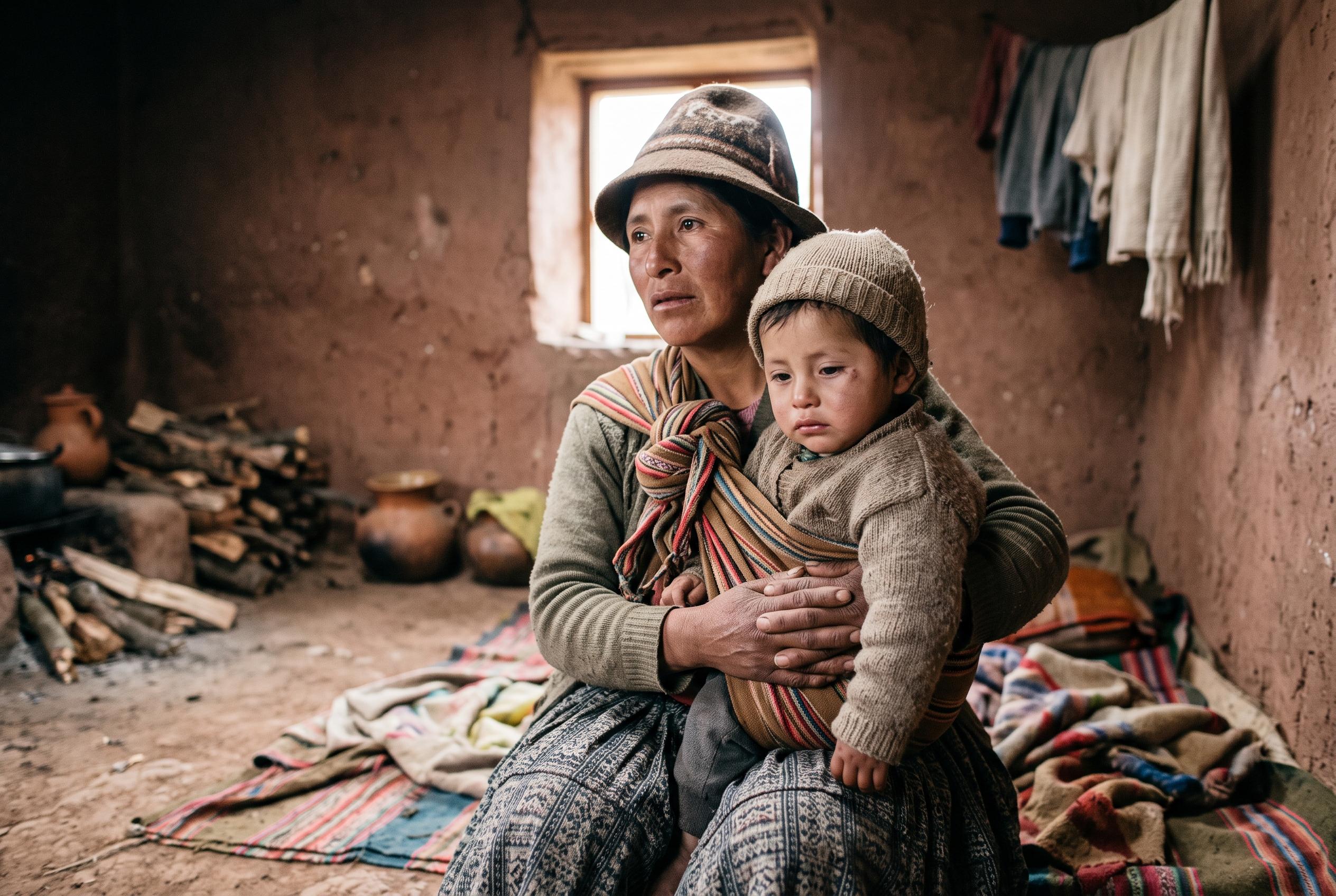

Despite ongoing intervention campaigns, anaemia rates remain alarmingly high among children under three in Arequipa and Caylloma, with recent data indicating worsening trends and regional hotspots, prompting calls for sustained, multisectoral action.
More than 5,300 children aged under three were diagnosed with anaemia across Arequipa and Caylloma in 2025 after 20,692 were screened, and broader official data suggest the problem is worsening rather than receding. The departmental ENDES survey found that 43.9% of children aged six to 35 months in Arequipa had anaemia in 2024, up from 40.4% in 2023, while the rate for children aged six to 59 months rose to 36.7% from 31.2%.
The burden is not spread evenly. Maricel Bedoya, the Red de Salud Arequipa-Caylloma co-ordinator for the fight against anaemia, told Diario El Pueblo in April 2026 that Caylloma had a 35% incidence rate and that San Antonio de Chuca, Caylloma and Coporaque were close to half of all children under 36 months. However, RPP, citing figures released in June 2024 by the regional health authority and network co-ordinator Carlos Cuya Mamani, reported a far harsher picture: seven in 10 children under three in Caylloma had anaemia, and Coporaque, Huambo, Lluta, San Antonio de Chuca, Tisco, Tuti and Chivay were all at 100%. Cuya Mamani said the figures had shown no improvement on the previous year and linked them to weak health coverage, shortages of specialists and entrenched poverty.
What officials broadly agree on is the age at which risk begins to rise sharply. Bedoya has said the first six months, when babies are fed on breast milk, are not usually the point of greatest vulnerability; the break often comes once complementary feeding begins and iron-rich foods are not added consistently. The health network says children should receive foods such as sangrecita, liver or bofe from the sixth month, alongside micronutrients supplied free of charge. Bedoya has also warned that the condition can be difficult for families to detect because a child may have no obvious symptoms, even as anaemia is already affecting oxygen transport to the brain. She told Diario El Pueblo that up to the age of three, 90% of a person’s cognitive potential is formed, making that window especially sensitive.
The health network says it is trying to move from sporadic appeals to repeated intervention. Radio Yaraví reported on 20 April 2026 that the Red de Salud Arequipa-Caylloma had launched the first of five campaign drives planned for April, June, August, October and December. Bedoya, identified by the station as the official leading the anaemia strategy, said the aim was to halve cases during 2026. The same report said some parts of the region were still hovering near 40%, underscoring why officials are focusing on repeated screening, monitoring and prevention rather than a single annual drive.
One example of that local approach came in Callalli, in Caylloma province, where the regional government said the micro-network there ran its Third Week of the Fight Against Anaemia from 18 to 23 August 2025. The programme reached 250 children under five and combined nutrition sessions with haemoglobin checks, blood tests, iron supplements and advice for parents on how to use them properly. Officials said families were encouraged to give iron-rich foods, including sangrecita, and that the work was carried out by teams from medicine, nursing, nutrition, dentistry, psychology and laboratory services. Even there, the government said, Callalli still had between 30 and 40 children with anaemia.
The issue has also been pushed beyond the clinics. At a meeting on 26 February 2026, Arequipa’s Provincial Health Council drew up a multisectoral agenda that placed anaemia in children aged six to 36 months and in pregnant women alongside mental health problems and rising cancer cases. The municipality said representatives from the health network, the Colegio Médico, EsSalud, the Ministry of Housing, the Colegio de Psicólogos, the Police Hospital and the provincial subprefecture took part, with Génesis Amado attending for the city council. The stated aim was to strengthen prevention, screening and vaccination through co-ordinated action on wider social determinants of health.
The regional survey figures help explain that broader push. ENDES 2024 shows little difference between urban and rural Arequipa among children aged six to 35 months, with anaemia affecting 43.7% in towns and cities and 45.0% in rural areas. Boys were slightly more affected than girls, at 46.0% against 42.3%. The same report notes that comparisons with older numbers should be handled carefully because Peru adopted a new WHO guideline in 2024, including an updated altitude adjustment and cut-off for children aged six to 23 months, but the latest departmental figures still point upwards rather than down.
That leaves Arequipa with a mixed and unsettling picture. Local health officials have argued that diagnosed cases within the Arequipa-Caylloma network have been easing, from nearly 6,000 in 2023 to 5,700 in 2024 and 5,314 in 2025. Yet the wider survey trend has worsened, Caylloma’s highland districts remain the clearest hotspots, and the network is still having to organise month-by-month drives to find children who missed growth checks, vaccination schedules or haemoglobin tests. Taken together, the figures suggest that progress, where it exists, is fragile and uneven, especially once infants move beyond exclusive milk feeding and diet starts to determine whether prevention succeeds.
Disclaimer: This content is for informational purposes only and is not intended to be a substitute for professional medical judgment, advice, diagnosis, or treatment.