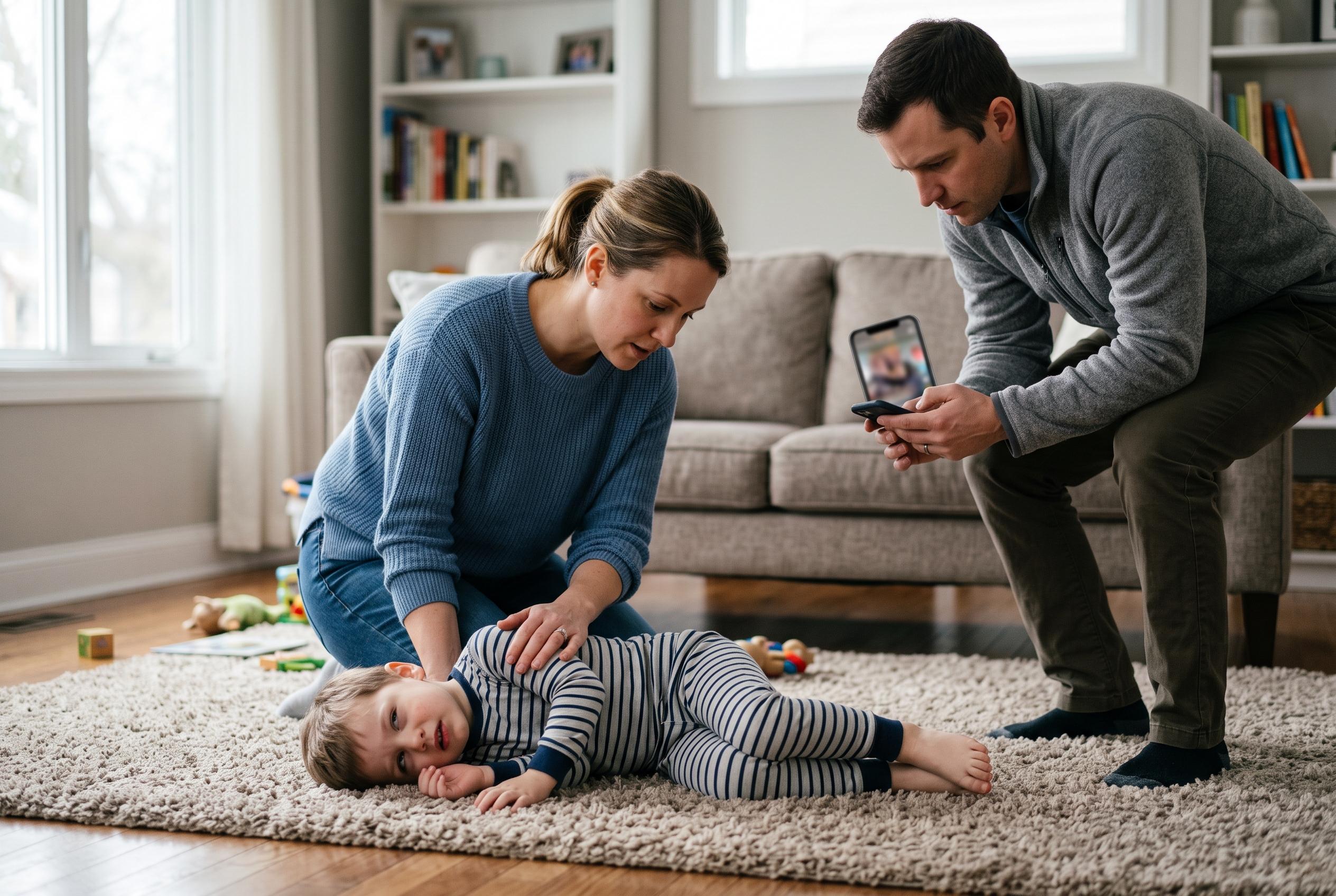

A study reveals that over half of febrile-seizure first-aid videos on Chinese short-video platforms contain dangerous misinformation, with professionally uploaded content often featuring harmful advice despite high production quality.
More than half the febrile-seizure first-aid videos sampled from China’s biggest short-video platforms contained advice that could put a child at risk, according to a study published online in BMC Pediatrics on Saturday, 5 September 2026. The researchers found that 55.0% of 269 videos carried at least one item of dangerous misinformation, while 52.4% included what the paper classed as Grade A misinformation, meaning advice with an immediate potential for physical harm.
The sample was drawn in March 2026 from Douyin, Kuaishou and Bilibili, with 96 videos taken from Douyin, 87 from Kuaishou and 86 from Bilibili. Two paediatric reviewers independently assessed every clip. According to the journal record linked through the article’s DOI and the Crossmark update page, the manuscript was received on 26 April 2026, accepted on 31 August and first posted online on 5 September. Crossmark listed the paper as current. A DOI-led PubMed search on the day of publication did not yet surface a clear indexed record, underlining how recently the study entered the literature.
What makes the paper more than another complaint about poor online health information is the way it tested for danger. The publisher version says the team did not stop at familiar measures such as Global Quality Score, modified DISCERN, JAMA benchmarks, the Patient Education Materials Assessment Tool and a video information index. They also built two febrile-seizure-specific tools: a 14-point content index and an 11-item dangerous misinformation checklist. That let them separate videos that appeared polished from videos that actually matched guideline-based care.
The result was not simply patchy explanation but actively risky demonstration. According to the paper, 46.1% of the videos showed or recommended putting objects into a child’s mouth during a seizure. Another 41.6% promoted pressing the philtrum or slapping the child. Restraining the child appeared in 38.7% of the sample, and 32.3% advised forcing water or oral medicines into the mouth. For frightened parents searching in real time, the study suggests that some of the most visible clips may be teaching exactly the reflexes clinicians try to prevent.
The sharpest finding was the split between appearance and safety. Douyin videos performed best on the generic quality measures, yet scored worst on guideline-based completeness and had the highest share of Grade A misinformation, at 63.5%, the paper says. The study also challenges the comforting idea that professional authorship offers a safeguard. Medical professionals uploaded 79.2% of the videos analysed, but 50.7% of those professionally posted clips still contained dangerous misinformation. In other words, the problem was not confined to obvious cranks or anonymous accounts.
The engagement data point in the same direction. Likes and shares tracked more closely with generic quality than with clinically useful completeness, while the paper reports that engagement moved negatively against the febrile seizure content index: likes showed a correlation of -0.22 and shares -0.20. Generic tools were also poor at detecting the dangers that matter in an emergency. The correlation between the study’s content index and Global Quality Score was -0.03, and with modified DISCERN it was 0.02. Earlier research on Korean YouTube videos had suggested that longer videos and clips led by physicians tended to be better. The new Chinese study suggests that, in acute paediatric first aid, polish and credentials can still coexist with bad advice.
That earlier Korean work helps place the Chinese findings in a broader pattern. In a paper published in Seizure on 1 June 2021, Juyeon Oh and Sun Young You screened 1,641 Korean-language YouTube results gathered on 7 September 2020 and analysed 73 eligible videos. Roughly 30% were judged high quality, most focused on seizure management, and five recommended putting a stick in a child’s mouth. The authors concluded that healthcare professionals should “warn parents of this issue”. OpenAlex shows that paper has been cited 32 times, suggesting that concern about febrile-seizure misinformation online is established rather than novel, even if the latest Chinese study reaches a more pointed conclusion about how platform dynamics may amplify it.
The Shanxi team does not argue that all short-video health education is worthless. Its warning is narrower and more serious: when the subject is an emergency involving a young child, content has to be judged on the actions it demonstrates, not on production values, popularity or the status of the uploader. The publisher’s ethics statement notes that the study qualified for exemption because it analysed publicly accessible videos and did not interact with users. For parents, the implication is bleakly simple. The clip that looks most authoritative in a moment of panic may be the one most likely to teach the wrong thing.
Disclaimer: This content is for informational purposes only and is not intended to be a substitute for professional medical judgment, advice, diagnosis, or treatment.