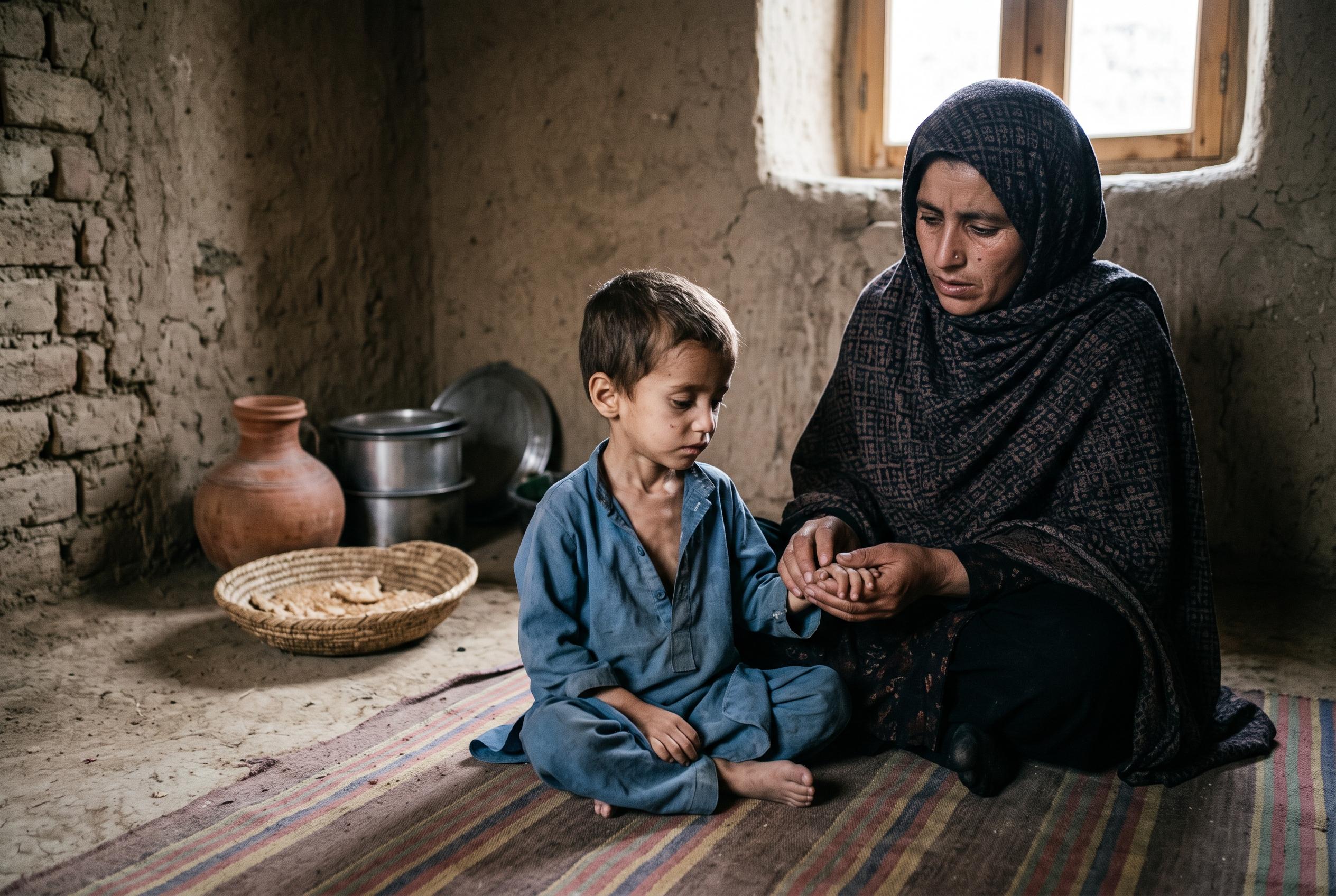

Rising child malnutrition rates in Kandahar highlight a deepening health and food security emergency across Afghanistan, with aid disruptions intensifying risks for vulnerable children and mothers amid mounting economic and environmental pressures.
The wards filling up in Kandahar are part of a wider collapse in Afghanistan’s nutrition safety net. Staff at the Médecins Sans Frontières hospital in the southern province told TOLOnews that 12,530 malnourished children had been brought to the facility since the start of 2026, with caseloads running about 28 to 30 per cent above last year. At the same time, the World Food Programme says Kandahar is now one of 12 provinces where child acute malnutrition has reached critical levels and is expected to keep rising through October.
Doctors and families in Kandahar describe a crisis driven by far more than empty cupboards. Ziaurrahman Stanikzai, who heads the malnutrition department at the MSF hospital, said the increase in admissions was “not a good situation”. Mothers interviewed by TOLOnews spoke of running out of breast milk, switching to powdered milk, infections and swelling. Enziad Abdul Wahid, another MSF nutrition official in Kandahar, said economic hardship, cuts in international funding and other illnesses were all feeding the surge. Local reporting also pointed to drought, migration, poor access to clinics, short gaps between births and misconceptions about breastfeeding.
Those pressures sit inside a national emergency that aid agencies say is deepening even during harvest time. The World Food Programme projects that 3.7 million Afghan children and 1.2 million pregnant and breastfeeding women will suffer acute malnutrition in 2026. The World Health Organization says 17.4 million people, more than a third of the population, are facing crisis or emergency levels of hunger this year, three million more than in 2025, in what it described as one of the harshest lean seasons in decades.
The system meant to catch children before they become critically ill is also fraying. According to the World Food Programme, 142 health centres across Afghanistan shut in 2025 because of reductions in humanitarian assistance, cutting more than 13,000 children off from nutrition treatment. The agency says shortages of therapeutic nutrition supplies have been worsened by conflict in the Middle East and the nine-month closure of Pakistan’s border, disrupting deliveries and leaving nearly one million malnourished mothers and children without essential nutrition services for five months. Reporting by the Associated Press added that food distributions intended to prevent famine in the worst-hit areas were being suspended from August to October 2026 for lack of money, with WFP seeking $540 million over the next six months.
UNICEF’s figures show how severe the damage has become. The agency says Afghanistan ranks fourth in the world for child wasting, the dangerous form of acute malnutrition in which children become too thin for their height. Of the 3.7 million under-fives expected to be affected this year, nearly one million are projected to be severely wasted and at imminent risk of death, 700,000 are expected to suffer moderate acute malnutrition and 2.7 million to experience early-stage wasting. UNICEF also links the crisis to water and sanitation: a quarter of households relied on unimproved water sources in 2025, while 46 per cent said access to safe drinking water was their main concern, up from 31 per cent a year earlier.
In Kandahar, the medical consequences are increasingly visible in children arriving with multiple, overlapping illnesses. Pajhwok reported in June that MSF had warned malnutrition was heightening the risk of tuberculosis in the south, while active TB could in turn worsen malnutrition by causing weight loss and raising the body’s energy needs. The news agency described the case of Noria’s eight-month-old daughter, who was admitted after three months of fever and persistent coughing and was later diagnosed with tuberculosis after examinations and X-rays. MSF says it runs a 45-bed inpatient malnutrition treatment centre in Kandahar alongside an outpatient service for children under five, but both Pajhwok and TOLOnews suggest many families are still reaching care late.
That delay is what most alarms aid workers. John Aylieff, WFP’s country director in Afghanistan, said the agency was trying to stop a situation in which the next generation was “waste away” even in a season when food should be more available. Olga Cherevko, spokesperson for the UN humanitarian office in Afghanistan, told the Associated Press that “too many children arrive at health facilities severely malnourished” and others do not arrive at all. With the annual malnutrition peak running from July to October, the warning from Kandahar is no longer a provincial one: it is a sign of how fast Afghanistan’s broader humanitarian crisis is being translated into child illness and, increasingly, child death.
Disclaimer: This content is for informational purposes only and is not intended to be a substitute for professional medical judgment, advice, diagnosis, or treatment.