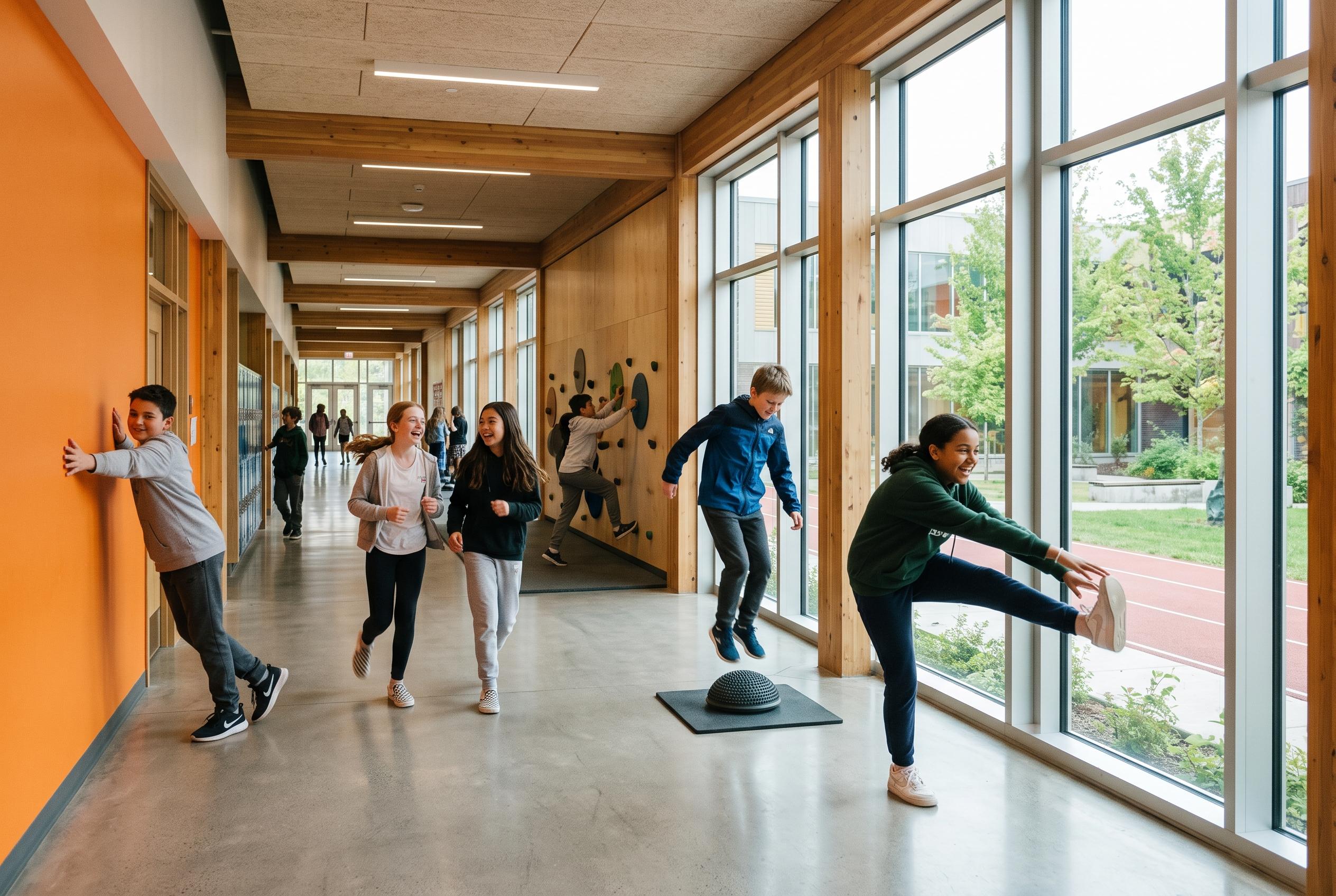

With rising concerns over sedentary lifestyles during school days, experts highlight the importance of integrating movement into education through school design, activity breaks, and community engagement to support children’s health and cognitive development.
As children head back into structured school days, the bigger risk may not be a lack of organised sport but the quiet accumulation of sitting: lessons, journeys, homework and screen time all in the same day. Safa Heybet, a physiotherapy and rehabilitation specialist at Biruni University, argues that movement should not be treated as time taken away from education but as part of how children grow, learn and stay well. That view is echoed in guidance from the World Health Organization and the US Centers for Disease Control and Prevention, both of which frame physical activity as something schools can support rather than leave entirely to families.
The wider public-health picture suggests the problem is hardly marginal. The WHO says 81% of adolescents aged 11 to 17 are not meeting its recommended activity levels, with girls less active than boys, at 85% versus 78%. It defines sedentary behaviour broadly as low-energy waking time spent sitting, reclining or lying down, which means a child can attend football practice in the evening and still have spent most of the day inactive. The same fact sheet says regular physical activity in children and adolescents supports bone health, healthy growth, motor development and cognitive outcomes.
That is why school design matters. In a 2023 topic brief produced with UNICEF and UNESCO, the WHO said physical activity supports education and learning objectives and that the benefits are stronger when schools adopt a whole-school, systems-based approach. The CDC makes a similar case, saying children and adolescents should get 60 minutes or more of activity each day and that schools are in a distinctive position to help them achieve it. Its guidance points not only to physical education, but also to activity during the school day, family and community engagement, and opportunities before and after lessons.
Those opportunities can be more ordinary than many parents assume. The CDC specifically lists walking or cycling to school programmes, activity clubs, school sport and extended-day provision as ways to build movement into a routine. That matters because the debate is often framed as sport versus study, when the evidence suggests smaller bursts of activity spread across the day may also count. In the Turkish back-to-school report, Heybet drew attention to breaks, playground time and simple movement between classes as chances to chip away at long periods of sitting.
The strongest recent evidence on classroom movement breaks is encouraging, if not definitive. A meta-analysis published on 24 August 2026, indexed by PubMed, reviewed 25 randomised controlled trials and found pooled effects favouring active breaks for attention and inhibitory control, while also reporting benefits for working memory and cognitive flexibility. The authors said 5 to 15-minute sessions, especially acute or single-session formats, appeared promising, but they also warned that the evidence was heterogeneous and did not justify a one-size-fits-all prescription for every class or every child.
A separate systematic review with meta-analysis in Educational Psychology Review struck a more cautious note. It described classroom active breaks as a “low-cost and low-burden intervention” that can be folded into everyday teaching, but said the overall gains should be seen as modest and context-dependent rather than universal. In that review, working memory showed a small statistically significant benefit, while attention, inhibitory control and mathematical outcomes showed positive trends that did not reach statistical significance. In other words, short activity breaks may help, but they are not a miracle technique and should not be oversold.
Heybet has been making a related case beyond the classroom. In a March 2026 report carried by Yeni Marmara Gazetesi, again via the İhlas News Agency, he warned that long hours on console and mobile games could harm children’s motor development by reducing the time they spend running, jumping and climbing. He said inactivity could affect muscle development, balance, coordination and posture, and could also contribute to neck and back pain when children stay in the same position for too long. In the same report he urged families to limit daily screen time, encourage outdoor play and take part in physical activity with their children, adding: “Technology is beneficial when used correctly, but no digital experience can replace movement in child development.”
Taken together, the evidence points towards a simple conclusion: if children are to stay active once the school year begins, the answer cannot rest solely on an after-school club or parental nagging. It depends on whether schools protect breaks, provide safe spaces to move, value physical education, and make active travel feasible where local conditions allow it. The WHO’s school-systems brief and the CDC’s guidance both suggest that movement works best when it is woven through the day. For parents and teachers alike, that means seeing activity not as a distraction from learning, but as part of the conditions that make learning possible.
Disclaimer: This content is for informational purposes only and is not intended to be a substitute for professional medical judgment, advice, diagnosis, or treatment.