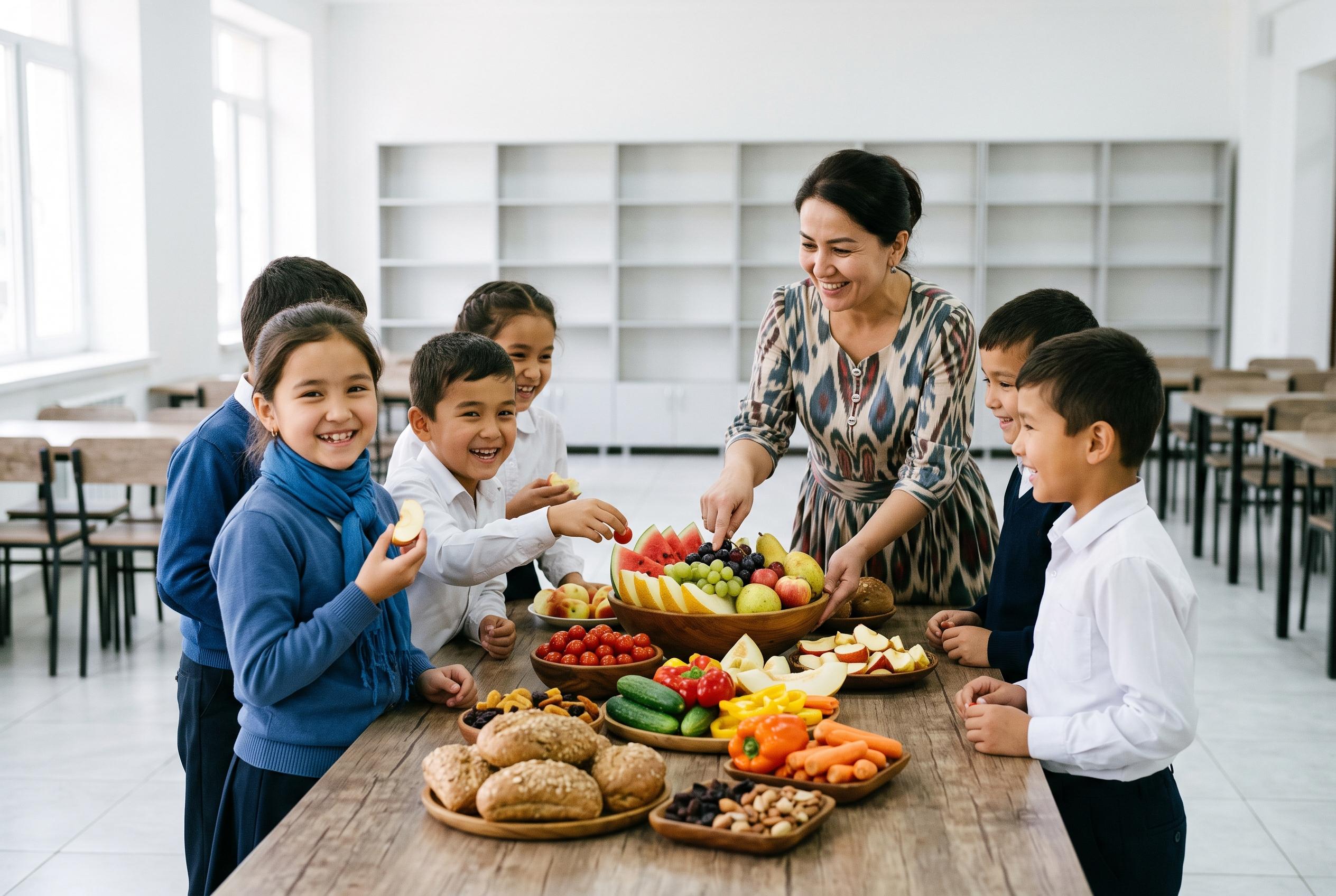

Uzbek schools are implementing comprehensive restrictions on food and drink in canteens, aligning with WHO health recommendations to promote children’s wellbeing and combat obesity globally.
Uzbek schools are being told to keep far more than burgers and fizzy drinks off canteen counters this term, with health guidance extending the blacklist to unpasteurised dairy, home-made preserves, cream cakes, cold soups and chewing gum. State-backed reports say the restrictions apply not only in general schools but across specialised secondary and vocational institutions as well, and cover both food sold to pupils and dishes prepared in school kitchens. (yuz.uz)
The official government advice is broader than the shorthand lists often circulated at the start of term. It bars mushrooms, unboiled milk, cottage cheese and sour cream that have not been heat-treated, meat and fish that have not passed veterinary inspection, and eggs and meat from waterfowl. It also excludes home-made peas and preserves, tins with broken seals, flour, groats and dried fruit showing pest damage, spoiled vegetables, and butter with a fat content below 72%. Taken together, the rules show that traceability, inspection and safe handling matter as much as whether a food is classed as junk. (gov.uz)
The ban also reaches into the menu itself. According to the government advice page, staff must not serve leftovers from the previous day, kvas, meat or curd blinchiki, pasta mixed with egg, navy-style pasta, fried eggs, cream confectionery, creams, mors and pâté. Other reports add first and second courses based on instant dry concentrates, along with okroshka and other cold soups, to the list of dishes that have no place in educational canteens. (gov.uz)
Many of the barred items are everyday staples in the region rather than obvious fast food. Yuz.uz and NOVA24.UZ say the sanitary rules extend to sausages, smoked meats, pickled fruit and vegetables, vinegar, mustard, horseradish and other hot spices, while Ta’lim xabarlari specifies that both coloured and colourless carbonated drinks are prohibited. The same reports say natural coffee, energy drinks and alcohol are out, as are culinary fats, lard, margarine and other hydrogenated fats. UZ24 added that the World Health Organisation recommends removing several of these products from the daily diet altogether. (yuz.uz)
There is evidence that officials do enforce the rules on the ground. In a report from October 2022, UzA said inspectors in Sergeli district in Tashkent found pizza, minced-meat samsa and coloured fizzy drinks on sale in school canteens and removed them from sale. Cooks were told they could not continue offering such products, while nurses were instructed to tighten oversight. Although pizza and samsa are not always named outright in the published lists, the action suggests inspectors treat them as falling under the ban on meat-filled bakery items and prohibited soft drinks. (uza.uz)
The public-health argument behind the rules has also been sharpened since the earlier school-canteen advisories first appeared. Ta’lim xabarlari said the health ministry presented the prohibited list as being based on World Health Organisation recommendations and aimed at protecting children’s health. In January 2026, a ministry post on the government portal highlighted the WHO’s first global school-food recommendations, saying that in 2025 obesity among children had for the first time overtaken underweight globally; one in 10 school-age children and adolescents lives with obesity, one in five is overweight, and more than 800 million people worldwide have diabetes. (talimxabarlari.uz)
That makes the latest reminder look less like a seasonal warning and more like a restatement of an established sanitary code. NOVA24.UZ attributed the latest recap to Nurmat Atabekov, deputy head of the sanitary and epidemiological wellbeing service. Separately, the Preschool and School Education Ministry said in February 2025 that the underlying rules on pupils’ nutrition in general secondary, specialised secondary and vocational institutions had been registered by the Justice Ministry in 2021 as document No 32, and it pointed schools to both recommended foods and the list of foods not permitted. (nova24.uz)
For parents, one of the clearest messages is that “home-made” is not a loophole. The official advice bans home-made preserves, while media summaries of the school rules add home-made sweets, home-made katyk and other dairy products that have not been properly heat-treated or come from safe, inspected farms. In practice, the policy pushes schools towards industrially produced, labelled and certifiable food, and away from informal treats whose ingredients, storage and shelf life cannot be checked. (gov.uz)
Disclaimer: This content is for informational purposes only and is not intended to be a substitute for professional medical judgment, advice, diagnosis, or treatment.